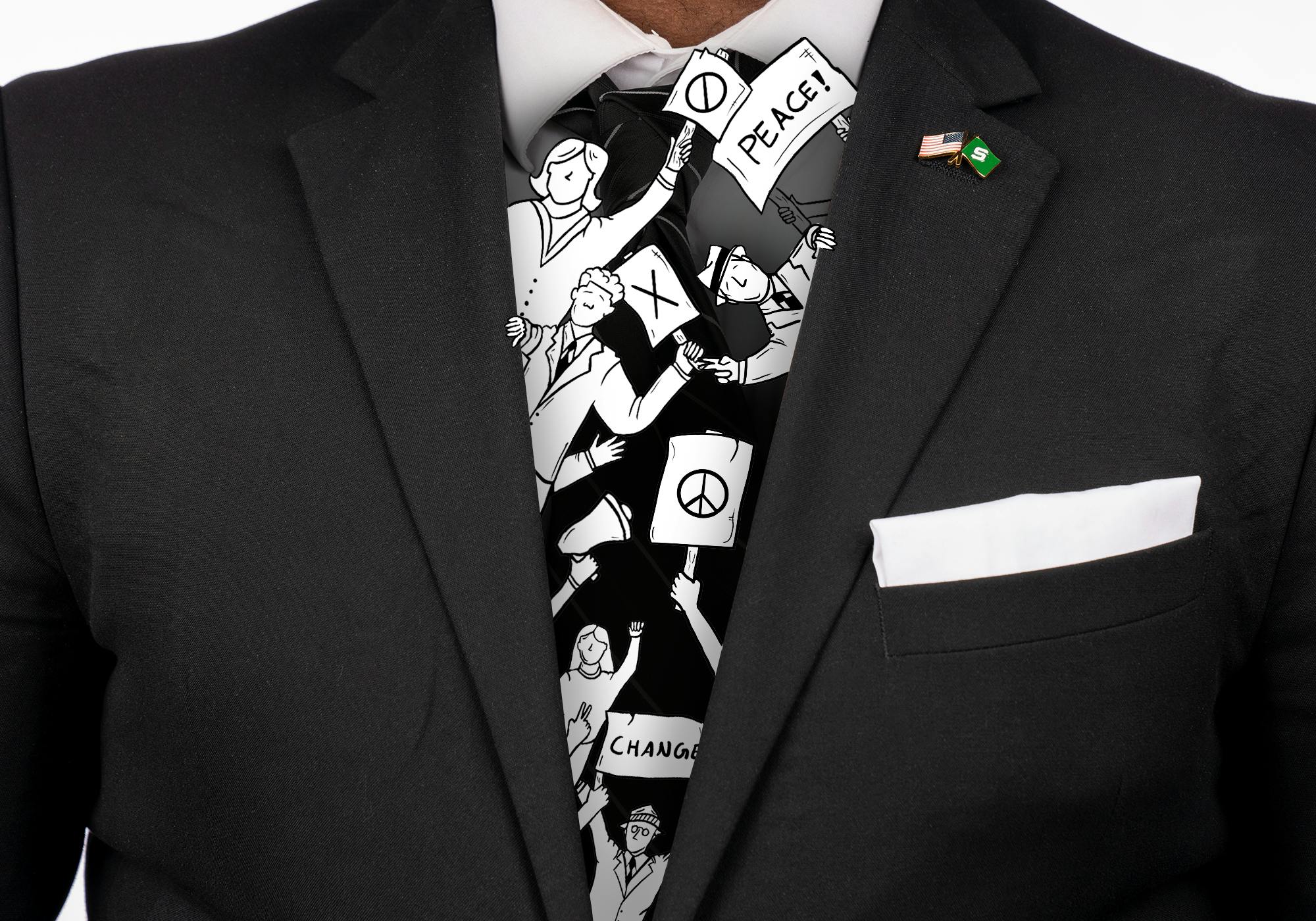
Political violence has gripped the nation in the last few months, and we, like advocates and politicians on both sides of the aisle, believe that it has no place in discourse, especially on college campuses. But as some thinkers have noted lately, simply calling for civil discourse is a fantasy, and we’re inclined to agree.
Traditionally, civil discourse refers to the idea that people can discuss ideas politely, calmly and with respect for the other person; even when they don’t necessarily agree. But when intolerance becomes widely accepted, the scales tip, and we’re asked to reevaluate if we can continue to uphold what we’ve come to know as civil discourse.
Last year, a student was arrested for flipping a transphobic table demonstration and striking two students. While the act was undeniably aggressive, claiming the perpetrator was unprovoked ignores that the demonstration itself targeted people’s identities.
When intolerance becomes the norm — whether based on gender, sexuality, nationality or ethnicity — people are bound to feel threatened. And when people feel threatened, they respond in ways that those in power often deem "uncivil."
It is in this way that the notion of civil discourse has become a constraint against those who speak up for themselves. It tells those that are rightfully angry to deny their emotions, shutting down their side of the debate because they chose not to be polite and calm in the face of injustice.
More recently, a protester was hit with disciplinary charges after directly confronting President Kevin Guskiewicz about the university’s investments in Israel. The charges against Eli Folts alleged intimidation and harassment, language that led many to believe he was being aggressive, rather than simply expressing anger.
But in the eyes of those who have chosen to use civility as a weapon, being "uncivil" exists on a spectrum from angrily wagging a finger at leaders to high-profile acts of political violence. The lines are blurred, and anything more than sitting and smiling while another human tells you they do not see you as such is used as yet another excuse to portray the left as the party of violence.
So in a world where violence isn’t the answer, civility isn’t either.
We instead urge our readers to opt for empathy, to not only speak up in the face of injustice but to continue to do so when they’re being told to be civil in the face of intolerance. Recent data indicates that the number of students who agree that using violence to stop someone from speaking on campus is acceptable has risen from 18% to 38% since 2022.
That statistic is alarming, but it should also prompt a deeper question: Why do some students feel that civility has failed them?
It is by addressing the structures that tell those affected by injustice to not be angry that we get to the root of the violence itself. Continuously denying those individuals the right to feel those emotions only deepens the wound, and is the foremost reason why we’re facing this rise in violence today.
A world in which civil discourse exists in its purest form is possible, but it’s also a world without injustice. And today, many students still feel the cards are deliberately stacked against them.
This editorial represents the view of The State News Editorial Board. It is made up of The Opinion Coordinator, two staff columnists, the Editor-In-Chief, the Multimedia Editor and the Newsroom Development Manager.
Support student media!
Please consider donating to The State News and help fund the future of journalism.
Discussion
Share and discuss “EDITORIAL: When civil discourse fails us” on social media.