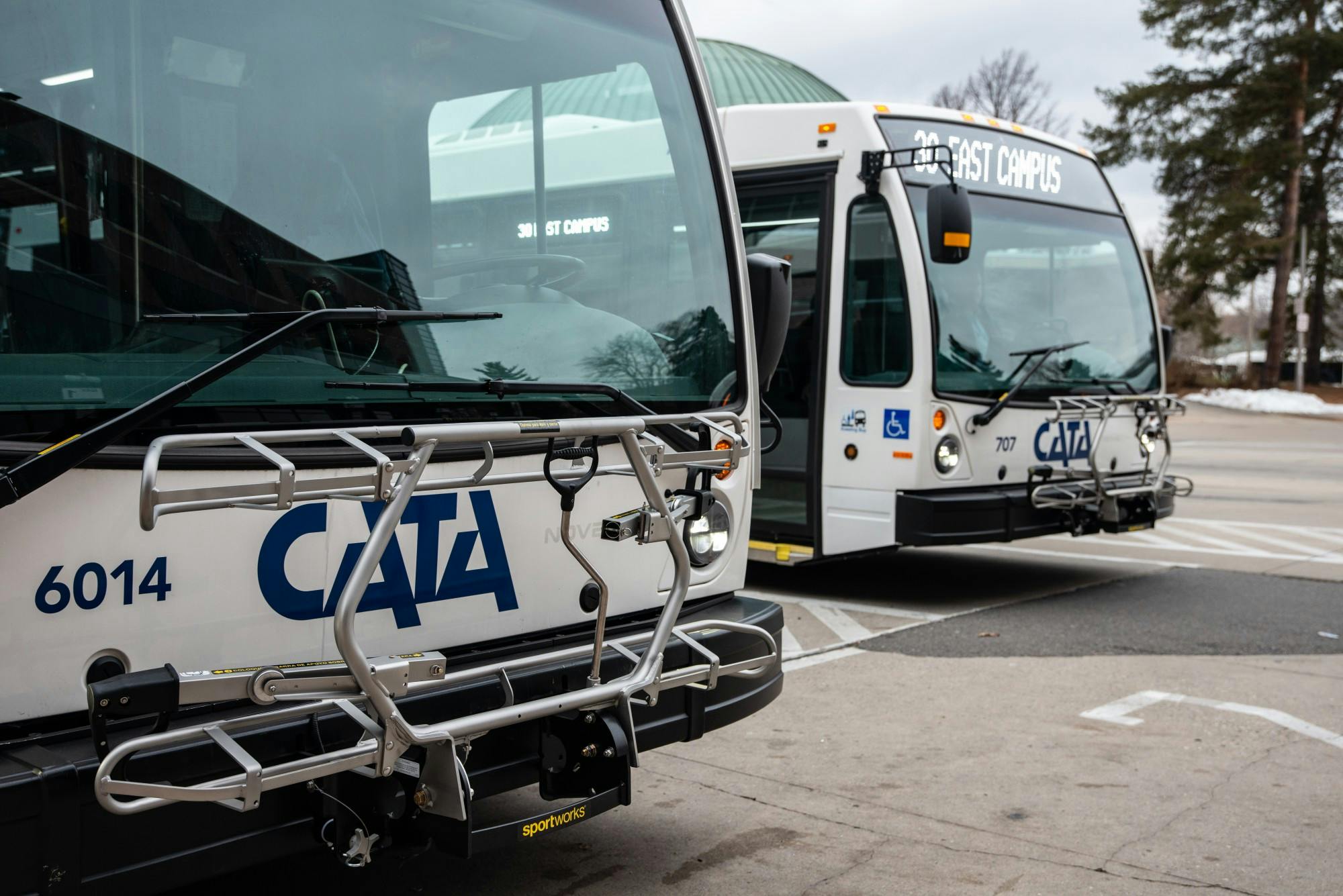
Despite ongoing concerns regarding CATA buses' reliability and punctuality, last Thursday, bus 31 was present and ready for departure earlier than the time listed on the Transit app— a rarity according to many students nowadays.
A crowded bus isn't unusual. Almost every seat was filled that warm morning, with some bus riders choosing to stand rather than cramming into a seat between two others.
Bus 31 then departed on time.
Spanning 5,200 acres, MSU’s campus size is no joke — a 40-minute walk to class can seem more daunting than attending the class itself. As a result, many students rely on the CATA bus system for transportation.
Naturally, punctuality is essential; yet there are seemingly several reports of bus delays on crucial routes, causing students to miss class, while other, non-essential routes are often on time. These timing inconsistencies and unpredictability can be a source of anxiety for passengers.
However, as students on the bus addressed their experience with CATA, many shared general satisfaction with the operation, with freshmen in particular mentioning positive experiences. Though they’ve only been here a short while, freshmen are frequent bus riders.
“I think [the buses] are very convenient,” finance freshman Elena Rochard said. That said, she explained that they’ve recently been late for her, despite usually being on time.
Rochard added that she was surprised students have to request their stops every time. Though it may not be clear, passengers are expected to press the ‘request stop’ button or pull the string to ensure the bus pulls over at their stop.
Rochard's stop quickly approached, and she went on about her day, with over half of the passengers following suit. The newfound space in the bus was short-lived as several people boarded bus 31 at the next stop. Business preference freshman Addyson Sturgis was one of them.
Sturgis also expressed a positive opinion of the bus system. “It was really simple to learn and I use [the buses] every day, so I think it's really good,” Sturgis said.
She was also surprised by the short intervals between buses, with some routes having buses stop by every 10 minutes or so.
Bus 31 approached its next stop: CATA, a station visited by all bus routes. Almost everyone got off, and in the span of a couple of minutes, the seats were filled once again.
During this short break at the CATA station, the bus driver gave insights into their job and the functions of the buses on campus. Working 13-hour days, the driver said they are accustomed to this system.
The driver described the difficulty of stopping a full bus and the dangers of students suddenly stepping out; they said they wish more students had a consciousness of federal regulations in terms of safety. Though it may be frustrating to be left behind by a crowded bus, it’s against the regulations to continue driving or picking students up when the passengers flow over a yellow line on the vehicle.
Delays – a primary student concern – are attributed to traffic, accommodating passengers with mobility aids and passengers who take longer to get on and off. As students have seen in the Transit app, delays are also a result of the traffic detours caused by construction.
However, even with all of these factors, students still have to get to class on time. The driver mentioned that having more buses to drive around would help improve the efficiency of the bus system. If there are more buses, more students would be able to be transported.
“I really hate to leave people behind, ‘cause everybody’s just trying to get to their next class, trying to get to their dorm to maybe eat or study,” the driver said.
Boarding bus 31 at a later stop, zoology junior Margaret Babiarz said she uses the buses multiple times daily. Babiarz also referenced the ‘ease’ of using the campus busing, adding that they’re essential to have on campus.
However, despite the convenience and essentiality of the buses, Babiarz pointed out a couple of concerns she had, including her personal experience being threatened with a knife on a bus. She said that having cameras and possibly microphones on the buses would foster a safer environment. Her experience isn’t something seen often, and Babiarz said additional safety precautions on the buses might prevent someone else from having a similar experience.
Babiarz also said weekend busing might come at an inconvenience to students because of differing routes and the infrequency of buses. She suggested running more routes along Shaw would help students get around better. As of now, CATA has five bus 30 routes that are available and free to use for students on weekdays: 30, 31, 32, 33, and 39, and three 30 routes available to students on weekends: 34, 35 and 36.
Support student media!
Please consider donating to The State News and help fund the future of journalism.
"[The buses] are so easy to use despite its flaws, like, the bus is so simple," Babiarz said.
As evening fell on Thursday, students came and went, bus 31 kept moving and the driver continued on — a cycle that may have its downfalls but remains essential for many Spartans traveling across campus.
Discussion
Share and discuss “A day on bus 31: navigating the controversy of CATA at MSU” on social media.