WARNING: SPOILERS AHEAD
There’s a saying: "Like father, like son," and in this saying, a son's character or behavior can be expected to resemble that of his father – a mirror from the creator to the created.
WARNING: SPOILERS AHEAD
There’s a saying: "Like father, like son," and in this saying, a son's character or behavior can be expected to resemble that of his father – a mirror from the creator to the created.
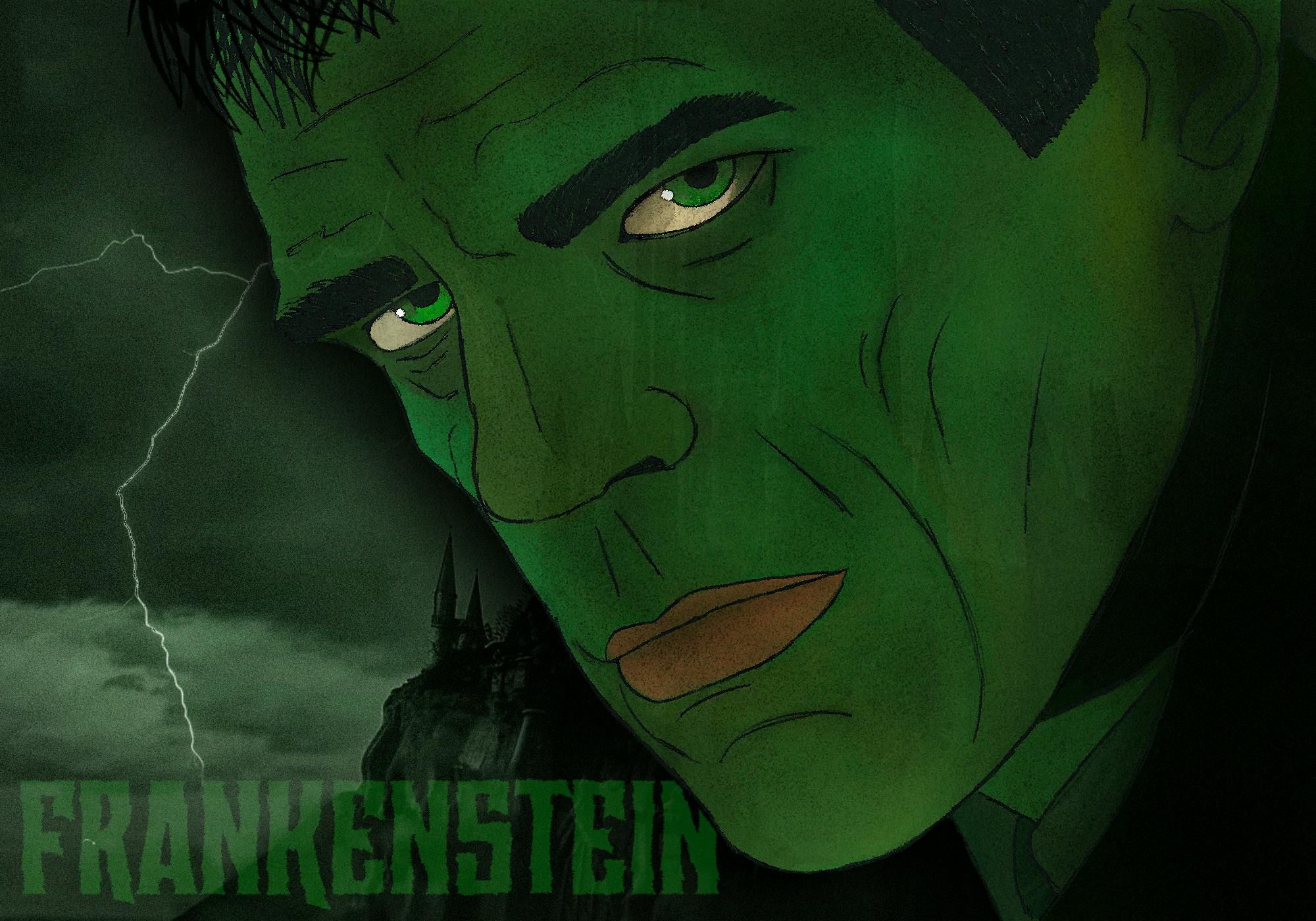
In Guillermo del Toro’s version of Mary Shelley’s 1818 novel "Frankenstein," he crafts a relationship between the creator and the created in a grotesquely beautiful film that pairs love and loss with the idea that if we can conquer death, we can conquer God himself.
The movie begins with Dr. Victor Frankenstein (Oscar Issac) being chased through the North Pole. After an explosion, the crew of a ship sailing through the same pole encounters him and is soon attacked by a creature. After returning to the vessel, Victor begins telling his tale to Capt. Anderson (Lars Mikkelsen) and shares that the creature is his own creation, but everything before this moment started with his father. A happy childhood turned sour after his mother died giving birth to his brother, William. Victor sought to conquer death — or, in essence, to conquer God.
Years later, after meeting Herr Harlander (Christoph Waltz), an arms dealer who offered to fund Victor’s research, he reunites with William (Felix Kammerer), now grown, and meets his new fiancée, Elizabeth (Mia Goth). Finally, the pursuit of this obsession with conquering death began, and one night during a storm, a body fused from parts of dead soldiers from a battlefield was born.
Enshrouded in mystery, the creature (Jacob Elordi) is born as a child-like figure, and we are introduced to a 6-foot-5-inch baby, who only knows what he hears, sees and is subjected to. Elordi plays this monster with care, carefully portraying him as some sort of beast in the wild, first learning how the world works and what he can make of it.
Elordi’s performance is the standout. In a scene with the grandfather, Elordi showcases the creature's human side after wolves partially devour the person who has shown him the most kindness in his entire life. The creature feels real sadness for the first time, and the dialogue highlights the humanized version of a "monster." Here, the grandfather considers him a friend. It breaks the creature, and he’s consumed by rage. It’s a heart-wrenching performance worthy of attention.
When the creature is born, there’s an innocent wonder. "Growing up," he is beaten and broken by his creator-father and becomes wretched. His story follows him to a family, where he learns how the world works and is truly seen (by a blind grandfather, mind you) for something other than his dying flesh — like a person. After violence takes hold of his idealistic life, he falls down the path of revenge.
Del Toro’s style was truly made for this type of story. With the dark, scenic shots, the allusions and themes of life, death, love and loss, the tragic characters and even the makeup Elordi had to undergo to become this creature — it's poetic and screams del Toro. Even the film's 150-minute run only seems like a moment of transition, with a prelude — Victor’s story and the creature’s. Viewers receive both sides of the wheel, and it’s up to us to decide before the satisfying ending to understand who the monster really is.
The take on the story is different. It doesn’t follow the plot of the book, really. Though the romantic parts between Victor and Elizabeth were used to build tension between life and death, they felt forced. Movie Elizabeth isn’t a mother figure or Victor's fiancée; she’s marrying his brother, and unlike the book, she doesn’t die at the creature's hands — she embraces him. However, she does die at the end of the movie, not at the creature’s hands, but in his arms.
But the backbone of Shelley is there — in the destruction of the creature, the egotistical mind of Victor and the beauty of a dream vanished — because technically, we cannot conquer God.
The two — Victor and his creature — are mirrors; both men need to know more than what is humanly possible, and del Toro gives them life through the crude relationship of what it means to be truly born into this world. Is it life? Is it death? Is it love? Loss? I guess only a father can teach his son the ways.
Support student media! Please consider donating to The State News and help fund the future of journalism.