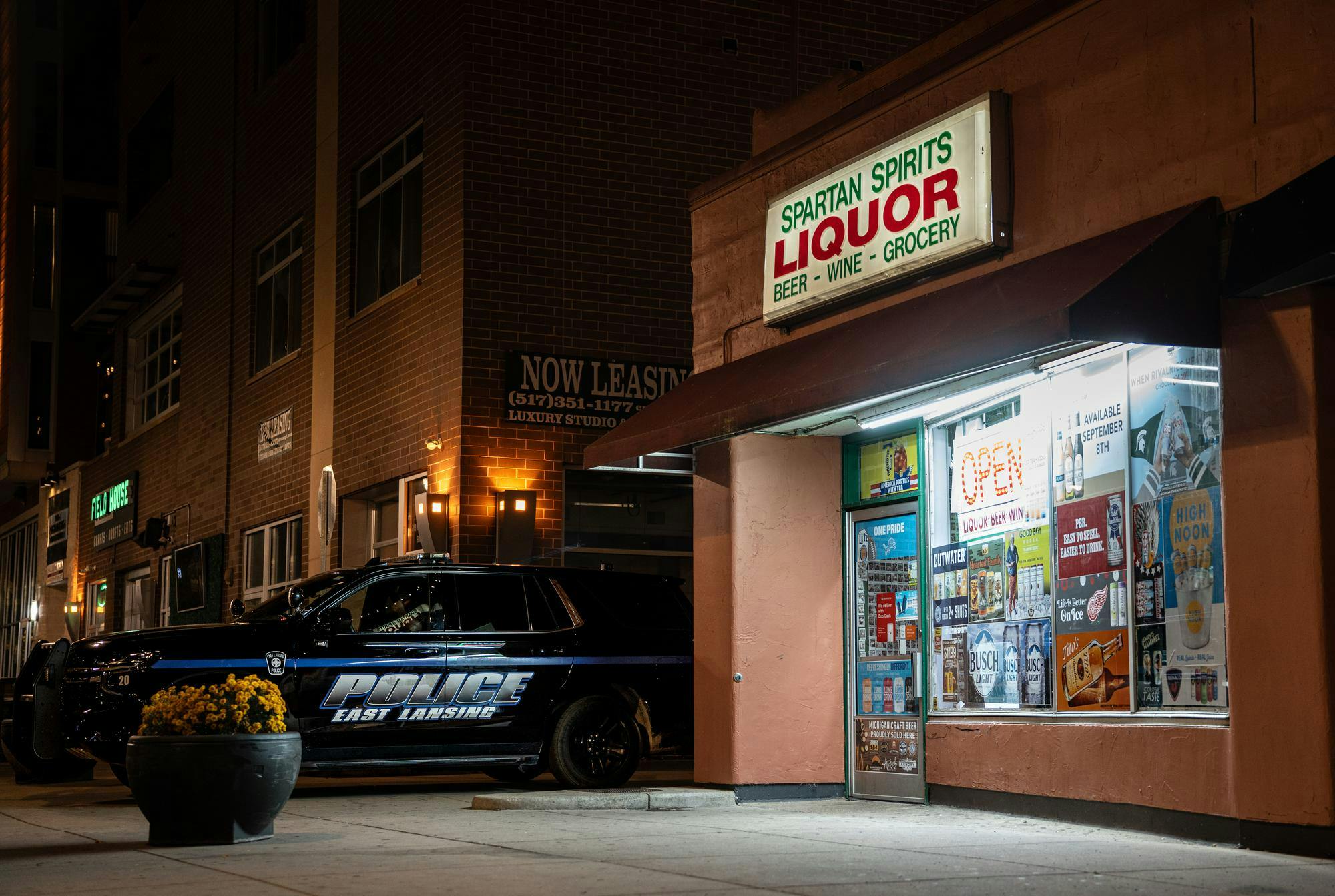
Last Tuesday’s East Lansing City Council meeting painted a portrait of the downtown area, one that is a hub for violence and crime when the clock hits midnight.
“This downtown is not secure,” a business owner declared in front of the meeting. His speech included an anecdote about how he lost seven employees after a group of teens harassed them and later pepper-sprayed one. Although he called the police on the group, he said they were back the next week engaging in similar activities. For some, incidents like this serve as proof that the department is not doing enough to combat crime.
But that’s not quite the case. Recent weeks has actually shown the department overstepping their boundaries a number of times in ways that reveals a much deeper reckoning the city needs to have with its police force.
In 2021, city council voted to approve Ordinance No. 1503, the adoption of an 11-person Independent Police Oversight Commission (ELIPOC). The idea was to increase accountability by addressing racial inequities and making it easier for complaints against officers to be reviewed. While the commission does not hold administrative power, it is allowed to collect information and review it for investigative purposes.
The commission seemed to be the city’s answer to an age-old question: Who watches the watchers? And yet now, amid accusations of excessive force use by the ELPD, the city attorney is trying to amend the ordinance in a move that would set East Lansing back years in progress made on racial inequity by stripping the commission of its investigative powers.
It's concerning. And if there was ever a time for East Lansing to have an independent investigative group for its police force, it's now.
During welcome week alone this year, one young man was pepper-sprayed without warning and arrested over a fight that he wasn’t involved in, according to a TikTok his sister, Sade Sellers posted. Another man was tased while holding his hands up in a dramatic video released by the department that makes it impossible to discern what exactly happened without the audio, which was not included.
Amid allegations of racism over the two incidents, Police Chief Jennifer Brown attempted to justify the actions during an ELIPOC meeting on Wednesday, where she said that the ELPD is "simply" responding to crimes committed by a "disproportionate number of minorities" who have come into the community and committed crimes lately. (She herself entered the role after two predecessors resigned, one amid an excessive force investigation.)
Setting aside Brown's blatant reinforcement of racial stereotypes, the notions that less oversight will be the solution to the problems facing the downtown area, and that an increased police presence is needed to tame the wildness — as city council candidate Liam Richichi recently suggested at a candidate forum — are ones that add fuel to a fire that has been allowed to grow for years now.
The proposed solutions don’t reduce violence, it gives the state more room to be the ones perpetuating it.
It's what ELIPOC sought to prevent years ago amid a city that a resident once described as “very hostile for people of color.” Two years after the commission was established, a Black man was shot in a Meijer parking lot, once again sparking discussions of what is considered appropriate use of force by ELPD. Back then, ELIPOC held a panel to address the issues (although the attorney general later cleared the two officers involved in the shooting). Later that year, the ELPD released data showing that more than 50% of incidents where an officer used force were against Black men that August.
And still, the problem persists. Councilwoman Dana Watson spoke to that reality at last Tuesday’s meeting: “If our community is saying it's Black and Brown people, we need a balance where we're not just sending the cops out to look for the Black and Brown people and have problems with us and destroy our lives.”
Is ELIPOC the solution to all of East Lansing’s policing issues? No, but gutting it is a step in the wrong direction. As Watson said, the city should focus on why East Lansing has been intentionally inaccessible for Black and Brown residents and invest in community violence-prevention programs that address root causes.
Yet, Watson’s council seat is up for grabs in November, putting her advocacy at risk. There is some hope in candidates like Joshua Ramirez-Roberts, Adam DeLay and Kath Edsall, who have proposed downtown solutions that don’t revolve around increasing police presence.
At the last council meeting, they deferred discussions about the amendments to later in October. Looked at plainly, the amendments to Ordinance No. 1533 are a poor decision that gives police more room to engage in misconduct. But looked at more closely, they reveal a deeper reckoning East Lansing is having with racist structures of violence, and the amendments are a further attempt to remove power from the hands of residents and place it into the hands of the people who have shown to abuse it when given the chance.
Jack Williams is a junior studying English and Political Science and is the Opinion Desk Coordinator at The State News. The views in this article are his own and independent of The State News.
Support student media!
Please consider donating to The State News and help fund the future of journalism.
Discussion
Share and discuss “OPINION: Police oversight is not up for debate” on social media.