Think of some of the biggest movies of the last few years. Now, think of some of the biggest movies that were completely original. If you’re struggling to name as many, it’s not a memory problem. It’s an industry problem.
With the announcement of the latest "Wuthering Heights" adaptation and the anticipation of "Wicked’s" part two, questions about Hollywood’s ability to produce inventive content have once again risen. Are they simply out of ideas, or are there other factors at play?
The rise of streaming services as the dominant film hubs has greatly influenced what types of storylines get produced. Film and media studies professor Peter Johnston said that these services and studios are afraid of taking risks, fearing it will lessen their profits. So, they opt for the road frequently traveled.
“Streaming services are tech companies at heart,” Johnston said. "Disney is a massive company, and now it owns [various intellectual properties]. They have a built-in audience, and that’s what leads to a million spin-offs.”
Johnston said that the constant addition of sequels, threequels, and prequels dilutes a story’s creativity and value, pointing to "Star Wars" as an example. Growing up, "Star Wars" was exciting for Johnston, but now it has been “run into the ground.”
“There’s so much content and it’s all the same,” Johnston said. “I just don’t care anymore.”
Of the top fifty highest-grossing films worldwide in the last five years, only seven are not sequels, remakes, or based upon an existing non-movie franchise (think "Super Mario Bros" or "Minecraft"). Two titles remain when focusing on American films: "Elemental" and "Oppenheimer". And, technically speaking, "Oppenheimer" is a retelling of real events.
Applied engineering freshman Jordan Newton said that sequels and remakes aren’t inherently terrible ideas, but many lack integrity. Pre-law sophomore Max Deshazor named "Spiderman 2" as an example of a sequel that wasn’t “corny and lame” due to its meaningful contributions to the existing plot.
“I think 'Spiderman 2' is better than the first one,” Deshazor said. “They built on the character and added more depth to him.”
Digital storytelling freshman Alysza Eddy said that audiences are developing a fear of the unknown. Today, the average movie-goer is more protective of their time and money, choosing to bestow them upon the familiar comforts rather than the seemingly avant-garde.
“We’re more likely to go watch something that has characters we know versus something that we might not like,” Eddy said. “It says a lot about our economy, too, because people aren’t going to want to spend money on movies or studios they’ve never heard of.”
Newton said that the film industry is becoming increasingly monopolized as Disney and other big names can tighten their grip on Hollywood, making it harder for less-established studios to compete.
“There are so many smaller companies with interesting ideas and interesting pieces of art but there’s a really high barrier of entry,” Newton said. “Hollywood is not out of new ideas, they’re just refusing them.”
Ignoring these new ideas can be dangerous, according to Eddy. Eddy said that the lack of diverse voices being heard can create issues outside of a bland film environment.
“If we’re not taking any risks with the media we’re consuming, we’re not going to learn any new viewpoints,” Eddy said. “If we’re not looking at how other people are thinking it’s going to impair our ability to be open-minded and to think critically about other people’s opinions.”
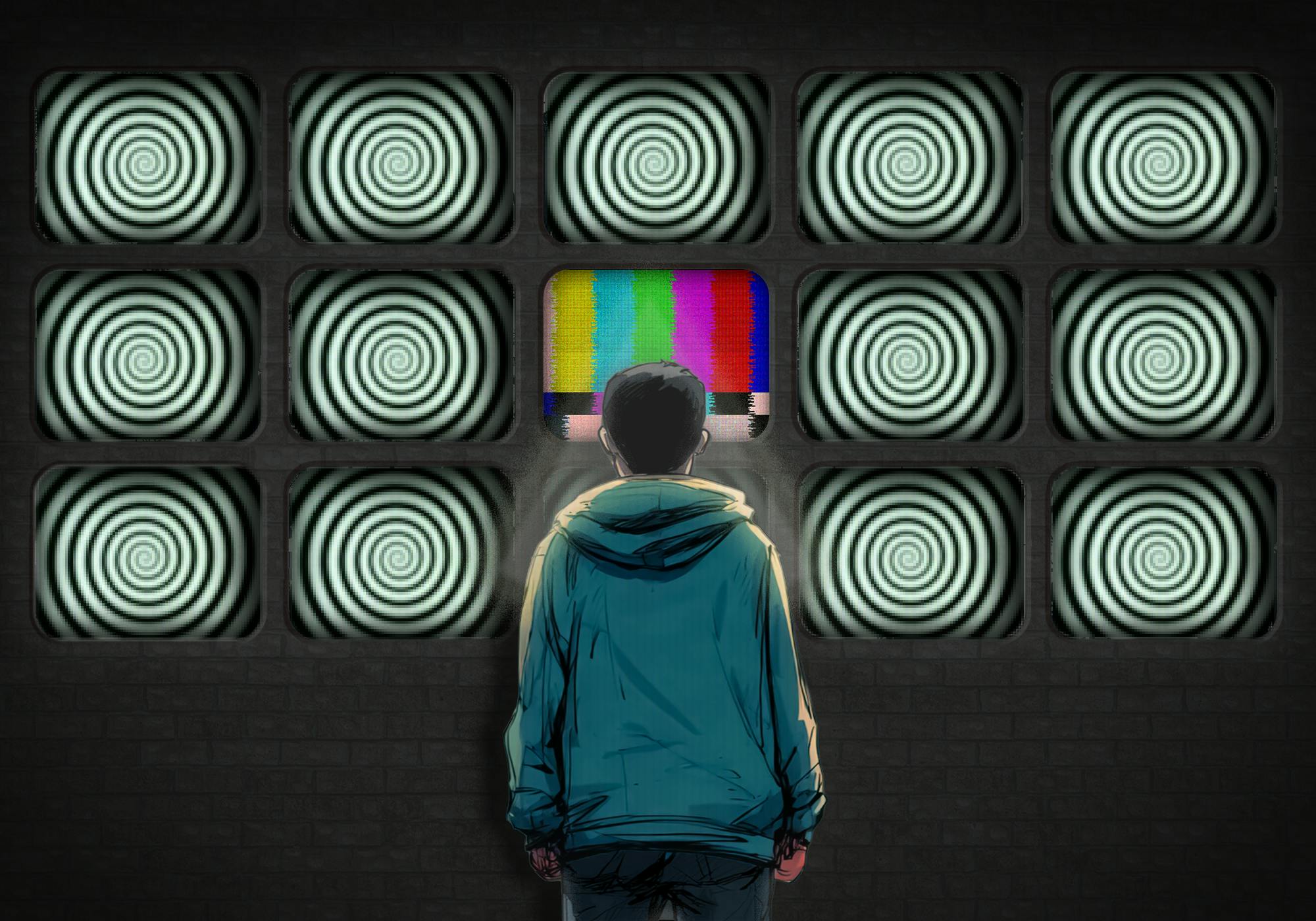
Johnston pointed to our reduced attention spans and decreasing willingness to think critically about what we watch as other reasons for less creative content being produced. Nothing is built to last, Johnston said, and we are no longer consuming media to be moved by it. We are consuming media to avoid being bored.
“Everything is forgettable and we’re just passing the time,” Johnston said. “It’s just about content, but I don’t want to look at content. I want to look at art.”
The rise of short-form content such as TikToks and Instagram reels has aided in the decline of our attention spans, Eddy said, and has thus made them more appealing compared to a two-hour-long movie. Better yet— it’s all free.
While movies were long the figureheads of pop culture, times are changing. Eddy said that Gen Z lacks the defining films that previous generations have. The world is much faster-paced, and the “next-big-things” slip from memory quickly.
“I remember when 'Saltburn' came out and it was big, but then everybody forgot about it after a couple of months,” Eddy said.
Support student media!
Please consider donating to The State News and help fund the future of journalism.
It can be easy to fall into the trap of nostalgia, but don’t shy away from the unusual. Give your fingers a break from scrolling and treat your brain to something new; you could find your new favorite film.
Discussion
Share and discuss “Lack of original films impair critical thinking, creativity” on social media.