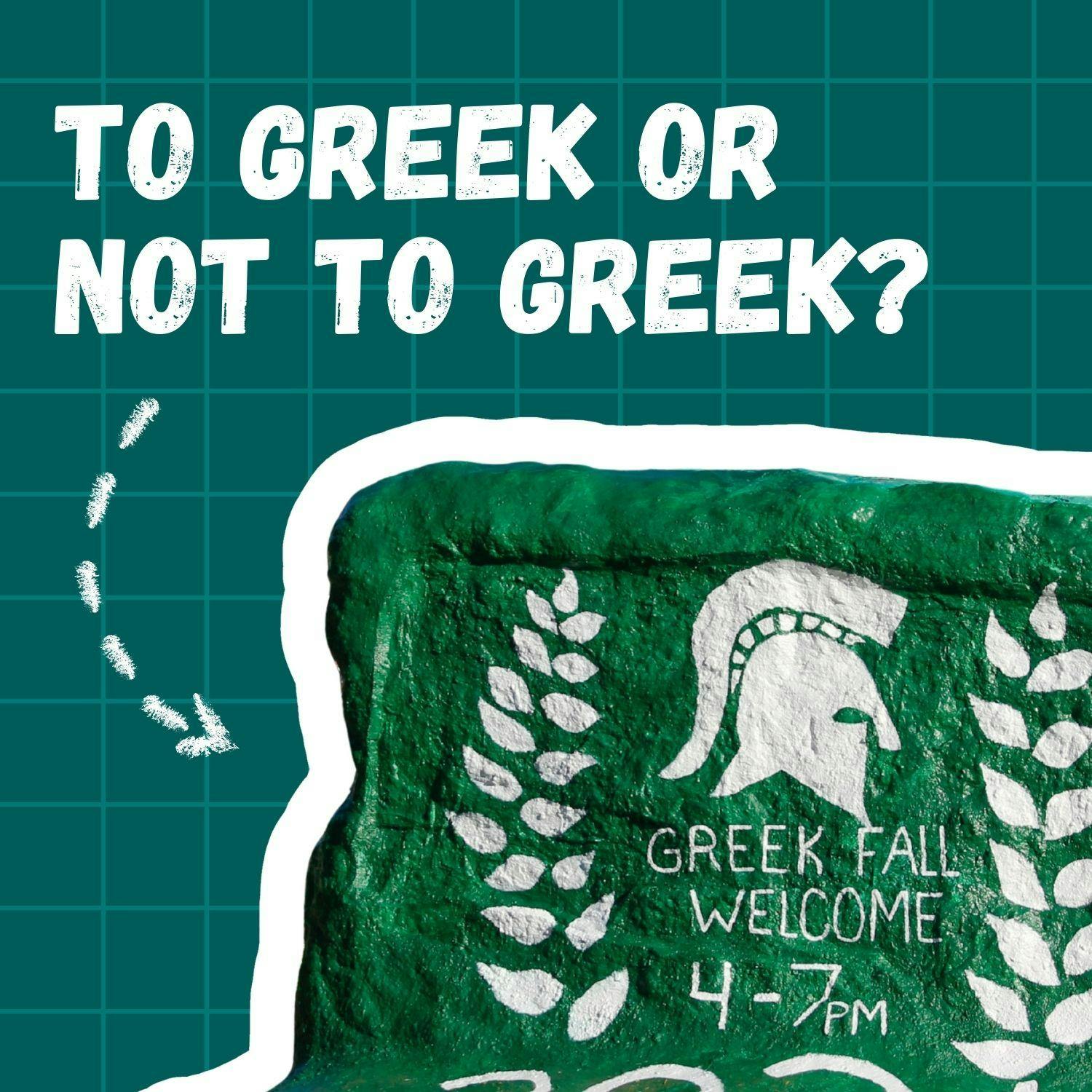
The formal recruitment process, with its house rankings and scripted conversations, felt more like a performance than a connection. The summer before college, when my hometown friends talked about it nonstop, I listened but couldn’t relate. I didn’t judge them; I just genuinely didn’t understand how something like that could mean so much to people.
But there’s a difference between being skeptical and being disconnected. Slowly, I started to feel the latter.
I didn’t come to Michigan State University alone. Two of my best friends from home came with me, making the transition less intimidating. But as the semester went on, I realized how hard it was to make new friends when I’d had the same ones for so many years. I felt like I didn’t know how to start over socially.
I didn’t come to a Big Ten school only for the social scene, but I also hadn’t moved four hours from home to stay in my bubble. I was lucky to have people who already knew me, but in some ways, that made things harder. I felt tied to a version of myself I hadn’t outgrown, and I wanted to see if I could build something new on my own terms.
That’s part of why I never considered formal recruitment. I still didn’t see myself in a sorority. I didn’t want the small talk or the pressure to act interested in something I wasn’t sure I wanted.
But beneath the comfort of old friends and the safety of routine, I felt genuinely lonely. It wasn’t that I didn’t have people; it was that I hadn’t found my place in a school of more than 50,000 students. So I decided to join a sorority.
I didn’t go through traditional recruitment. Instead, I joined through continuous open bidding, or COB, a quieter, more relaxed way to meet chapters. I spoke with a few, but meeting the women at Delta Gamma felt different. The conversation wasn’t forced, and no one was performing or trying to sell anything. I didn’t feel like I had to prove myself, and that alone was a relief. I know everyone says that, but it really was true.
What helped me most in those early weeks was our director of new members, who was unapologetically herself. She didn’t filter what she said to make people like her, and she wasn’t trying to lead in the traditional sense. She simply showed up as she was, and somehow that made it easier for the rest of us to do the same.
There were about 15 of us in my member class. Not all of us stayed close, which I didn’t expect, but over time, some relationships solidified. It was about showing up, week after week, and sitting next to the same people until they weren’t strangers anymore.
Now, three of those girls are my roommates and best friends. We’ve seen each other through every version of college life: tired, stressed, heartbroken, excited, completely over it. They’ve stayed through the messy parts, the versions of me I tried to leave behind, and the ones I didn’t realize were mine to keep. It took time for me to fully let myself in, but it’s one of the best things I’ve found here.
At first, I stayed in the Delta Gamma bubble because it felt safe, but eventually I met people in other chapters through classes, events and random overlaps. The more I saw, the clearer it became that the stereotypes I’d held about Greek life weren’t just shallow — they were lazy.
Yes, there’s plenty to critique: performative friendships, performative philanthropy, and even performative accountability. But there’s also a reality most people overlook. People who lead. People who support. People who hold each other through grief, finals and identity shifts. It’s not perfect, and it never will be, but it’s not a caricature either.
Eventually, I found myself somewhere I never thought I’d be: leading in the very space I once said I’d never join.
Leadership in a sorority means showing up in real, often unseen ways. It’s about staying steady when things get messy and learning to give yourself the same kind of grace.
I’ve held two leadership roles in Delta Gamma: house manager and now vice president of social standards. Both challenged me in ways I didn’t expect. There were moments I felt overwhelmed and wanted to step back. But I didn’t, and I haven’t, because even when it felt heavy, I was never carrying it alone.
My time as house manager stretched me in ways I still struggle to describe. The role forced me to advocate for people in difficult situations, navigate adult dynamics without a playbook, and stay composed when I felt like falling apart. I don’t think many people knew what was happening behind the scenes — and honestly, that’s OK.
Now, as vice president of social standards, the weight feels different. Most of what I handle is confidential, which means carrying stories that aren’t mine but still matter deeply to me. I’ve faced the pressure of not getting it wrong, of holding people accountable with care, and of knowing I won’t always get it perfectly right. And in the middle of all that, I’ve learned to trust my judgment more than ever. That’s been one of the hardest lessons to learn.
Conflict used to scare me. I hated the thought of disappointing anyone or being misunderstood, so it’s almost ironic that I ended up in a role that demands confrontation. But that’s what no one tells you about leadership — it finds the parts of yourself you’ve avoided and makes you face them.
Support student media!
Please consider donating to The State News and help fund the future of journalism.
I couldn’t do any of this alone. Lauren, our president, has been my anchor through every challenge. She’s steady, clearheaded and always seems one step ahead. She’s the kind of leader who makes you feel more capable just by standing next to her. In many ways, she’s my partner in this, but she’s not the only one. Our whole executive team, along with Honor Board, consists of women who show up with intention and heart. They’ve helped carry things I didn’t always know how to name and have been there in ways I didn’t even have to ask for. That’s what leadership and true sisterhood look like to me.
None of this means everyone’s experience looks like mine, or that the stereotypes aren’t real. In some ways, they are. I’ve seen traces of them, and I understand why some people walk away feeling hurt, disillusioned or simply unseen. Those realities exist too. But they’re not the whole story, and they’re not mine. My experience hasn’t been perfect, but it’s been real, and I’m incredibly lucky. I know not everyone feels the same way about Greek life, but these spaces are more layered than the stereotypes suggest. They can hold more than one truth at the same time.
And honestly, I needed to be wrong. It’s humbling to realize you’ve misjudged something. It’s even more humbling to be let in anyway — to be given space to learn, change and grow into someone better than the version who thought she had it all figured out.
Greek life wasn’t what I expected, and maybe that’s the point. College isn’t just about knowing who you are — it’s about becoming. And sometimes, the place you least expect to belong is exactly where you do.
Discussion
Share and discuss “MSU SURVIVAL GUIDE: How Greek life became my unexpected path to growth at MSU” on social media.