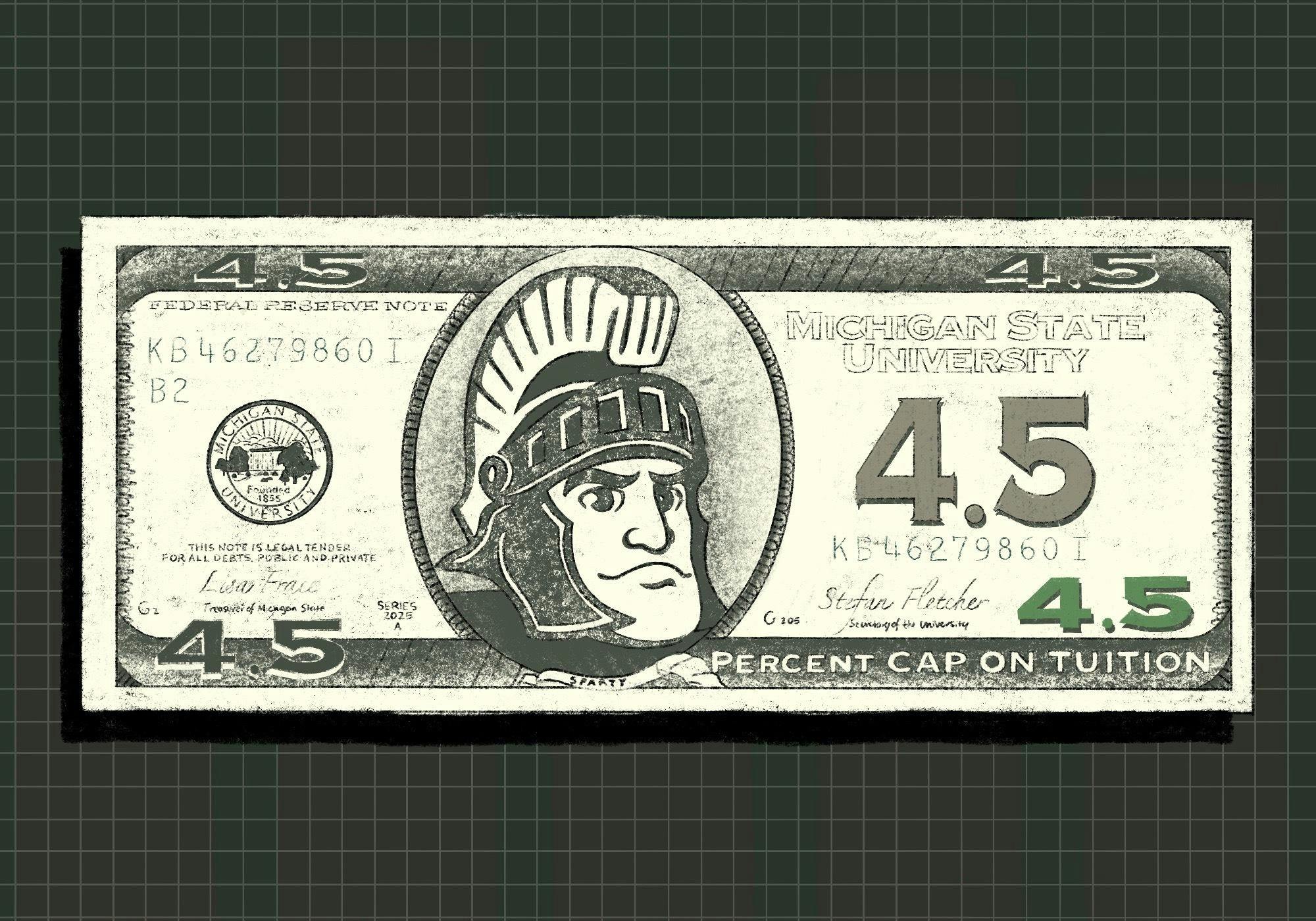
The Michigan Legislature finalized a state budget that sets a 4.5% cap on tuition increases at public universities, mirroring the rate already approved by Michigan State University's Board of Trustees in June. Because the board's approved increase aligns with the state limit, Michigan State University will not need to adjust its tuition rates.
Undergraduate in-state students will now pay the following per-semester flat rates for 12-18 credits:
- Freshmen: $8,458
- Sophomores: $8,653
- Juniors and seniors: $9,642
For in-state students in the Broad College of Business or College of Engineering, junior and senior tuition climbs to $9,935.
Nonresident undergraduates will see steeper costs:
- Freshmen and sophomores: $22,150 (non-business/engineering)
- Juniors and seniors: $22,818 (non-business/engineering)
- Juniors and seniors in business or engineering: $23,127
Graduate tuition, which is charged per credit hour, also reflects the increase:
- In-state graduate students: $937.25 per credit
- In-state engineering graduate students: $1,036.50 per credit
- Out-of-state graduate students: $1,868.50 per credit
MSU billing office confirmed that these rates for the 2025-2026 fall and spring semester rates incorporate the 4.5% hike, which matches the maximum tuition increase allowed under the state's higher education budget. The cap ensures that public universities remain eligible for full performance funding if they stay within that limit.
For students taking fewer than 12 credits or more than 18, tuition is assessed on a per-credit basis. Additional course-specific or program-specific fees may apply.
President Kevin Guskiewicz acknowledged the hardship the hike could pose for students and families but said it was part of a broader effort to stabilize the university’s finances.
"Our primary budgetary pressures come not just from changes occurring at the federal government, but from existing structural deficits that must be addressed," Guskiewicz said during the June board meeting held in Traverse City. "I wish I could spare our community from this difficult work, and we will do our best to support our people. But ultimately, we must take the necessary strategic decisions for the long-term success of MSU."
Sandy Pierce, chair of the Board of Trustees’ committee on budget and finance, emphasized that the increase falls within the tuition cap set by state lawmakers. Had the final legislative cap come in lower, Pierce said MSU’s rate would have been reduced to comply.
"We carefully consider tuition rates as part of our responsibility to balance access, affordability and ensure the resources that are necessary to support MSU’s mission as a world-class research institution," Pierce said. "It’s important to note that over the past 10 years, MSU has held tuition rate increases to the lowest level of all Michigan public universities, and MSU has consistently increased university-funded financial aid … which has grown an average of 7 to 8% annually, far outpacing any tuition increases."
About a third of the additional revenue generated from the increase — estimated between $10 to $12 million — will be directed to financial aid.
Support student media!
Please consider donating to The State News and help fund the future of journalism.
Discussion
Share and discuss “Here’s what MSU students will pay for tuition in the 2025–26 academic year” on social media.