For many Michigan State University students, East Lansing is a temporary home. College years often fly by — sometimes too quickly for students to learn about the city more deeply. Political science professor Sarah Reckhow recognized this gap and sought a solution. Together with her class, she created the East Lansing Citizens Manual.
Reckhow said the inspiration came from a group of Detroit high schools that produced a Detroit Citizens Manual. She saw the project as a meaningful way for her students to learn about local history and politics while helping others do the same.
“It’s partly an effort around civic education and a way for students to do a more active and engaged learning project,” Reckhow said. “They are themselves learning about the communities around MSU but also creating a public resource for young people in the community.”
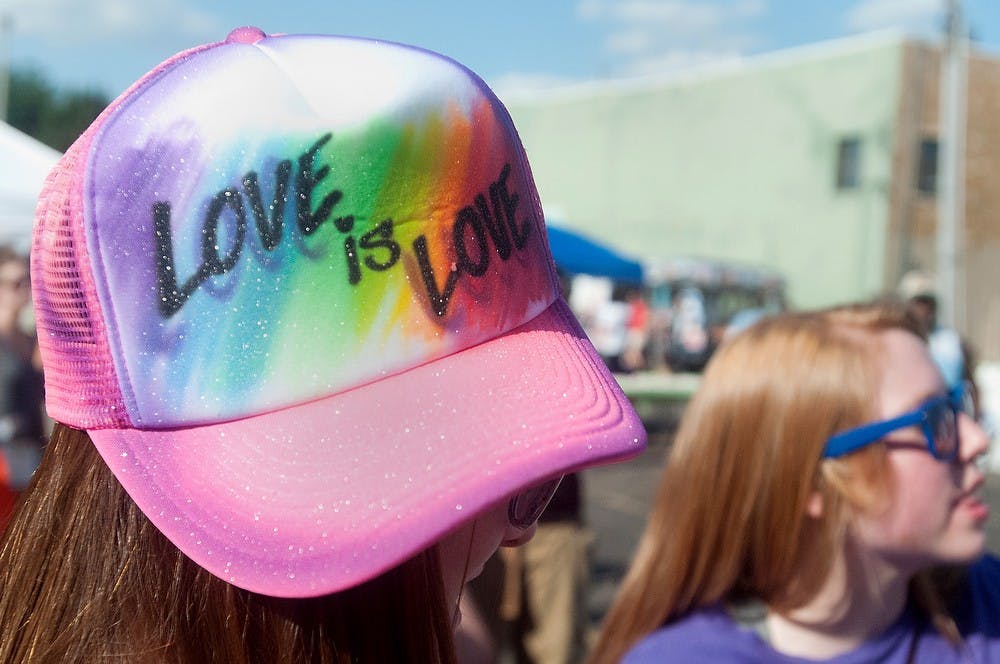
The manual covers topics ranging from MSU’s history and racial and housing dynamics to a guide on how to get involved in East Lansing’s local government. One topic that particularly surprised Reckhow’s students was the depth of LGBTQ activism in the region.
In 1976, East Lansing became the first city in the United States to ban workplace discrimination based on gender and sexual orientation — a milestone not often associated with mid-Michigan.
“You mostly think about places like California being at the forefront of LGBTQ issues in the 1970s,” Reckhow said. “It surprises people, but it speaks to a long history of advocating and organizing at MSU and in the surrounding community.”
Social work doctoral student Sterling Bentley authored the manual’s LGBTQ section, drawing on research he began about five years ago. As a member of the LGBTQ community, Bentley said he wanted to understand the history and policies of any cities where he might live.
Originally from North Carolina, Bentley said he was both shocked and excited to learn that East Lansing had been the first city to take such a significant step for LGBTQ rights — a discovery that played a major role in his decision to attend MSU.
Like the rest of Reckhow’s students, Bentley spent hours digging through public libraries, document archives and MSU’s special collections for sources. He said East Lansing and MSU’s commitment to preserving local history is significant for the LGBTQ community and helps combat the erasure of marginalized groups.
“I feel like queer and trans history has mostly been word-of-mouth because of how it’s tried to be erased, so this feels like a way of highlighting that history and trying to empower young people and (show them) this legacy that they come from in this area,” Bentley said.
Trans Day of Visibility also began in mid-Michigan. Lansing resident Rachel Crandall-Crocker launched the movement with a single social media post, determined that trans people should be celebrated, not only mourned.
“I was tired of only being seen when we were dead,” Crandall-Crocker said.
Since then, March 31 has become an international day of observance, where trans people and allies share stories and reflect on progress made. Bentley said it’s not only a significant piece of trans history for Lansing, but also an important chapter in social work history.
“(Social workers) want to approach things with strength, joy and resistance, which is what Trans Day of Visibility is all about,” Bentley said. “I’m really proud both as a trans MSU student and a social worker to know that Trans Day of Visibility started here and now it’s something international.”
Reckhow and Bentley hope the manual will serve as a helpful, informative and inspiring resource for East Lansing residents — especially MSU students. Reckhow said it’s vital for community members to know the city’s history and policies because whether they realize it or not, everyone is affected by them.
“Whether or not someone thinks they have or have not been part of a community that has faced discrimination, the reality is that we are all impacted by how we’re being represented in our government,” Reckhow said.
MSU students are a key demographic in East Lansing, and Reckhow believes the best way to achieve progress is for younger generations to make their voices heard in their communities — just as those before them did.
“It’s not one linear narrative, people definitely had to fight for acceptance,” Reckhow said. “I hope it’s inspiring for people to see that you can achieve impactful and important change through local politics. It’s a reminder that that matters.”
For Reckhow, Bentley and others who worked on the East Lansing Citizens Manual, the project is about more than local history. It is a reminder that change often begins close to home, and that students and residents alike have the power to shape their community’s future.
Support student media!
Please consider donating to The State News and help fund the future of journalism.
Discussion
Share and discuss “East Lansing Citizens Manual uncovers stories of local LGBTQ activism and progress” on social media.