Michigan State University has dissolved the Neighborhood Student Success Collaborative (NSSC) after a year-long internal review found its functions had been absorbed by other student support offices across campus. The closure took effect April 17 and included layoff notices for NSSC staff.
Vice Provost and Dean of Undergraduate Education Mark Largent said the NSSC was originally created in 2009 to foster collaboration between academic and student affairs, particularly through its work in Neighborhood Engagement Centers. However, in the years since, MSU has developed more robust and centralized student support systems making the collaborative redundant, the internal review found.
“The goal from the start was that the NSSC would start the work, draw the university’s attention to the necessity of doing that work, and they’ve done that,” Largent said. “This is not to say that the work that (NSSC) has long been doing or promoting isn't important, just the opposite. It has taken on centrality in most of what happens in the colleges, in the Multicultural Center, with student affairs and with academic affairs in general.”
Largent emphasized that no student-facing services housed within the Neighborhood Engagement Centers—such as CAPS, tutoring, identity-conscious programming or career services—are being shut down.
“Those spaces still continue, the functions that have gone on in those spaces still continue,” he said.
The decision to phase out the NSSC followed a review process involving Largent, Assistant Dean Genyne Royal and former NSSC leaders.
“We found that the work that had been originally done in and led by the NSSC really has taken off and has been very successful,” Largent said.
He pointed to several newer or expanded initiatives that now carry forward much of NSSC’s mission, including University Advising—a centralized unit offering academic guidance across colleges—and the Multicultural Center.
He also referenced cohort-based programs like TRIO Student Support Services, Detroit M.A.D.E., Dow STEM Scholars and the Vanderploeg First Generation Leadership Program, all of which support students from underserved and first-generation backgrounds through academic guidance and mentorship.
Data analysis, once managed by a single staff member within NSSC, is now handled by a team of four in undergraduate education, as well as staff in student affairs and the Office of Institutional Research.
“It’s much larger and better resourced,” Largent said.
While student support remains a high priority, Largent noted that student behavior has shifted post-pandemic and that demand for services inside residential neighborhoods has declined.
“The uptake of services in those residence hall spaces really never came back after COVID-19,” he said. “But if you go into the library right now, it’s packed.”
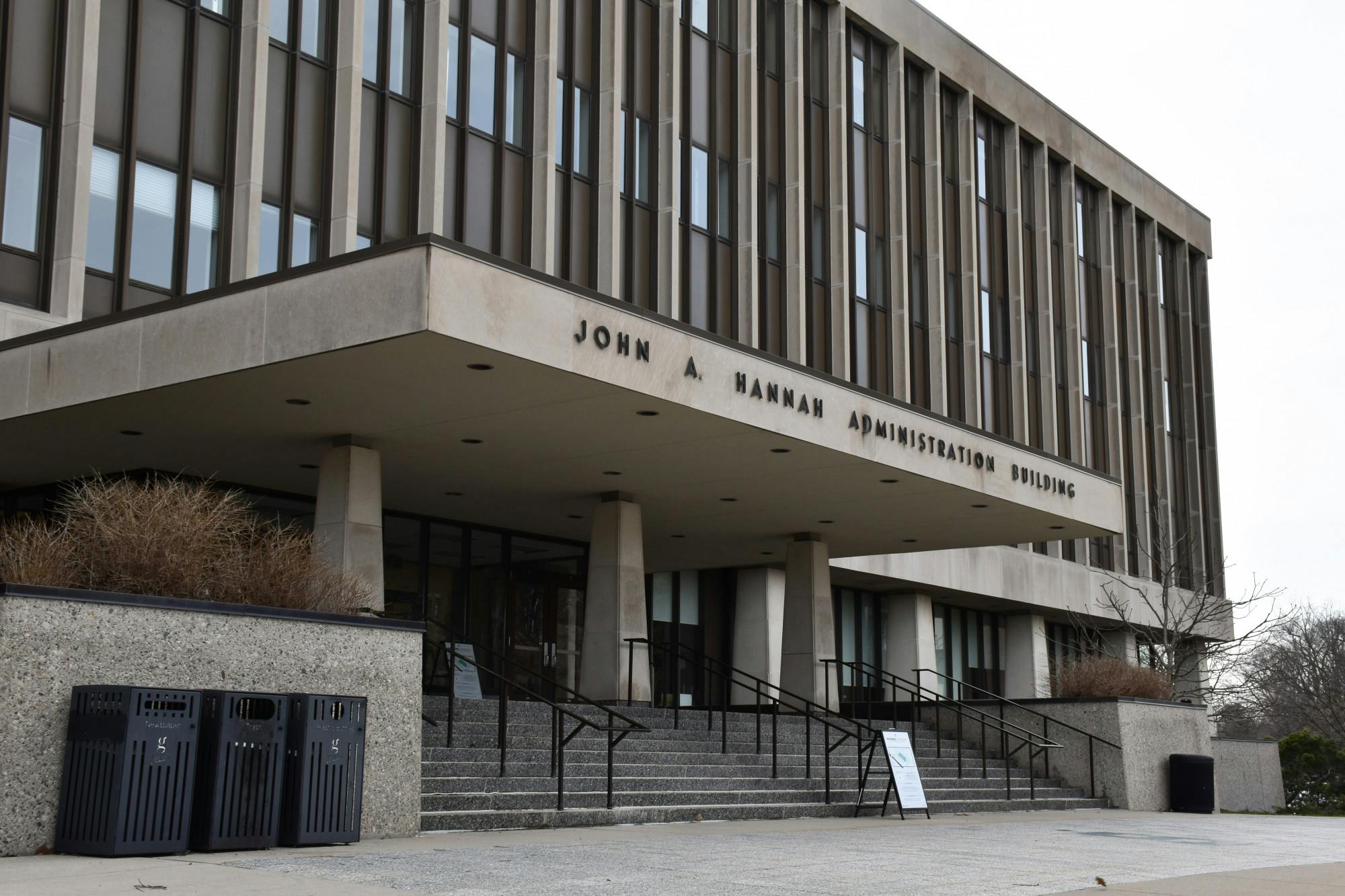
MSU is planning to open a new centralized Student Services with “Spartan One-Stop" on the first floor of the Hannah Administration Building this fall, consolidating administrative support such as financial aid, admissions and the registrar’s office. Largent said this change reflects a broader effort to meet students “where they are” in how they access services.
“More student support is always better than less student support,” Largent said. “The question isn’t, should we have more? The question is, what is the best way to arrange it and organize it and make it available to students?”
Though specific details regarding staff transitions were not provided, Largent emphasized the institutional impact the NSSC had.
“We’re national leaders in student support and student success because of the collaboration we learned how to do through the creation and operation of the NSSC,” he said. “The NSSC really changed the institution for the better.”
Support student media!
Please consider donating to The State News and help fund the future of journalism.
Discussion
Share and discuss “MSU retires Student Success Collaborative as student needs evolve” on social media.