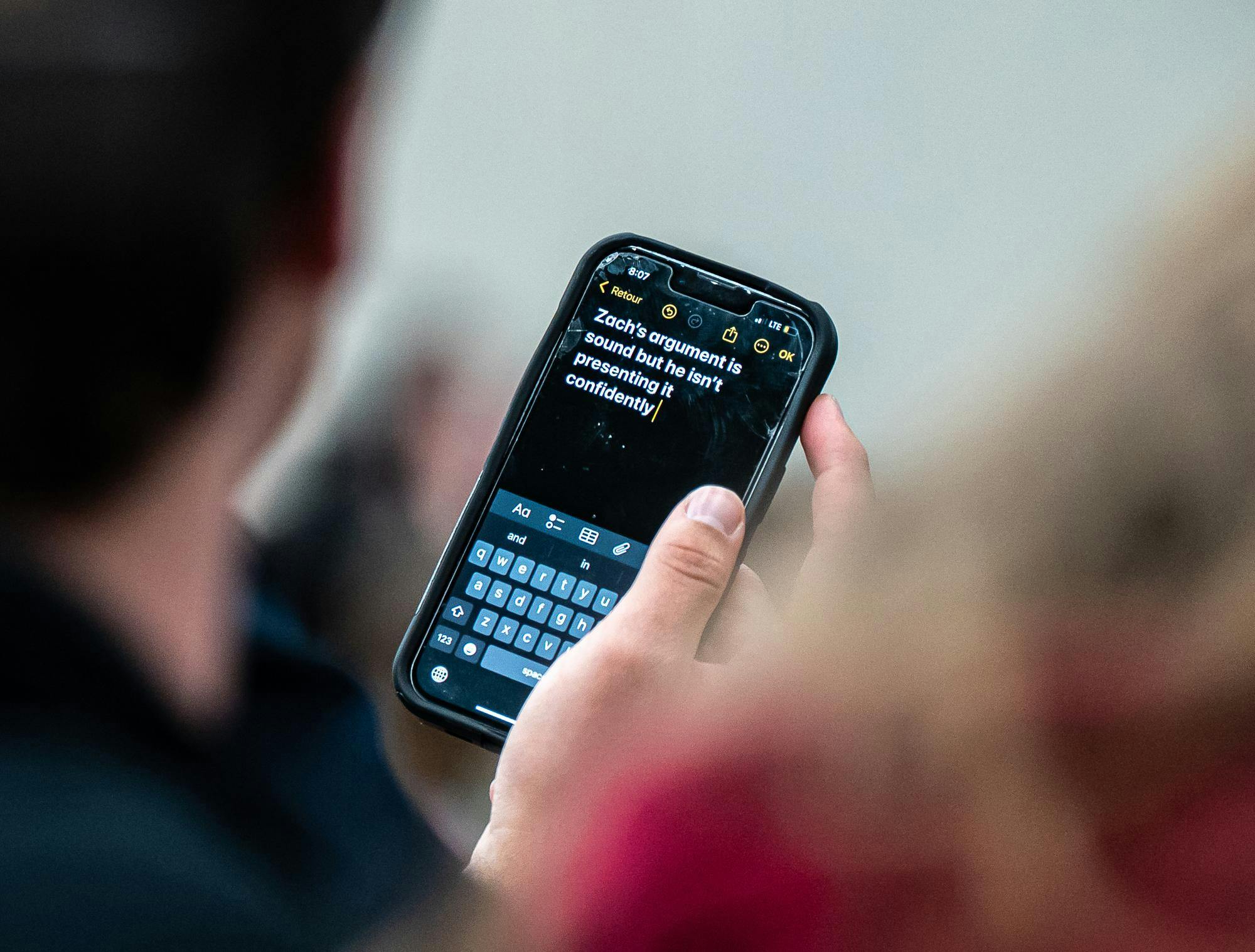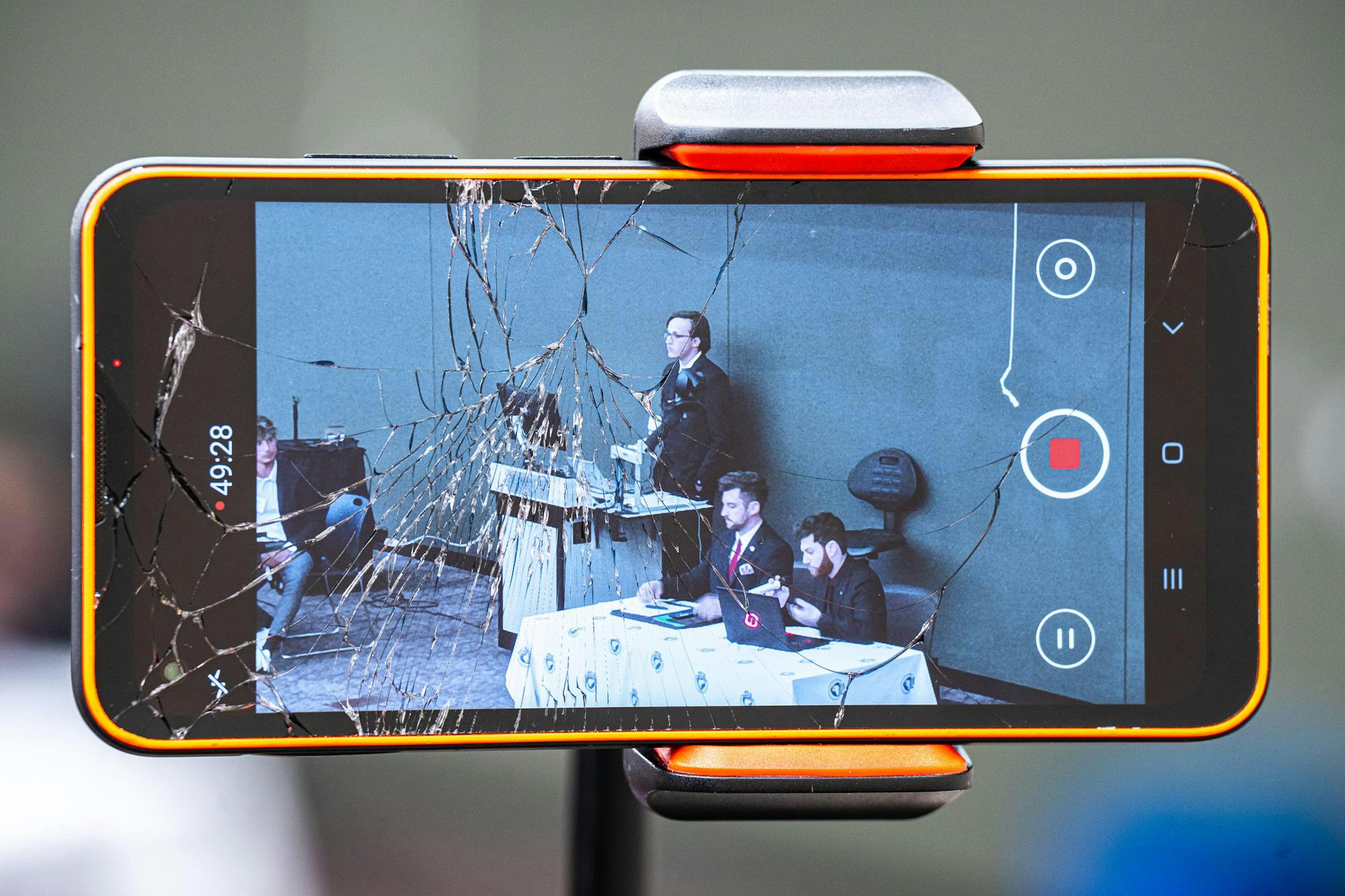
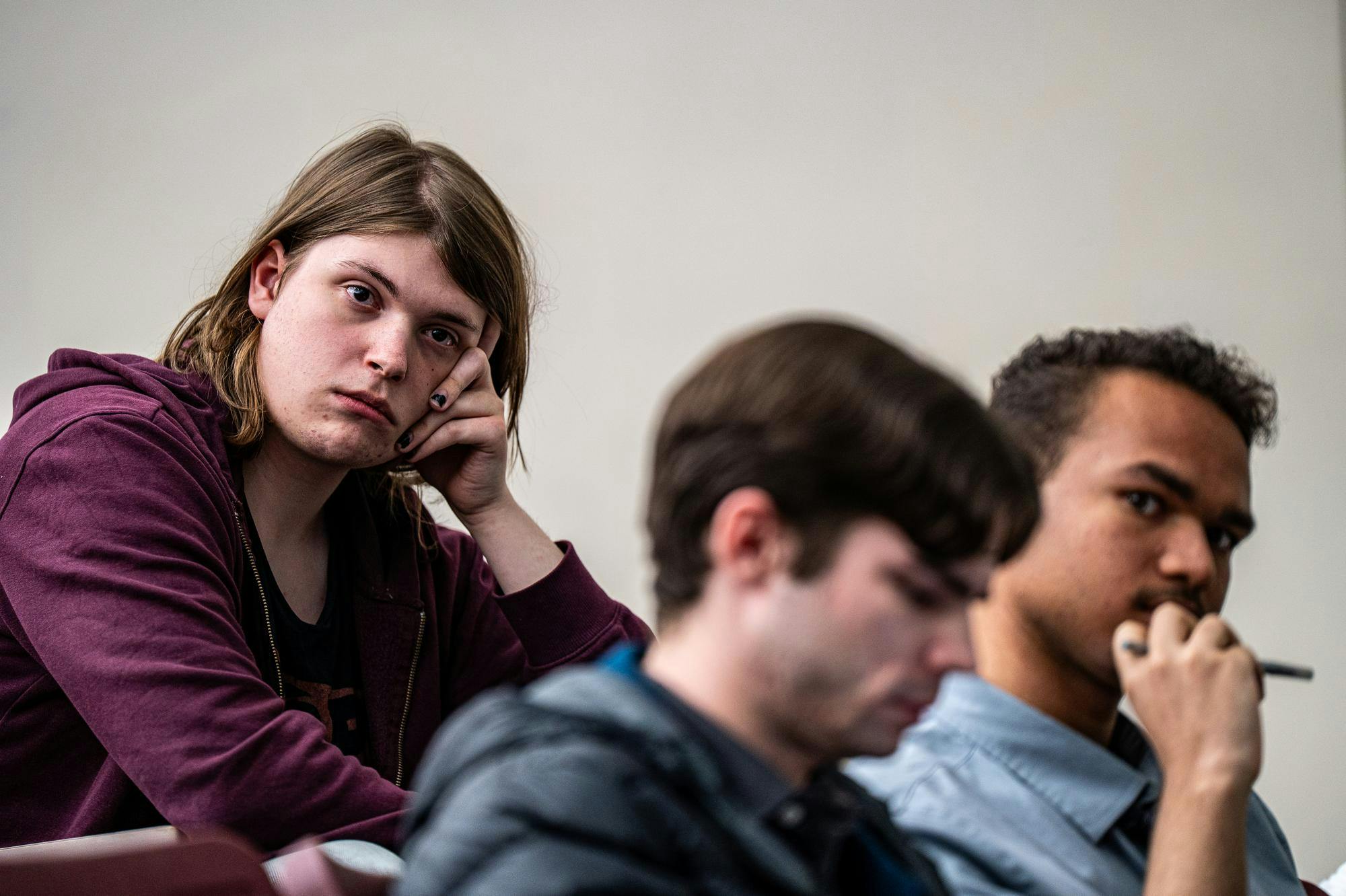
"I don’t know why we’re doing this," a member of the College Democrats said in the near-empty room N130 of the Michigan State University Business College Tuesday.
Off the banks of the Red Cedar River, a fight was about to go down, and not one of brawns or even brains for that matter. The members of the MSU College Republicans and College Democrats were having a battle of vanity, and they were determined to have a winner.
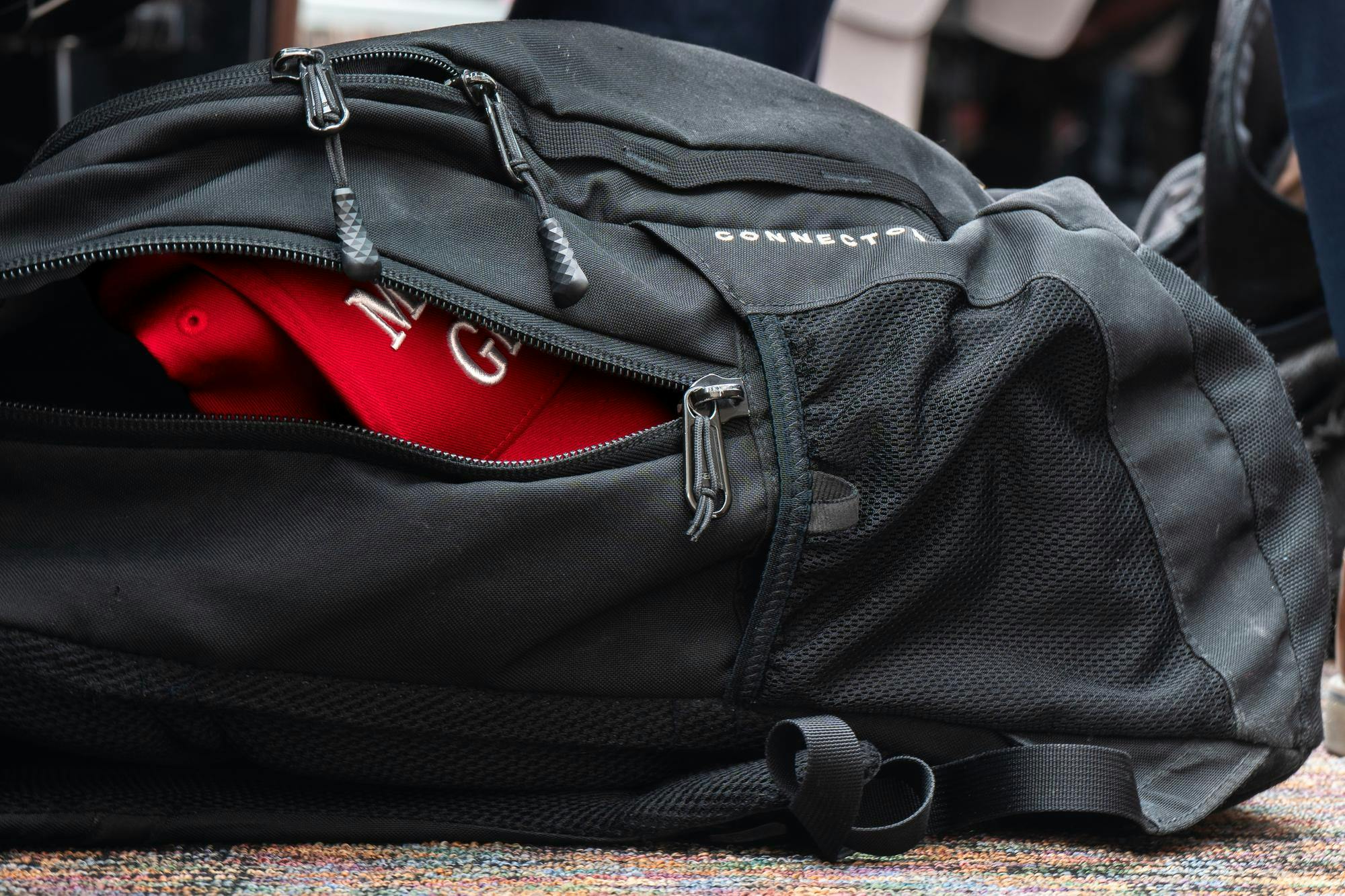
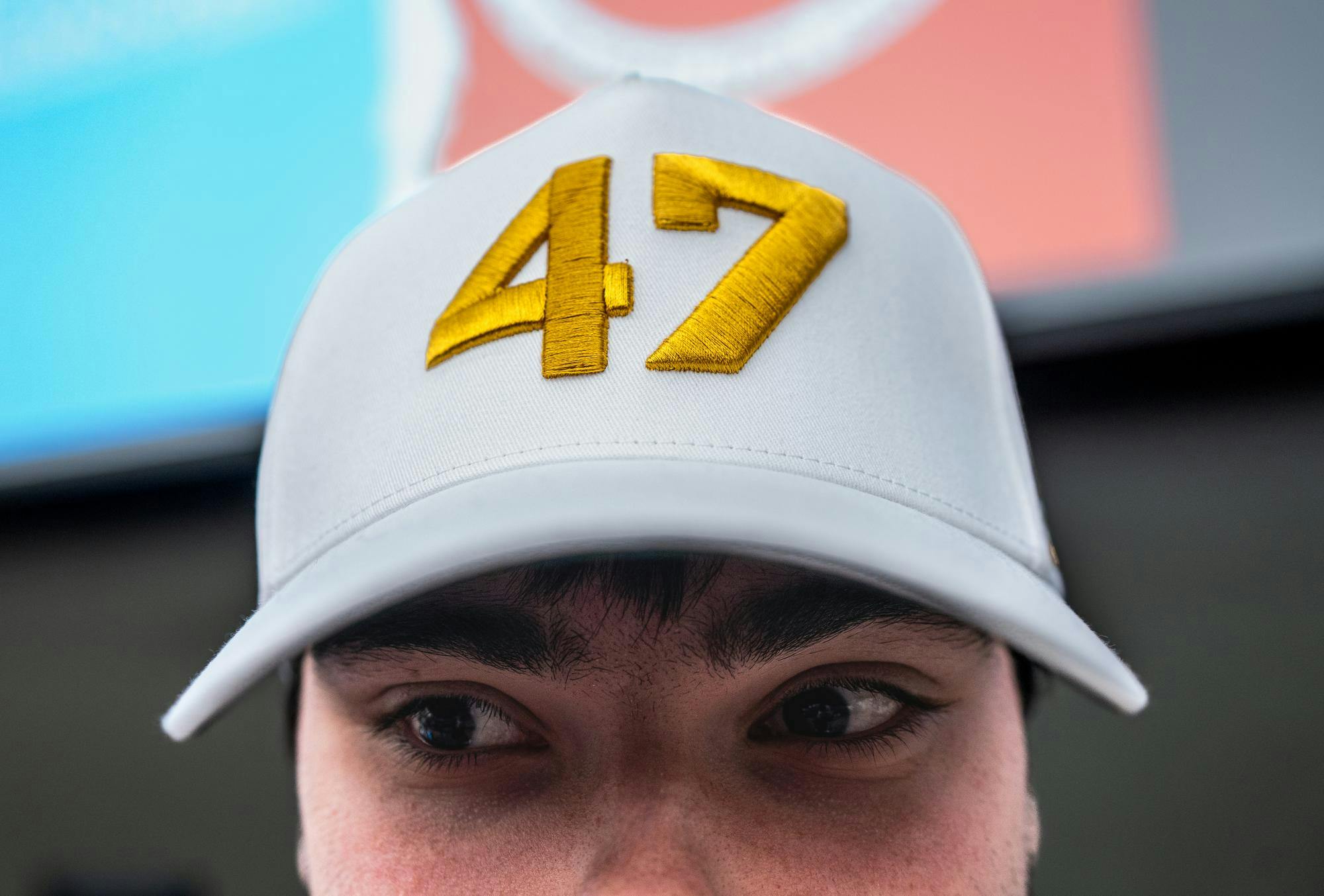
The large lecture hall was half full of spectators for the big fight when 7 p.m. rolled around. The Republican debaters were the first to arrive about 40 minutes prior, most of whom were wearing full suits and ties, matching each other in a type of traditional uniformity. The Democrats began arriving shortly after with some more diversity in their attire. Not casual per-se, but they brought more of a taste for color and patterns, with a few of them going completely casual for the debate.
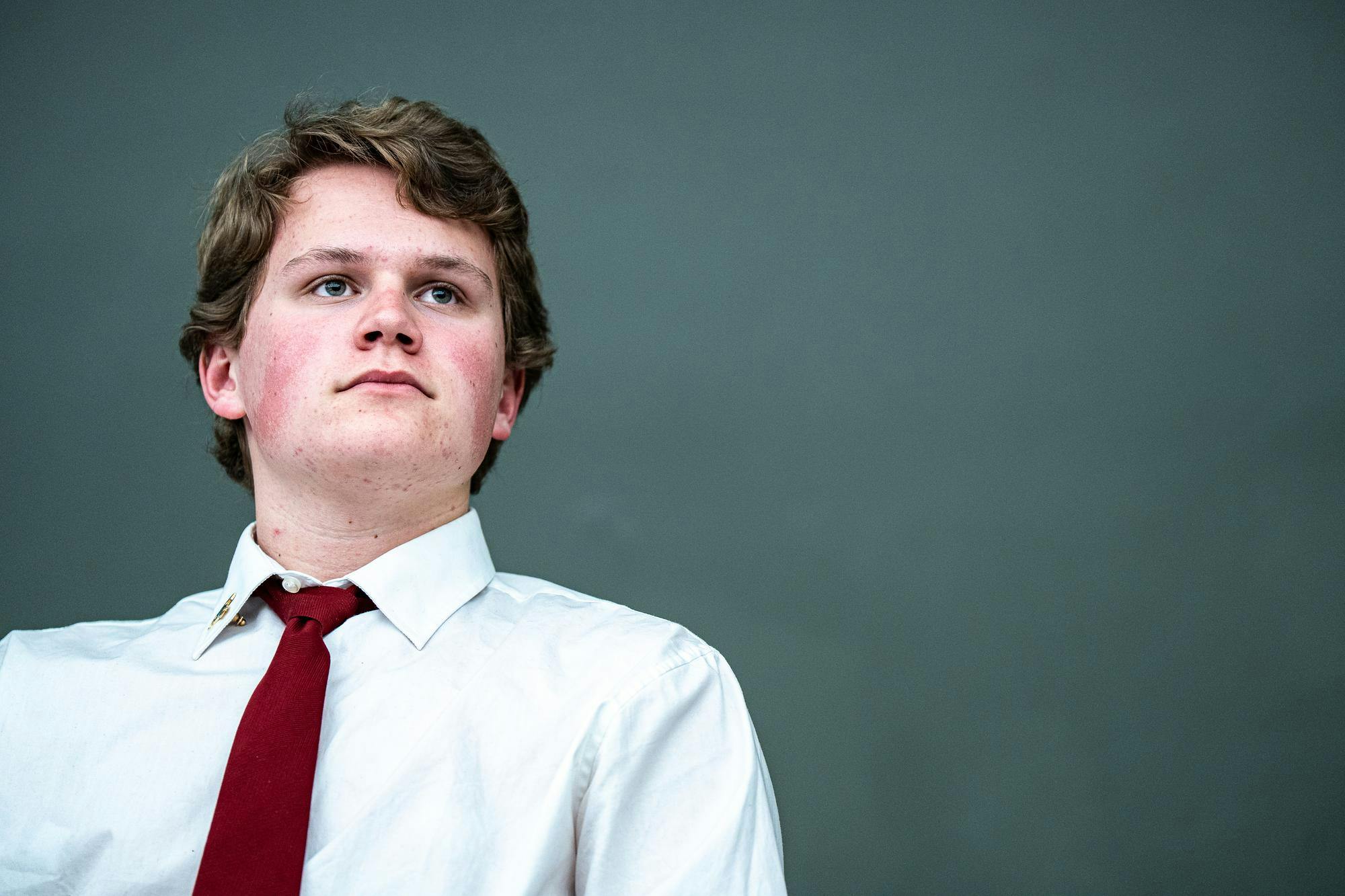
Regardless, there was a common color theme on each side: Republicans primarily wore red and Democrats blue.
A nervous excitement boomed between the two groups, paired with the hope that everyone was there in good faith. "It gets testy at times, you get at each other’s throats, but I know it’ll be civil and we’ll be talking about facts," debater and political science senior Zayne Bratschi said prior to the debates starting.
Each debate had a few rounds: The first round gave one of the two debaters three minutes to make their case in response to the resolution they were discussing, which was followed by a question from the opposing side and 30 seconds to respond.
The first debate was light, the type of thing to warm up the audience before the real heavy-hitting subjects fell into the ring. The resolution stated, "resolved: rent control is an effective way to control housing costs in urban areas."
The first pairs went up, the two Democrats to a table with signs reading 'Young Gets it Done' lining the edges. They were the first to go with a pro argument for the resolution, the debater’s eyes staying fixed to the paper on the table while he gave his speech. The following question and rebuttal periods were just as conventional.
Then the examiners got to ask questions.
While the William Howard Taft Society, formerly the Red Cedar Law Review, mediated the event, it also sought out examiners who would question each side. (It even asked The State News to lend a staffer, emailing the student newspaper in March that it was searching for an "ideally liberal or left-wing person" to examine the Republicans. The State News declined the request.) So, the role of the left-leaning examiner fell to Sinan Lal, an alum of the organization. The Democrats, on the other hand, were interrogated by Thomas McKenna from the Hillsdale Collegian, a conservative-led student newspaper out of the right-wing hive that is Hillsdale College. The two were tasked with having a free-form discussion with the debaters for three minutes in which they asked questions and responded to points.
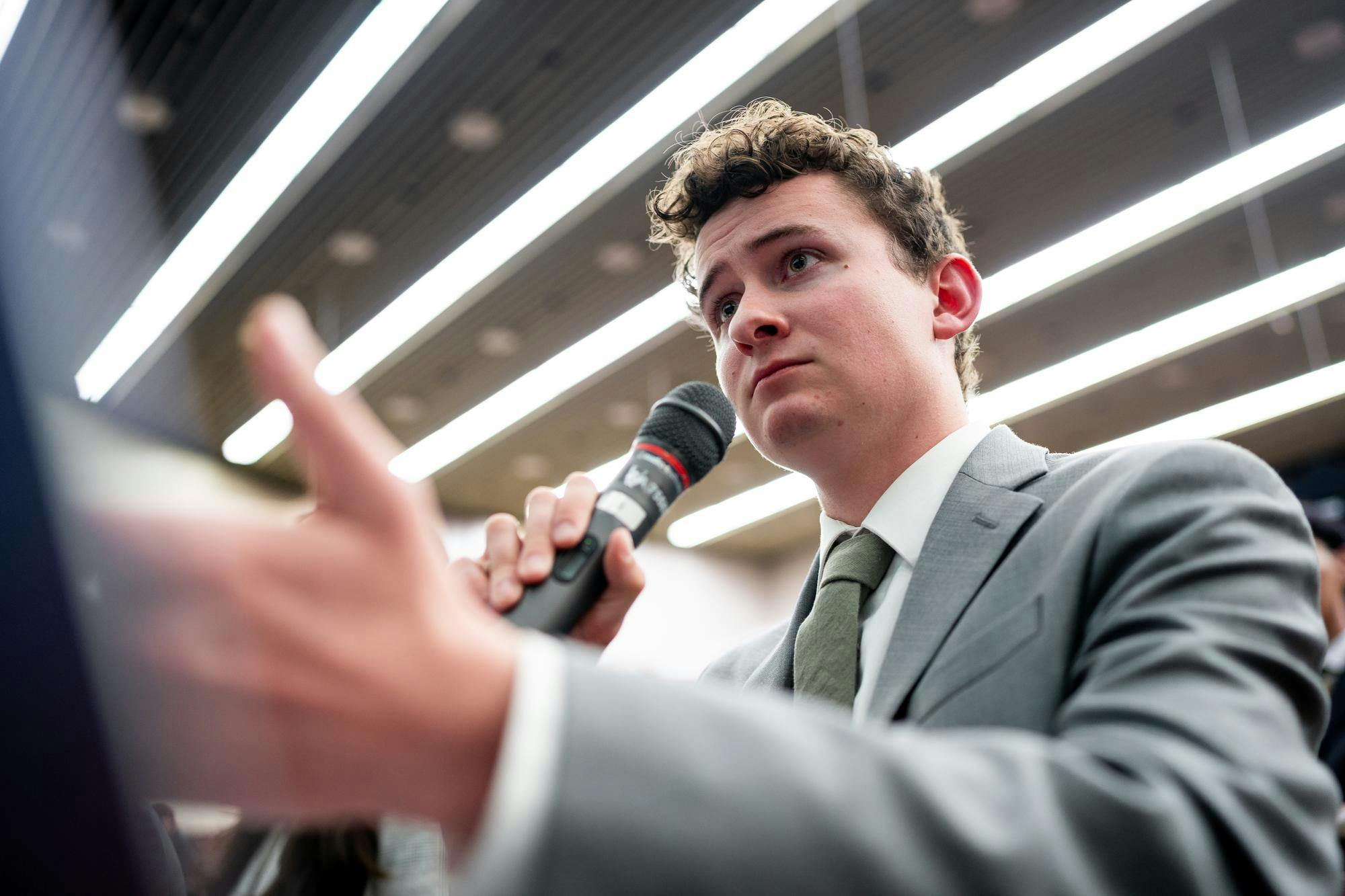
McKenna, in his time, asked if the government should introduce fixed pricing on other goods like eggs and cars, to which international relations junior Kai Baltes, a debater on the Democrat side, said yes.
"Which goods should we not put price controls on?" McKenna asked.
"Well, I mean this gets into the debate of capitalism, right," Baltes said. There were sparse audience chuckles at this as one of the Republican debaters mouthed 'wow,' before the debate returned to the prices of eggs. This became a recurring theme throughout the debate, and was part of the reason why the Democrats would widely go on to lose the next two rounds. The spectre of capitalism, which is arguably an identifiable cause for all of these issues, is too touchy of a subject and was thus left alone for the entirety of the debates.
But the first debate went to the Democrats nonetheless. It was a fight of endurance, and they took the cake due in part to Baltes’ ability to quickly string together defending arguments.
The next resolution, focusing on whether or not further illegal immigration would be drastically reduced through additional immigration enforcement, was a win for the Republicans before the debate even started. "I'm kind of surprised the Democrats wanted to discuss it, because I thought it was pretty resound that most people are against illegal immigration and want to see it reduced," said one of the debaters, philosophy junior Tyler Bommarito, prior to the event starting.
Bommarito’s comment was exactly what spelled the end for the Democrats. His opening arguments focused on typical Republican rhetoric: classifying immigrants as perpetrators of an "invasion," creating distinctions between "illegal" immigrants and "real Americans," and how borders are "not just lines on a map," and instead represent how immigrants are undermining American rule of law.
In response, the first of the fighters from the blue corner opened his speech with what might have been an attempt at a joke making fun of the Republican debater’s arguments: "Check the door, guys, there might be a Mexican in here!" he said. The comment was followed by a brief silence and some puzzled looks by audience members. Bommarito, having just leaned back in his chair, couldn’t contain a chuckle at the comment.
A joke about Mexican immigration in a large, public debate forum is a territory Republicans wouldn’t dare step into, even if they wanted to. The Democrats, who seemed like they operated under the assumption that they had the support of the audience at all times, came to be more comfortable in making such comments. There’s some truth to their assumption, as moments of applause for the Democratic side were in greater numbers than their adversaries.
Support student media! Please consider donating to The State News and help fund the future of journalism.
Because Republicans had an audience minority, they put up a defense of matching suits and a controlled manner of speaking that contrasted the zip-up hoodie and frequent cussing being put on by the first Democrat speaker of this debate. If the Democrats had a 'gotcha' moment, they’d turn to the audience for approval whereas the Republicans would whisper among themselves. The Republicans didn’t have the stadium pulse, so they directed their energy inwards, toward each other.
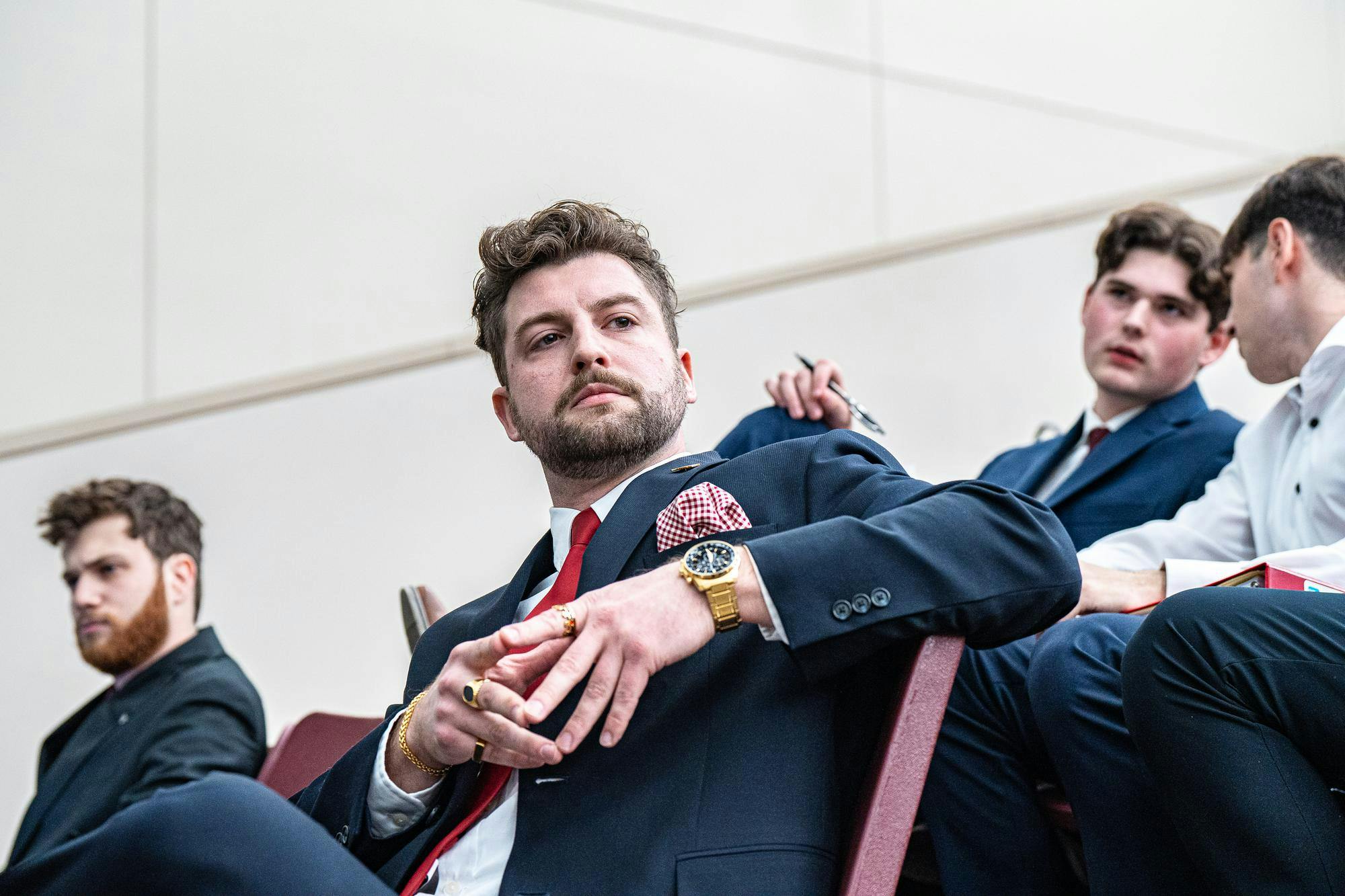
In this way the Republicans didn’t need to take any swings — it was instead the Democrats taking a cocky right hook so hard that it missed completely and their fist came back around to meet their own face.
The rest of the Democratic argument fell apart shortly after, due in part to the fact that Democrats will never take a human stance on immigration. They’ll never say that humans, by nature of existing on planet Earth, deserve the right to life regardless of laws and borders. They will never call into question the nature of state-defined crime, and for this reason they ended up debating on the Republicans’ terms last night — much like they ended up doing in the debate on firearms shortly after. This became especially evident at the very end of the fight when McKenna asked "you're against additional immigration enforcement because it would be too expensive. Is that right?"
The Democrat debater said yes, and was boxed into an argument in which she had to argue the economic value that immigrants bring as justification right before the timer ran out, leading to the Democrats hitting the floor in a late-round knockout.
Like round two, round three was a loss for the Democrats from the beginning. The Republicans brought a sense of formality and level-headedness to the table whereas the Democrats once again tried to get away with an audience-backed one-liner that ultimately fell flat. The debater was trying to string together a rebuttal for the resolution, arguing that certain guns take longer to load and fire than assault-style weapons.
"With an assault rifle, you just point and shoot," he said. "It’s like Fortnite."
The efforts of political theory senior Liam Richichi, the president of MSU College Democrats and the other debater at the time, did keep them in the fight toward the end, but began to fall when the Republicans made the debate about intricate gun knowledge, a winning battle for the pro side any day of the week.
The most powerful punch once again came from McKenna trying to get some sort of a plan out of the Democrats, asking the pair "Would you go into (people’s) homes and take their guns?"
"No we would not," the first debater responded before the sound of the gavel signaled the end of the round, leaving a lingering sense of confusion as to what exactly Democrats are arguing for.
The fourth and final round was the main event. The audience rumbled at the announcement of DEI being the final topic. It was at this point in the debate that the fight off the banks of the Red Cedar River became less of a boxing match and more of a WWE style wrestling match. The fight swelled with drama, perhaps being the most heated part of the night with the Republican side taking an anti-affirmative action stance, using the Asian American experience as an example of discrimination.
The second examiner, informing the Republican debaters that he himself is Asian American, asked what they have to say to people like him who feel that being exposed to different races and individuals across the socioeconomic spectrum was an enriching part of their college career.
"Seeing other cultures is actually one of the most beautiful things, and that's why people travel," the debater responded, which, like many of his points, was met by laughter and murmuring from the audience.
The fight, however, once again culminated in a heated exchange with one of the Democrat debaters (a freshman in James Madison College named Alana Mick) and McKenna. He asked if racially exclusive scholarships count as racial discrimination, to which Mick said no and began to explain how opportunities for scholarships exist for all kinds of students.
McKenna cut her off. "Sorry, I've got to bring it back to my question here. I’m afraid you’re not answering my question," he said. Mick tagged in her partner, James Madison junior Braxton Maduka, who began to explain in more detail.
McKenna cut him off: a jab then a hook, "I'm afraid you're not answering the question," he said before repeating his original question again.
Maduka blocked the blow with a simple "no."
Another jab: "Why?"
"Because white people typically already have resources to provide that for them. Other minoritized people do not and so we are trying to provide resources so that they can up the equal playing field," Maduka said.
In a weak defense, backing into the corner of the ring "Students might be disadvantaged, but there are many other ways to measure disadvantage," McKenna said. "Why are we picking skin color?"
Mick was tagged back in, throwing a few finishing blows, "We're not only picking skin color. You called me out for going to a different topic, but then you did the same thing," she said before returning to an earlier point that McKenna said wasn’t answering his question.
"Understood," he responded, backing into the red corner. He began asking another question before the audience cut him off with cheers and a loud applause. McKenna asked for those seconds back on the clock, but the winner of the round was clear.
In many ways the debate was a microcosm of the 2024 presidential election. The Republicans gained the upper hand through sheer radicalism and their ability to control the topic of the debate, whereas the Democrats failed to keep up through their inability to go as far as addressing the roots of these issues, and provide basis for their stances.
At the end of the night, Bommarito said he felt that the Republicans won the debate, "I’m sure (the Democrats) will say the same," he said, and they did. It seemed like the Democrats won two debates and the Republicans won two. But even if that wasn’t the case, there would still be no true winner.
Because when the excitement of the fight faded, it revealed a group whose interest was "owning the libs," as one of them joked beforehand, against a group who, while representing the party of progressiveness, failed to address pressing topics around campus as many activists so often do, made for a night where the only mutual ground the two groups could find was an itch to stroke their vanity.
Student activism and discourse has reached a point of stagnation for these reasons. So perhaps if Democrats wouldn’t shy away from the question of capitalism and debate was more focused on finding some sense of class unity, then the scattered left might be able to combat the rise of fascism in America. But until then, observers — and participants themselves — are going to keep saying "I don’t know why we’re doing this."