According to recent program data, between fall 2012 and fall 2013 the average amount of food waste per student increased by nearly 20 percent, or from 3.84 ounces to 4.83 ounces.
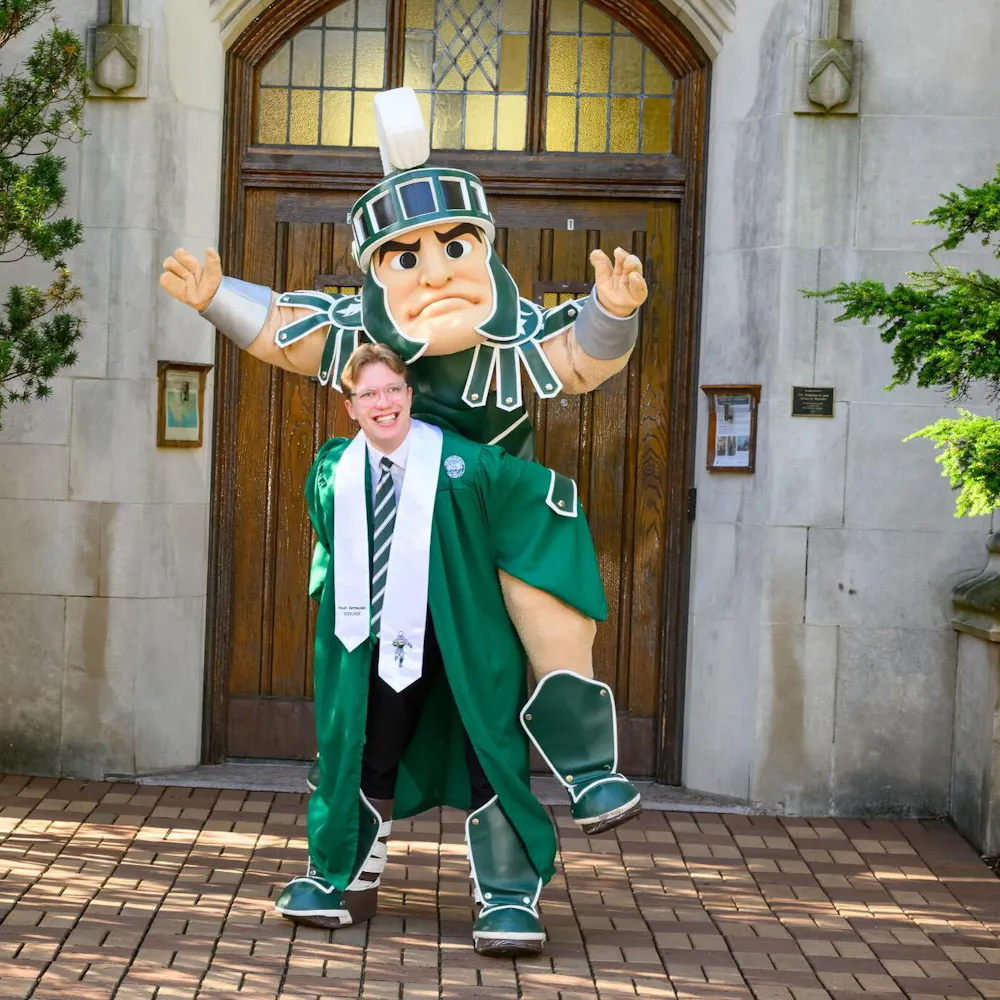
Residential and Hospitality Services, or RHS, has armed eight life-size cutouts of the MSU mascot with food waste slogans and facts to raise student awareness about trashing leftovers.
Each week four cutouts are stationed at two dining halls during the lunch rush. It’s part of Clean Plates at State, a program tasked with educating students on sustainable food practices.
Steven Brickel, RHS departmental aid and environmental studies and agriscience junior, said the Sparty cutout campaign is a fresh way of garnering student attention. Brickel said the campaign has many students talking about food waste, and some others about wanting to snatch the MSU mascot.
The program also collects leftovers on certain days, weighs them and concludes an average amount of food waste per person. Brickel said the environmental and economic benefits of lowering food waste are secondary to alerting students about being conscious of their actions, because those benefits come when each student acts sustainably.
“If I throw one banana away, it’s not anything,” he said. “But if 40,000 students do, there are implications.”
RHS Sustainability Manager Carla Iansiti said driving down food waste is a collective effort, such as dining hall workers communicating with patrons about personalized serving sizes. Along with the cutout Sparty’s, Iansiti and her team uses presentations and advertising to bring food waste to students’ attention.
“Food waste is a problem no matter where you are, and everyone can contribute in fixing it,” Iansiti said. “Clean Plates at State is about bringing awareness to student food waste on campus and how we can be conscious of it.”
Office of Campus Sustainability Director Jennifer Battle said Clean Plates at State aligns with university goals of reducing landfill waste by 70 percent by 2017.
Battle said while most of food waste is diverted to the anaerobic digester, composting and other programs, organic material still is a large portion of the university’s landfill waste.
“It may not seem like a big deal on the surface, but when you think of how much is consumed per person, it adds up,” Battle said.