When biomedical laboratory operations junior Colleen Blake was in high school, she was an avid volunteer through the National Honor Society, fundraising primarily for cancer treatments and other community outreach programs.
Blake said she wants to help kids with cancer and still participates in Relay for Life, but she has been less involved in community efforts since starting college. Instead, she notices more people joining groups or liking causes on Facebook.
“I never see people actually out (doing things),” she said. “It stops there and doesn’t go further.”
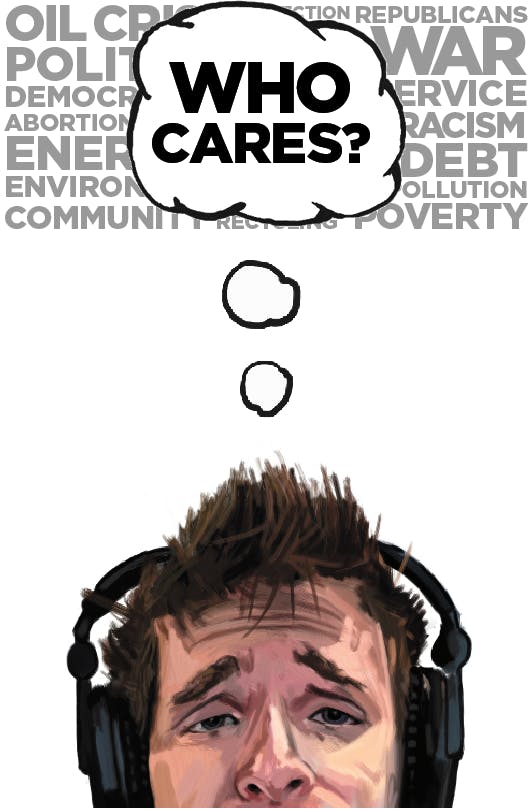
A recent study out of San Diego State University, published last month, stated millennials — those born in the 1980s or 1990s — are more likely to have done required community service in high school but are less likely to show continued interest in the environment, political activism or community outreach in college.
Compared to previous generations, millennials also are concerned with money and reputation more than self-acceptance or community, the study found.
Blake said young people want to get involved, but most outreach is through social media, where they can like a page without getting their hands dirty.
“More people donate money and have someone else do it, (rather) than get up and do something themselves,” she said.
Sociology professor Carl Taylor said he agrees with much of the study’s findings, particularly about civic complacency compared to previous generations in addressing political or social movements.
“We have not trained or educated young people on subjects such as the war, to protest for civil rights or women’s rights,” he said. “We’re very focused, as the older generation, on getting them to go to school and pursue careers, and that’s what they’ve done.”
But Karen McKnight Casey, director of the Center for Service-Learning and Civic Engagement, or CSLCE, said service work at MSU is an exception to the rule of young people not being involved.
“I believe that the folks who did the research did quality research,” she said. “However, my experience and my reality is a very different view. Some students, and most students that are out there, are engaged with community.”
Growing involvement
The number of students involved in service work has grown considerably during the past decade, Casey said. MSU had fewer than 5,000 students certified for service through the center in the 2000-01 academic year, but grew to almost 18,000 students in the 2010-11 academic year, according to data from the CSLCE.
The service options at the CSLCE span from work required for a course or curricular reasons, supplementary work to a course or student-led initiatives the center supports, Casey said.
The San Diego State study also found the trend of increased volunteer work stems from more high schools requiring community service for graduation.
Many students come to MSU with volunteer experience already under their belts, which Laurie Thorp, director for the Residential Initiative on the Study of the Environment, said was a shift from what she saw 10 years ago.
Thorp said more high schools are prepping students to be engaged, so when students enter college, they might be interested in getting involved in the community.
“No doubt there’s a percentage of students here and in high school who do it to build their résumé, but I also know there’s a large percentage who deeply care about the planet and helping local communities,” she said.
A lot of students know what employers want to see in charitable activities, Taylor said, which is why most students want to have volunteer experience before college.
But Taylor, who primarily works in distressed urban communities, said much of that service work lacks consistency or sustainability if the student’s motive is only to have something to show for the experience.
“Sometimes people take a romantic viewpoint of volunteering, that everything is going to be, for lack of a better term, peachy cool,” he said.
Support student media!
Please consider donating to The State News and help fund the future of journalism.
Technological changes
Casey, who has been involved with service-based programs at MSU since 1993, cited an end-of-the-semester survey done by the CSLCE in spring 2010 assessing why students partake in community engagement. Fulfilling responsibilities of citizenship was ranked highest by student participants, followed closely by fulfilling class requirements.
Casey said in the 1960s and 1970s, when protests were more common on campus, MSU facilitated student activism by encouraging students to become involved in the issues of the day.
But students were more active during those decades because they were involved in a “protest generation” that wasn’t so connected with today’s technology, which has accelerated young people’s lives, Taylor said.
Communication sophomore Lea Mackenzie, who has been involved in Relay for Life while at MSU, said this generation has more on its plate and not as much time, which might lead to less visible involvement outside of social networks.
“I feel like kids these days want incentives, rather than taking the initiative themselves,” she said.
Despite many young people interacting with social or political movements on the Internet — a large youth base is what spurred then-candidate Barack Obama to the presidency in 2008 — not all people who engage online translate to volunteers.
Casey said the influx in technology can isolate people and turn them inward, away from community outreach, but it also can spread the message of available service opportunities, and some people lean more one way than the other.
But Taylor said although more service opportunities are available through the Internet, it can be misleading to think the service is sustainable or always will have lasting effects.
“Technology is the breakpoint, and quite frankly, I don’t see the genie going back into the lamp,” he said.
Take Our Survey!
Discussion
Share and discuss “Who cares?” on social media.