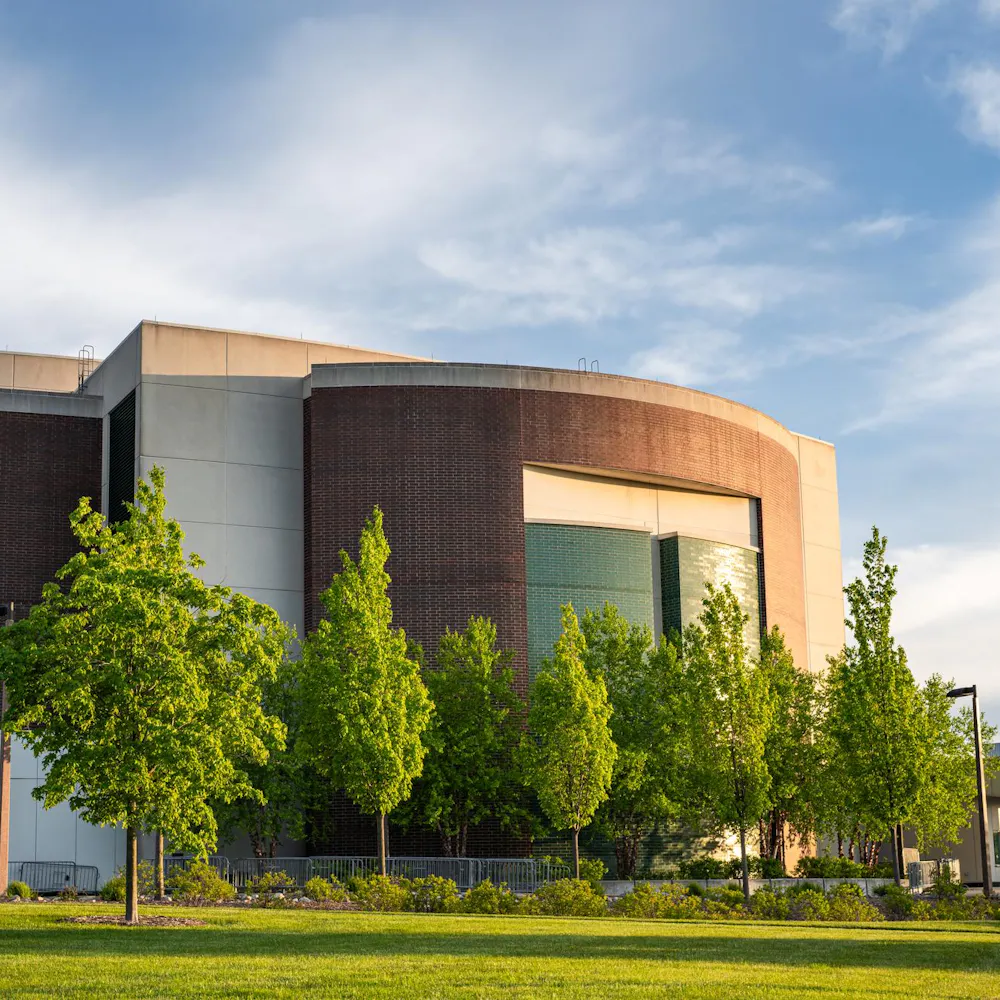
A woman sentenced to 22 years in prison for committing an act of arson to Agriculture Hall in 1999 requested an appeal of her sentence Tuesday.
Marie Mason of Cincinnati pleaded guilty in September 2008 to conspiring to commit arson, aggravated arson and arson for the Agriculture Hall fire set on New Year’s Eve 1999. She currently is serving the sentence in Fort Worth, Texas.
“(The) case (was) argued — there’s no way to know when the decision (comes) down,” a U.S. Court of Appeals 6th Circuit official said Tuesday.
More than a decade ago, Mason and then-husband Frank Ambrose set the offices of the Agriculture Biotechnology Support Project, or ABSP, on fire to protest the federally funded research on genetic modification of potatoes. The goal of the research was to learn how to make food more accessible for underprivileged populations.
Niether Mason’s family nor her defense attorney, Anastase Markou, returned phone calls Tuesday.
John Minock, who represented Mason during her criminal trial, said if the appeals court deems Mason’s sentence unjust, the judge who handed down the original sentence most likely would reassign the sentence.
“I hope they see it for what is — a harsh aberration (of a typical arson case),” he said.
Ambrose was sentenced to nine years in prison and ordered to pay more than $4 million in restitution. Mason also was sentenced to pay more than $4 million.
The arson caused more than $1 million in damage and took about a year to repair while offices temporarily were relocated to Olds Hall and Wills House.
Mason and Ambrose were members of the Earth Liberation Front, or ELF, when they committed the arson. ELF is a radical environmental group that uses violence as a means of protest.
Catherine Ives, director of the Office of Technology Transfer & Licensing at Boston College, was director of ABSP during the incident and said although her job was impacted significantly, it did not prevent her or her team of researchers from moving forward.
Still, she said it was a frightening incident to have her main office impacted with no real justification on behalf of the perpetrators.
“I don’t think there was intent to harm people — though it certainly could have done that — but nonetheless, it is not a good thing to be targeted,” Ives said.
After the blaze was extinguished, it was discovered no actual research was destroyed other than Ives’ own personal papers and presentation slides. If plants and other research tools were destroyed, they would have been irreplaceable. Financial data was recovered from a fried hard drive, she said.
“The (judges are) the ones that will bring about justice and I leave it up to them to decide whether that (sentence) is justice served,” she said.
David Schweikhardt, an MSU professor in the Department of Agricultural, Food and Resource Economics, said he heard a faint explosion — sounding like the collision of two cars outside — on the floor above him on the day of the incident and dialed 911.
After grabbing a few belongings from his office, he walked to the northeast side of the building and saw flames coming out of the third floor window.
“I saw the fire on the floor above mine and after I had called, as I recall, I took a few things from my office and left,” he said. “I had no idea what it was.”
MSU spokesman Tom Oswald said he did not have any additional information or a comment concerning the latest developments in the case.
Staff writer Emily Wilkins contributed to this report.
Support student media!
Please consider donating to The State News and help fund the future of journalism.
Discussion
Share and discuss “Agriculture Hall arsonist files appeal” on social media.