National media attention to NASA's rover landing on Mars is attracting a crowd of starry-eyed gazers on campus.
Presidential talks of moon walks and celestial rocks from the Red Planet have rekindled the once-dying interest in matters out of this world to a new space-age generation.
So soak up the space hype, grab a telescope and unravel the mysteries of space. Stargazing is not only cheap and exciting, but it's just around the corner and above your head.
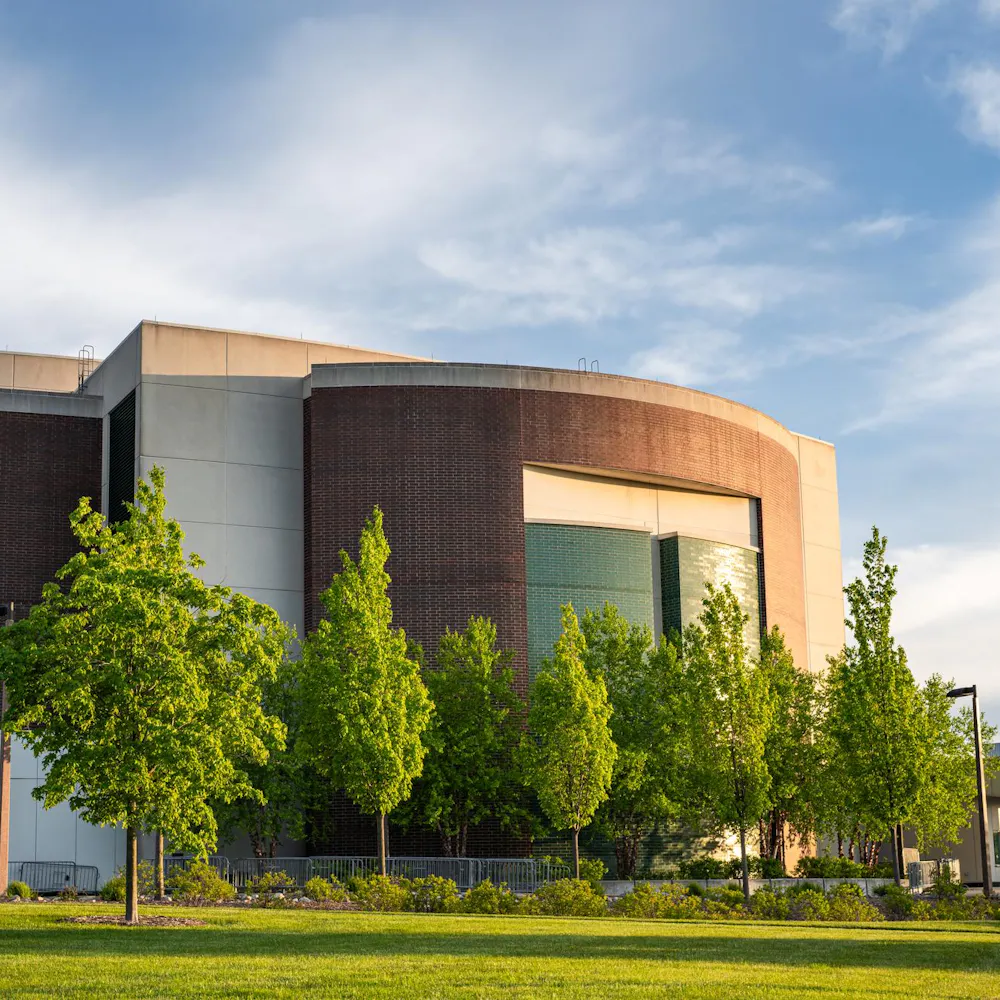
Abrams Planetarium provides an outlet for MSU stargazers to get lost in space - on campus.
Shane Horvatin, an education coordinator at the planetarium, said his job description at the planetarium includes helping people decipher what is happening in the night sky.
"(The news on the Mars orbit) made people think that it was only going to be visible that one time," he said. "Part of what I do is clearing up misconceptions about what is happening in the night sky."
Horvatin said there are several objects in the universe to watch for this week, including Mars, once darkness falls and skies clear.
"After sunset, Saturn will be visible in the eastern sky by 6 o'clock, and by 9 o'clock, Venus will appear," Horvatini said. "In the early morning, Jupiter is visible in the eastern sky."
Astronomy Professor Horace Smith said the upcoming months will shed light into further space program developments, including plans of the possible creation of a habitable space station on the moon, Smith said. His class will focus on using scientific measurements to observe the night sky and also will study the developments of the two rovers that landed on the red planet.
"The first of the two rovers, The Beagle, landed, but it hasn't barked back to us yet," Smith said.
You don't need a class to become a stargazer though.
Many resources already are available on campus for students with a growing interest in astronomy.
After the last rays of light disappear over the horizon and darkness settles over East Lansing, members from the Capital Area Astronomy Club meet outside Abrams Planetarium for a sky talk with planetarium Director David Batch. The group, united in its galaxy interests, carries its telescopes out to the parking lot to get reacquainted with the night sky.
Michael Rogers, the Capital Area Astronomy Club secretary, said recent NASA developments have sparked interest in the club.
"When the stuff hits the news, a lot of people come into our shows, which sell out, because people want to know what is going on," Rogers said. "The news increases awareness of the universe around us, and people are more aware that there is a lot more out there besides our blue little planet."
Although stargazing can be enhanced with a nice telescope and fancy equipment, they're not essential.
Rogers recommends a better way for beginners to view the heavenly night show.
"People just starting out should start with a pair of binoculars to learn their way around the sky," he said.
The planetarium also provides free sky calendars that map out each night's visible constellations and teaches an instructional program that will be offered in February to help people learn how to use newly acquired telescopes.
Although the bright campus lights help ensure safety for students, the illumination in turn makes it quite difficult to catch a completely dark view of the vast universe.
Known as the cloudiest months of the year, Rogers still finds that January and February are great for seeing some of the brighter celestial occurrences, such as meteors, moon phases, the major constellations and the movement of planets.
"It is worthwhile every time to take a look at the sky and see what is going on," Rogers said.
If you can't bear winter's biting winds, you can attend one of the area's planetariums.
After drifting through a hallway adorned with an intense array of astrological neon-colored wall sculptures, illuminated underneath black light, Abrams Planetarium patrons can take a seat on a red recliner underneath a 50-foot dome and watch an artificial 3-D star show.
Last Friday, Abrams resurrected a program on the Milky Way, which begins with a booming narration on the history of the celestial wonder.
Surrounded by darkness, the show is similar to an IMAX experience as the innumerable firefly-like stars explode into a cascading array of light. The show concludes with a supernova space ride that has people reaching for the stars as their stomachs jump into their throats.
Only a sticky handlebar, the faint aroma of vomit and loose seatbelts could make the experience more like the real thing.
After a long stint of the daily grind, skip the mindless TV dramas and watch a star show produced, directed by and starring nature.
The astronaut ice cream is optional.