A string of computer viruses infected thousands of campus computers last week and left students scrambling to remove them before classes began today.
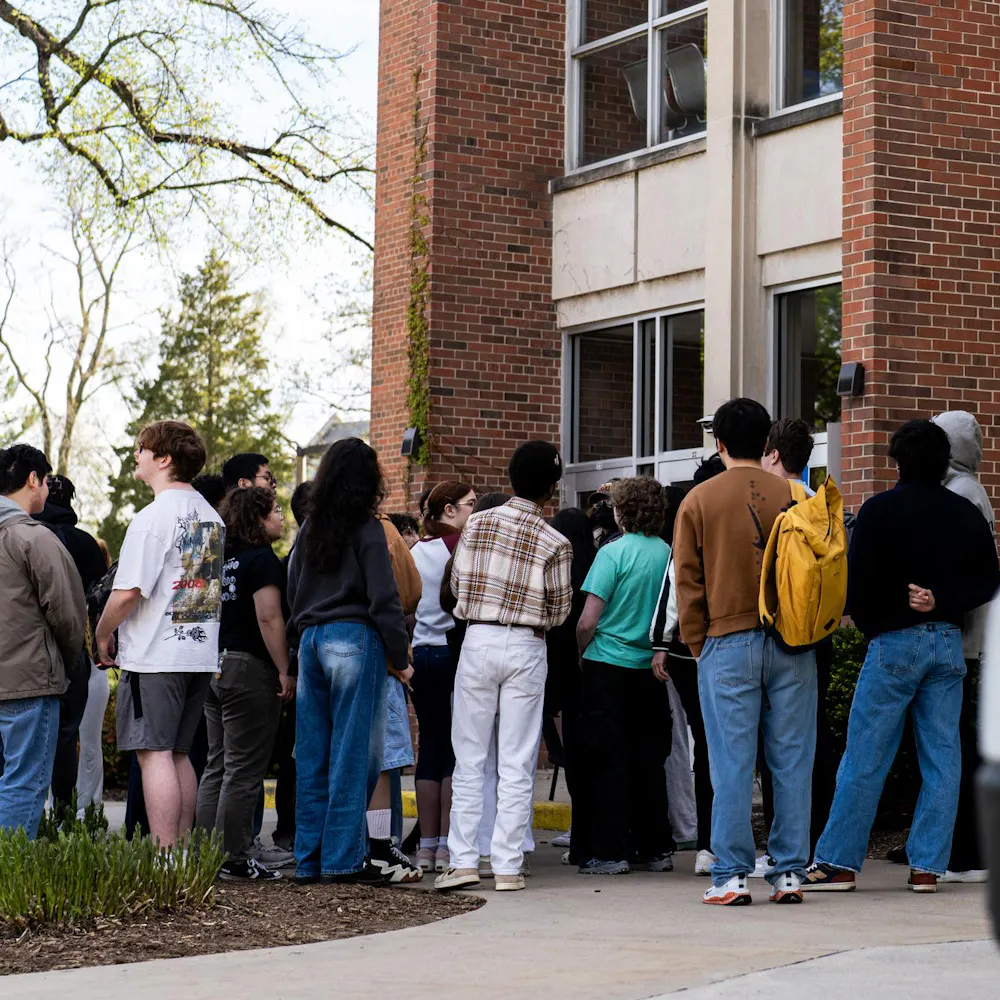
Students took a number and waited in the crowded MSU Computer Center Thursday before their computer problems could be fixed, and staff worked until midnight taking phone calls from disgruntled computer users.
Four worms have been infecting computers nationwide, with three known culprits affecting MSU. One of them, the Sobig worm, is an e-mail-borne virus that infects a computer, duplicates itself then sends those copies as an e-mail attachment to infect other computers. Wiggins said he was worried Friday the worm might "explode" into a big problem, but that hasn't occurred.
The Welchia and the Msblast worm, also known as "blaster," cause network problems. The Msblast worm is the most widespread virus in the world.
MSU's campus is only one of many campuses nationwide affected by the spread of the viruses. The worms already wreaked havoc at the University of Wisconsin-Milwaukee, Stanford University and the University of Michigan.
"Some of the anti-virus companies are saying this past week has been the toughest week in the history of the Internet, and I would have to agree," said Richard Wiggins, senior information technologist at MSU's Computer Center. "It certainly would've been more convenient had these viruses arrived, say, in May, while most of the students were gone."
The total number of infected computers at MSU cannot be accurately calculated, Wiggins said, since many students with infected computers have disconnected them from the campus network. But the amount of infected computers probably totals in the thousands, he said. Wiggins wouldn't give an estimate of when the virus issue could be solved.
Engineering freshman Keith Dehenau said he was upset when he lost access to the network Wednesday night.
"Everything with the computer seemed to work fine until I tried hooking it up to the network," Dehenau said. "I wanted to e-mail my adviser, but I had to call instead."
Wiggins said Computer Center staff members can isolate certain network ports to effectively block student access, preventing further spread of the worms. The process also will lower the chance that a person in one residence hall can affect computers in another, Wiggins said.
As of Sunday, Wiggins said there have been about 1,500 computers blocked from network access. He added that a couple hundred have been unblocked, and another couple hundred are waiting to be unblocked.
"Because the network is so fast, the rate with which these things spread is incredible," Wiggins said. "They're almost like the perfect virus in that they spread so quickly and can infect any student's computer.
"The most important thing to keep in mind is if you're running an unpatched Windows XP computer, unplug it," Wiggins said. A virus patch is a virtual Band-Aid that safeguards a computer's weak areas to keep viruses out.
"Once you plug that (unpatched) computer into the network, you will be infected."
But students aren't alone in dealing with the problems caused by the worms.
Lou Anna Simon, MSU provost and interim president, said her office trashed 500 junk e-mails on Wednesday alone.
"Now that we've become a technological society, the computers we rely heavily on are easily susceptible to attack," Simon said. "Students have to be reactive, as well as alert about the warning messages we send out to them."
She said students should take personal responsibility keeping their computers up to date with the latest anti-virus software to avoid worsening the problem.
"We're dealing with a whole new, nasty little bug," Simon said.