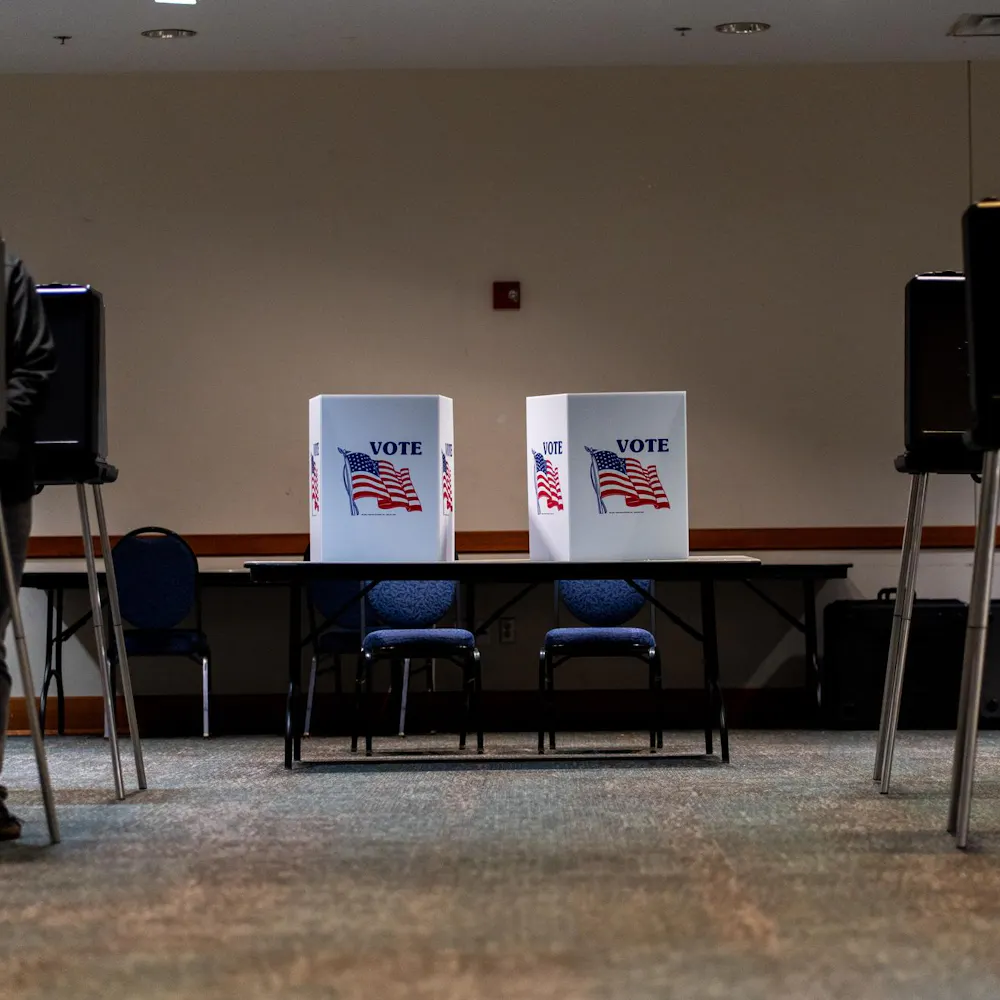
With Lansing's primary race less than 24 hours away, council members and citizens are spending one more evening finalizing their choice for mayor.
While some council members say Mayor Tony Benavides and state Sen. Virg Bernero will most likely be the winners of the primary election, the three lesser-known candidates say they still have a good chance.
Leon Black, Mary Ann Prince and Melissa Sue Robinson have all said they feel they will at least come in third on Tuesday.
The top two candidates from Tuesday's primary race will compete for mayor at the general election on Nov. 4. The winner will finish out the remaining two years of former Mayor David Hollister's four-year term.
Candidate Gerald Rowley, a drywall finisher, withdrew from the race on Thursday for "personal reasons." His name will still appear on the ballot because he did not file his withdrawal paperwork by the May deadline.
Benavides is a former council president and was promoted to mayor in January when Hollister left office to work for Gov. Jennifer Granholm's administration. Lansing's mayoral position pays $107,000 per year and helps manage the city's $100 million budget.
All the candidates agree on some prospective goals for Lansing, a city of more than 120,000. Some of those goals include dealing with downtown development, decreasing uninhabitable rental housing and improving the educational system.
"There's always a balance between downtown development and reaching out to the citizens in the neighborhoods," Councilmember Harold Leeman said.
Leeman, who's been a council member for eight years, said he hopes to see a candidate win who will make sure the city brings in enough money to balance the budget.
Benavides said his 22 years on the council have kept him in touch with citizens.
"My whole challenge here is to try to get their agendas and their interests into a common goal, and do what is best for the city," Benavides said.
Part of his work as mayor would be to boost downtown development with new businesses and housing, he said.
Bernero, a state senator, has had previous political experience as an Ingham county commissioner and state representative.
If elected, Bernero said he would focus on building strong neighborhoods by getting rid of uninhabitable housing and establishing a business adviser to attract and keep small businesses.
"We need to take care of the little small businesses that day-to-day are making decisions of whether to stay in Lansing or whether to locate in(to) Lansing," Bernero said.
Black is a retired computer analyst for the state and said he would work to bring "jobs, people and businesses" to Lansing. He said he hopes working with the school district could accomplish his goals.
"We have masses of people leaving this city all the time," Black said. "We lose people and we lose quality people. They take their family out of here because of the school system."
Black also said he would work to have the sidewalks of senior citizens and people with disabilities shoveled for free during the winter.
Prince, a retiree from the Michigan departments of community health and education, said she hopes to improve the school district by asking corporations to donate money and supplies.
Prince also said that if elected she would not decrease rental housing but work to assist renters who have trouble financing their houses.
"There are funds we can find to keep them in their home," Prince said. "I think those people deserve any kind of help the city can give them."
Robinson is a supervisor for SBC Communications and is the only transgendered candidate running for mayor.
Robinson hopes to help pass a $70 million school millage for the district.
"We need even more money than that, but you can only ask the taxpayers for so much," she said. "Our schools need to be able to compete with the private schools and the suburban schools."
No longer running, Rowley would not comment on who he would be voting for and said he's unsure whether he plans to try to run again in two years.
"It really depends on whether whoever gets it really changes things or not," Rowley said.
Tuesday's primary will be a mix of politically experienced candidates and lesser-known citizens, and some council members say the future Lansing mayor must know and understand Lansing in order to win the spot.
"It's easy to have ideas and sit on the sidelines, but you're not understanding what got us to where we are," Council President Carol Wood said.
Wood said Lansing's mayor must work to bring new businesses to the city.
"It's so important to exhaust all the bases we can in order to entice businesses to come to Lansing," she said.
Other council members said the future mayor should be more in touch with citizens.
"The person who is mayor needs to be able to reach out to people, be empathetic and sympathize with the community," Councilmember Sandy Allen said.
Some community members say they hope to see a mayor who would work more with neighboring cities.
"Surrounding areas are only as strong as the central city," former Lansing Community College Trustee Olga Holden said. "What happens in Lansing definitely impacts everywhere around it."
Sarah Frank can be reached at franksa2@msu.edu.