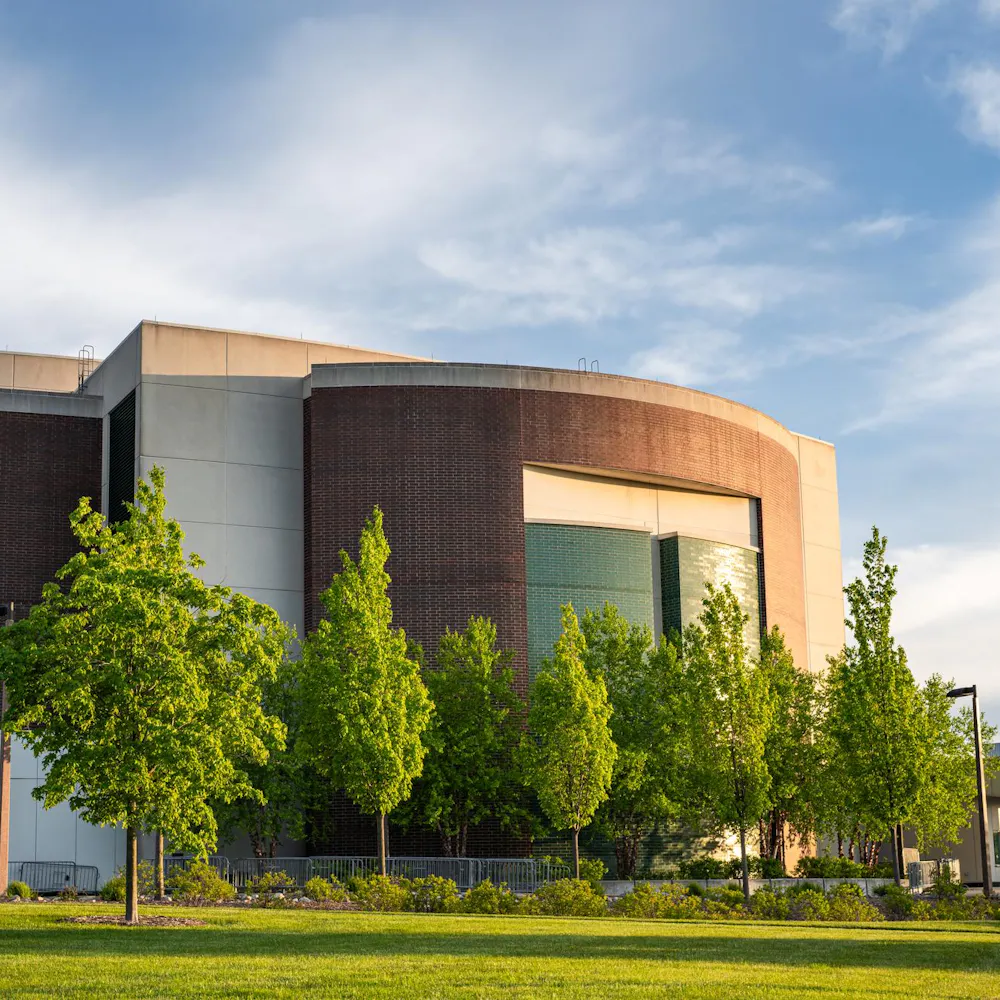
Security measures in MSU's residence halls, home to 15,500 students, could be reshaped when a report is released next week.
The campus community began scrutinizing hall safety in January when two Case Hall students were threatened at knifepoint in their dorm room. Parental outcry prompted MSU administrators and students to form a committee to re-evaluate security procedures.
Finding a "balance of our sense of community with our sense of safety" is a priority for the new Residence Halls Security Committee, co-chairman Tim Liss said. The committee plans to convey findings of the report to MSU President M. Peter McPherson.
Liss, also president of the MSU Residence Halls Association, joined student leaders, police and housing officials on the six-person committee looking to make campus safer.
But he said he doesn't want students to feel like they are in a "convenience store with cameras following them around."
To better gauge students' feelings about campus safety, the committee hosted campus forums, conducted a survey and met with parents.
Suggestions included small adjustments such as more lighting in hallways and outside buildings, and better training for night receptionist staff. More elaborate measures included adding security cameras and card swipe systems at every entrance to a living area - which includes rooms, bathrooms and hallways -in the dorms.
The committee also consulted other Big Ten universities and residence hall associations for advice.
For every 1,000 dorm residents, about 65 felonies occurred at MSU, according to the FBI's 2001 Uniform Crime Report, the most recent numbers for MSU. Those figures are similar to numbers reported at the University of Wisconsin and Purdue University and are below statistics reported at University of Michigan. Reported felonies can range from murder to larceny.
MSU regularly re-evaluates security, but is seeking more student input in the latest round of checks, University Housing Director Angela Brown said.
"I think we have a pretty good system," the committee co-chairwoman said. "The challenge is to get the students to follow those rules. The propping open of doors, allowing people in you don't know and a lot of other things that circumvent the system, compromises safety."
Living with security
Tucking himself against the concrete corner of U-M's West Quad dormitory, Tim Williams shielded himself against a bitter February wind. Williams, wearing just a maize rage T-shirt, waited outside for his pizza.
"It usually doesn't take this long," the U-M junior said. "When I called they said the driver was on his way."
At U-M, pizzas aren't delivered to dorm rooms, as they often are at MSU. A swipe card system only grants access to residents. Visitors rely on old, bulky red-painted phones, a cell phone or a friendly hand to get inside.
Williams said he has no problem with the swipe card system, but said "it seems like if people really want to get in they will."
"You have to have the card to get in, but basically anyone will hold the door open for you."
Williams paused to swipe his card and open the door for a man whose hands were full, a black duffel bag in one and case of pop cans in the other. A few moments later his wait was rewarded with a yellow Hungry Howie's box.
At MSU, when Rory McClintock orders in, the pie is delivered directly to his McDonel Hall room.
Unlike U-M, MSU dorms are open to the public until midnight when night receptionists swipe identification cards.
McClintock, a bioengineering junior, who says he feels safe in the dorms, doesn't favor adding security measures because they are often inconvenient and could be costly.
Adding a 24-hour swipe card system would be hassle, he said.
"I have friends come up from home, they know where my room is and they just come up," he said. "And I have friends across campus