A former MSU student and researcher was charged Tuesday with lying to federal authorities about misusing more than $400,000 in federal research grant money.
The U.S. Attorney's office in Grand Rapids filed a complaint against Scott Matthew Doree, a former microbiology graduate student, accusing him of making false statements to FBI agents, mail fraud and misapplication of fraudulently obtained federal funds.
According to the complaint, Doree admitted to staging the theft and faking his research, partly because of "pure laziness."
If convicted, Doree, a 28-year-old Howell resident, faces up to five years in prison and a $250,000 fine, Assistant U.S. Attorney Lloyd Meyer said.
Doree will appear in federal district court at 2 p.m. Monday in the Ford Federal Building in Grand Rapids for an initial appearance, after which a federal grand jury will decide whether there is probable cause he committed the crimes.
Doree did not return phone calls Thursday night.
After graduating from MSU in May of 1997, Doree enrolled as a microbiology graduate student. That fall he became involved in a federally funded project to find a vaccine for actinobacillus pleuropneumoniae - a deadly pig bacteria.
However, police and FBI determined his graduate studies were fake, after an investigation following the alleged theft of his research material concluded they never existed.
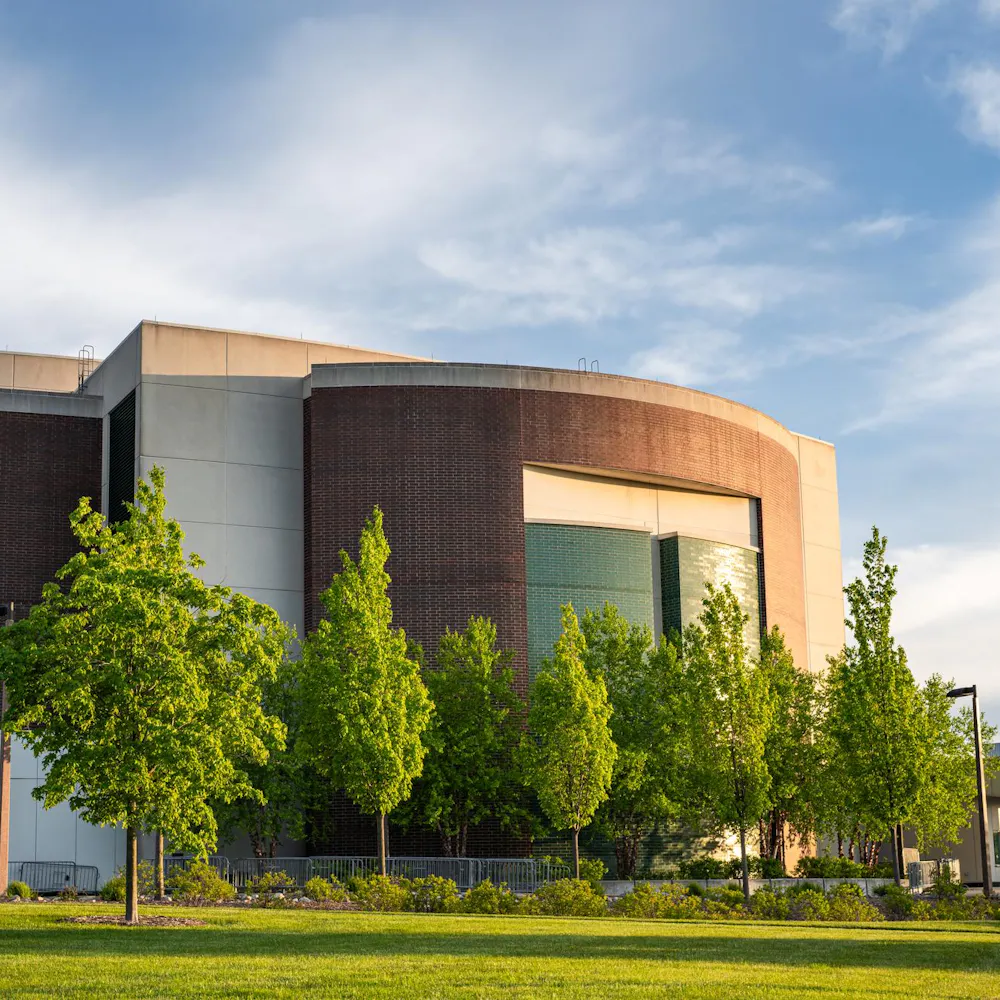
Doree, who expected to continue with post-doctoral work at University of Michigan, alerted police on Sept. 13 - his last day at MSU - that his work had been stolen from a locked laboratory in the Biomedical and Physical Sciences building. The "missing" research materials included notebooks, computer disks and two vials of the bacteria.
The theft touched off a statewide alert to veterinarians, urging them to prepare to treat the bacteria.
However, within 96 hours of Doree's call, MSU police found that he had entered the lab twice before dialing 911, and Doree could not account for the time lapse between the entries.
The building uses a computerized key card system, which Meyer said was a main reason why Doree was so quickly identified as a suspect.
"In a lot of places in the country, people feel security is lax," Meyer said. "That's not the case at MSU."
Regardless of the outcome of Doree's case, the university is committed to the proper conduct of researchers, said Bob Huggett, MSU's vice president for research and graduate studies.
"We're going to look to see what went wrong and how not to let it happen again," he said.
To assure researchers use grant money properly, MSU has mentors oversee their work, Huggett said. Doree's mentor, microbiology and molecular genetics Professor Martha Mulks, declined comment on Doree's charges.
Huggett said while "it's a tragic situation," he does not believe the incident will harm future researchers' requests for grant money.
"MSU has thousands of grants and contracts," Huggett said. "We perform very well. We're very respected. I don't expect this to change that."
Genetics Professor Helmut Bertrand, who works in the microbiology and molecular genetics department, agreed with Huggett the case shouldn't affect the status of future research projects.
"Granting agencies are aware something like this can happen occasionally," Bertrand said. "There are thousands of people who are very honest and careful about their research for every case where something negative happens.
"There should be proper dealings with the person who committed this particular fraud, but not repercussions to the innocent."
Melissa Sanchez can be reached at sanche96@msu.edu.