Tracing the history of DNA from Gregor Mendel’s pea plant experiments to James Watson and Francis Crick’s discovery of the double helix, Harvard University Professor Emerita Ruth Hubbard spoke to a crowd of about 200 Wednesday.
Hubbard, who lectured on “How the Genome Became the Book of Life” and focused on issues addressed in her book “Exploding the Gene Myth,” said scientists have over-conceptualized DNA.
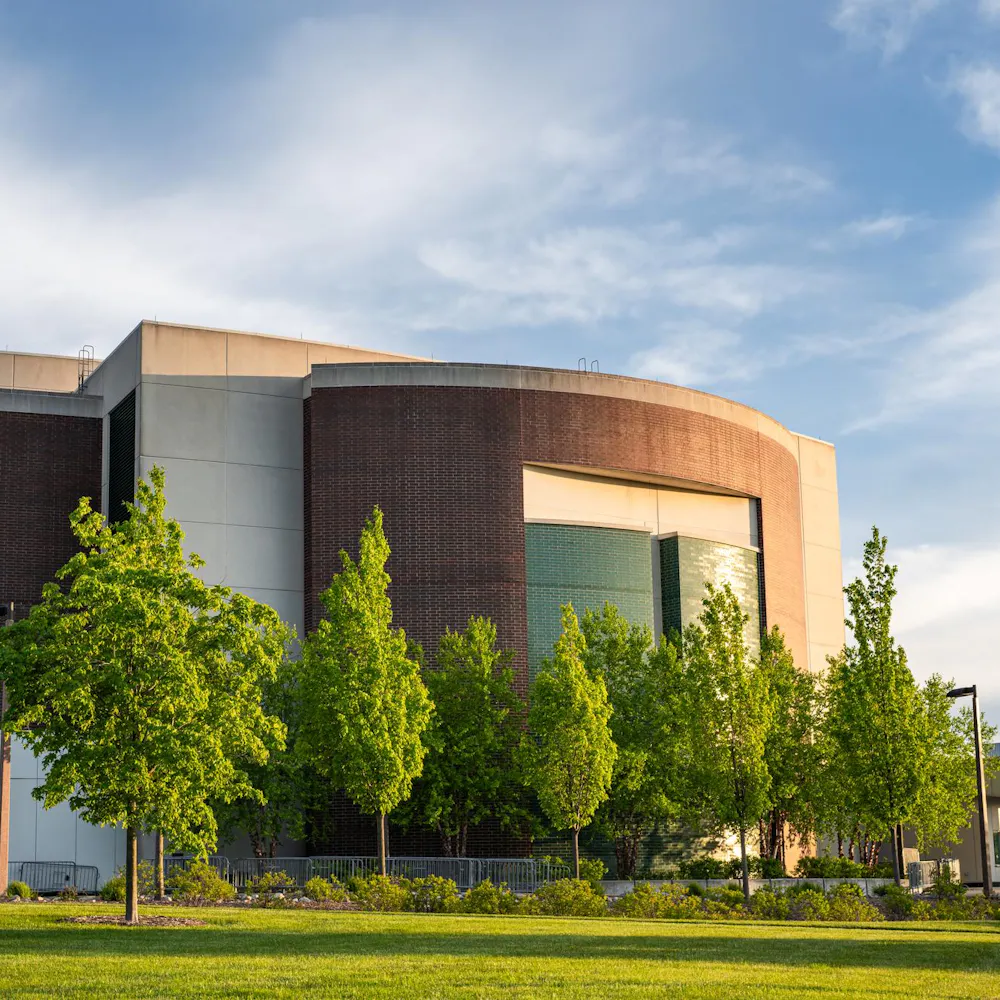
“In this process (of cracking the DNA code), what got conceptually pushed aside is that DNA is a part of a cell that divides and replicates and lives in a complicated situation with its environment,” she told the crowd at the Auditorium on Wednesday night.
“Somehow the complexity of this molecule got erased as we focused on computing this linear sequence instead of focusing on the squishy cells and molecules on which life gets played out.
“We must remember that by itself, DNA is just a gooey glob that does nothing - it’s just a glop that sits there.”
Hubbard, the first woman to be awarded a tenured biology professor position at Harvard, became a professor of biology at the university in 1974. She was awarded the title of Professor Emerita in 1990 after serving fellowships at College Hospital Medical School in London and a Guggenheim Fellowship at Carlsberg Laboratory in Copenhagen, Denmark.
Her speech was the third of five McPherson Professorship lectures. The lectures were funded by a $2 million anonymous donation that MSU President M. Peter McPherson and his wife, Joanne, have decided should focus on science.
The series is tied in with Natural Science 491, Science Changing Society, a class offered to all undergraduate students at MSU.
Visiting lecturers address the public and give a lecture to the class the following day.
Hubbard blames the over-conceptualization of DNA on the way it has been portrayed during the decades.
“The way DNA is copied when cells divide is called ‘self-replication,’ and has led to DNA being labeled a ‘self-replicating molecule,’” she said.
“But DNA doesn’t replicate itself. Cells replicate DNA using the template DNA provides.”
She added that the two scientists who gave DNA much of its notoriety set the ball in motion.
“When Watson and Crick felt even as they began their experiments, they were after the ‘secret of life,’” Hubbard said.
Ananda Zaccanelli attended the lecture, and said the subject is important. But it’s nothing new to her.
“I’m taking a genetics class right now, so she’s kind of just rehashing what I’ve already learned,” the fisheries and wildlife junior said. “But I do think it would be very informative for someone who hasn’t taken a genetics class or isn’t a science major.”
Abdul Ahmed also attended the speech.
The visiting research associate said the lecture was informative to him, even though he is experienced in the subject - he’s currently finishing his postdoctoral work in genetic engineering.
“The Human Genome Project will help to solve a lot of genetic problems,” he said. “But it might cause other ethical and moral problems and it’s important to address those now.”
Heather Banks can be reached at bankshe1@msu.edu.