Whether she’s walking to class or falling asleep at night, Sharmaine Ingram listens to music “all the time.”
“It’s very soothing to me,” the child and youth development sophomore said. “When I’m having a rough day, I listen to music to de-stress.”
Whether she’s walking to class or falling asleep at night, Sharmaine Ingram listens to music “all the time.”
“It’s very soothing to me,” the child and youth development sophomore said. “When I’m having a rough day, I listen to music to de-stress.”
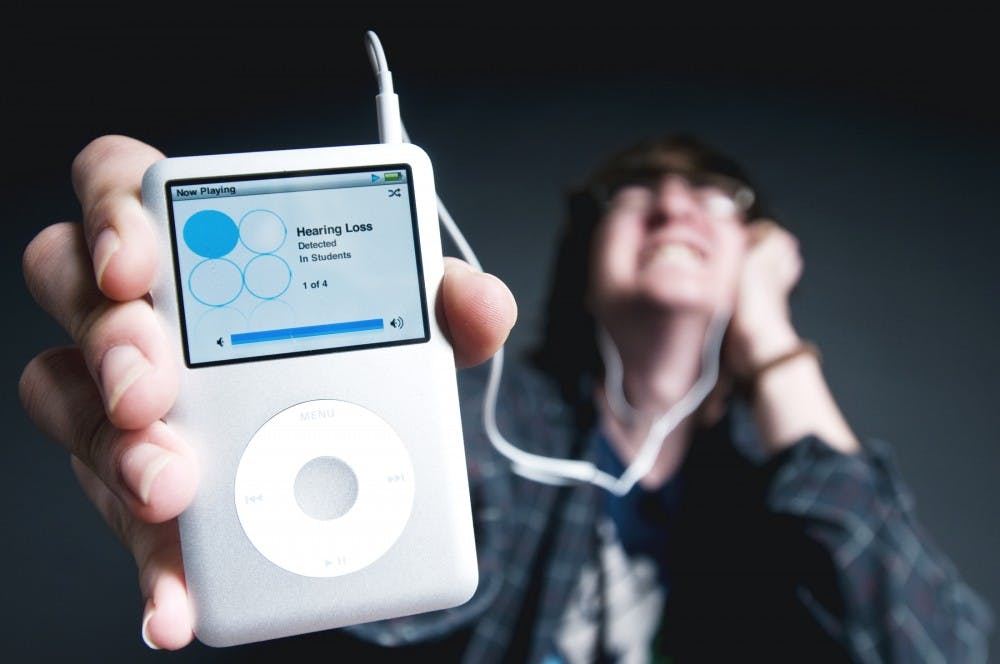
But listening to music at high volumes or for long periods of time might damage hearing, according to a recent study by researchers at the University of Florida.
About 25 percent of students surveyed were tested as having 15 decibels, or dB, or more of hearing loss, according to the survey. About 7 percent had 25 dB or more of loss, which clinically is diagnosed as mild hearing loss, said Colleen Le Prell, principal investigator of the study and associate professor in the department of speech, language and hearing sciences at the University of Florida.
However, about 15 dB still is considered within normal limits, said Jerry Punch, a professor in the Department of Communicative Sciences and Disorders at MSU.
“Fifteen dB is only significant when compared to 0 dB, which is the average hearing sensitivity of normal-hearing young adults,” he said.
Still, whether or not hearing loss is a problem among students is unclear, Le Prell said.
“Music players definitely can produce sound levels that are high enough to cause damage,” she said. “Whether students are actually listening at levels that can cause (damage) is an open question, the evidence is very mixed.”
The information from the study also might not be representative of students because so few were involved in the study, Punch said. About 56 students were tested.
Although most damage is not severe, it could affect students in the classroom, Le Prell said.
“In most of the cases, this is what we would consider a mild hearing loss,” she said. “(Students might) notice it much more in noisy situations, for example in a noisy classroom.”
With a low level of hearing loss, students might hear more easily at the front of the classroom, Le Prell said. With poorer hearing, distinguishing sounds can be difficult, which in turn might affect students’ ability to concentrate in class, she added.
In addition to Mp3 players, any loud noise potentially can cause hearing damage, Le Prell said. Over time, the noise in concerts, bars and nightclubs can be detrimental, she added.
“The most important thing to take care of hearing loss is reducing the amount of time spent in a noisy environment,” Le Prell said.
Wearing earplugs, reducing the amount of time listening to personal music players and limiting the volume on the devices can prevent hearing damage, she added.
Regardless of whether hearing damage is an issue among young adults, students should try to limit hearing damage, Le Prell said.
“We only have one set of ears and there is absolutely nothing we can do to restore hearing once it’s gone,” she said.
Support student media! Please consider donating to The State News and help fund the future of journalism.