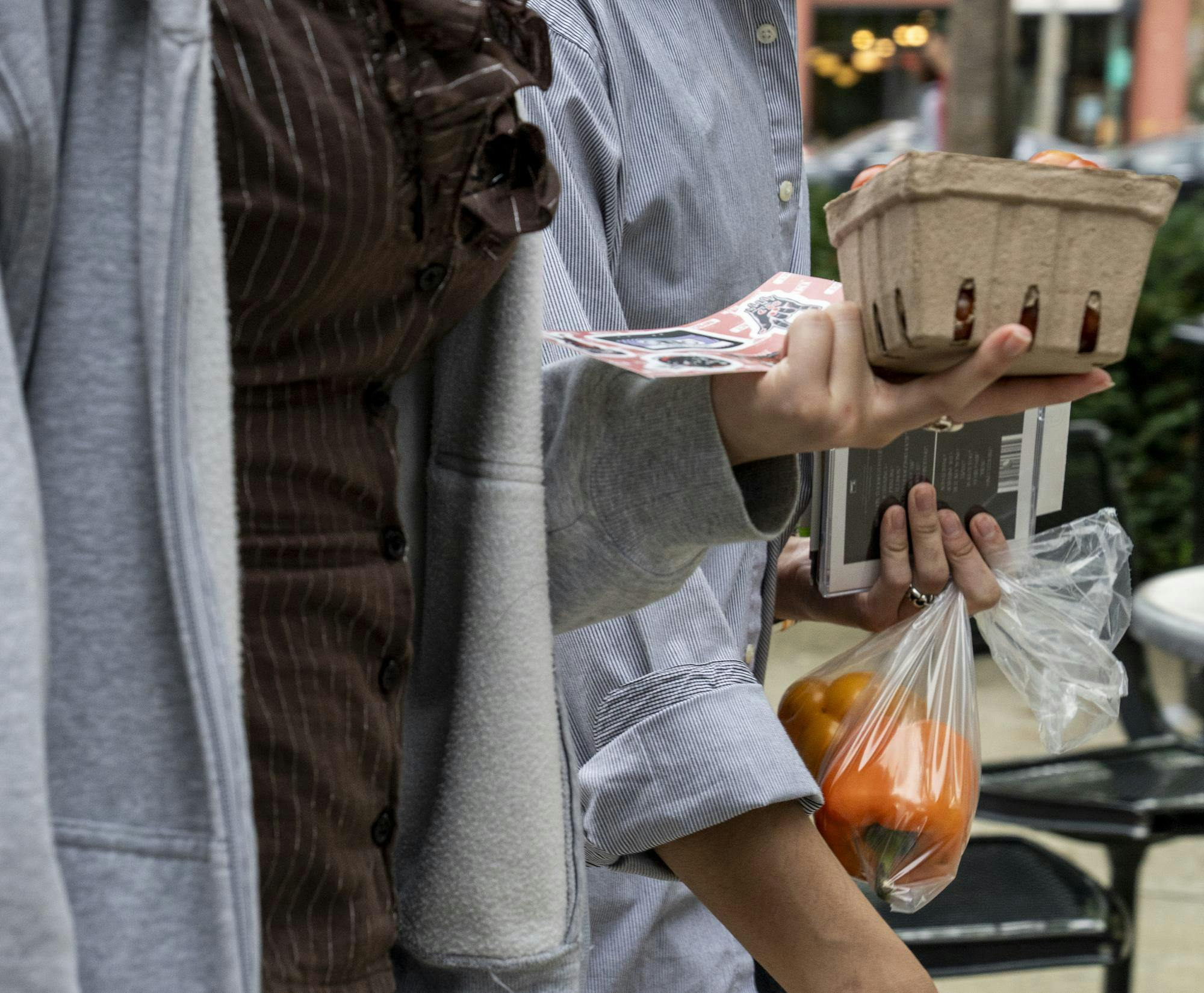
Michigan State University students juggle a litany of new responsibilities once they move off campus, including budgeting for weekly grocery hauls — although constant food recalls threaten their ability to get their bang for their buck.
Food recalls occur when a producer takes a product off the market because there’s reason to believe it could make consumers ill. A foodborne outbreak is when two or more people get ill from the same contaminated food or drink, which can lead to a recall.
266 food recall events occurred in the first half of 2026, according to Sedgwick, a global recall provider.
MSU food microbiology assistant professor Ahmed Abdelhamid said official notices, social media and the news amplify awareness of food recalls, with news circulating quickly through social media and news channels. They can also feel more frequent as foodborne pathogens detection technology progresses.
Social work junior Lindsay Park, who goes grocery shopping at the Lake Lansing Meijer every week or two, said its "hard" to keep track of recalls because "you don't know until it's a food you've already eaten."
“I try to keep up with the news and just stay aware and mindful," she said. "But it’s difficult when you’re shopping on a budget, and sometimes you have to go for the cheaper alternatives like bagged lettuce or things that would be quick and convenient while you’re a student and you might be working."
Bagged iceberg lettuce was recalled in Michigan this summer during a cyclosporiasis outbreak. While cyclospora is not a frequent pathogen, it remains the main agent behind iceberg lettuce outbreaks in the country, Abdelhamid said. It also can’t be detected as quickly in a lab like salmonella.
“The major problem is everybody thinks that all iceberg lettuce is a problem right now,” Abdelhamid said. “All the iceberg lettuce, for example, is unsafe to use, is not correct; it’s specific to the product itself.”
Park avoided lettuce when grocery shopping during the summer regardless, following suit with other foods. When beef in Michigan was recalled, Park sought out poultry as an alternative to red meat, despite the replacement being a "little more expensive" as cheaper beef varieties were affected.
“Other than that, I just try to wash all my produce very well,” Park said.
Food recalls can fall into three different classes, according to the U.S. Food and Drug Administration.
Class I recalls involve “a reasonable probability that the use or exposure to a violative product will cause serious adverse health consequences or death.”
Class II recalls involve products whose use or exposure may cause temporary or medically reversible harm, or where serious harm is unlikely, and Class III recalls involve violative products unlikely to cause adverse health effects.
The FDA does not test every food product before it hits the market, so companies must self-regulate by monitoring their environment to prevent contamination, using third-party testing or participating in the Global Food Safety Initiative.
Abdelhamid said food recalls can happen for “several reasons, rather than an outbreak,” including when foreign objects, such as bacteria or organisms, or allergens aren’t labeled properly.
It’s important to identify the recalled product before it’s too late. If an off-campus student learns that their food is contaminated, Abdelhamid said they must properly dispose of the contaminated food and clean any foods that came into contact with it, as well as the fridge, kitchen or freezer, to prevent cross-contamination.
If an off-campus student has eaten the food, he recommends watching for symptoms and, if they become severe, seeking out a healthcare provider. Communication is also key when living with people to minimize the risk of infection.
"There’s usually alternatives for almost every food, so even though it’s difficult, maybe just try to find a workaround," Park said.
“The news kind of creates a lot of fear around the food, and I think that it’s really important to listen to the foods that are being recalled, but maybe not to let it control your whole diet."
Support student media!
Please consider donating to The State News and help fund the future of journalism.
Discussion
Share and discuss “MSU students navigate food recalls amid budget constraints” on social media.