A dating app that matches you with someone in another country and translates your messages live.
Sounds like a tech demo, but for Michigan State University economics senior David Harrison, it’s his whole business.
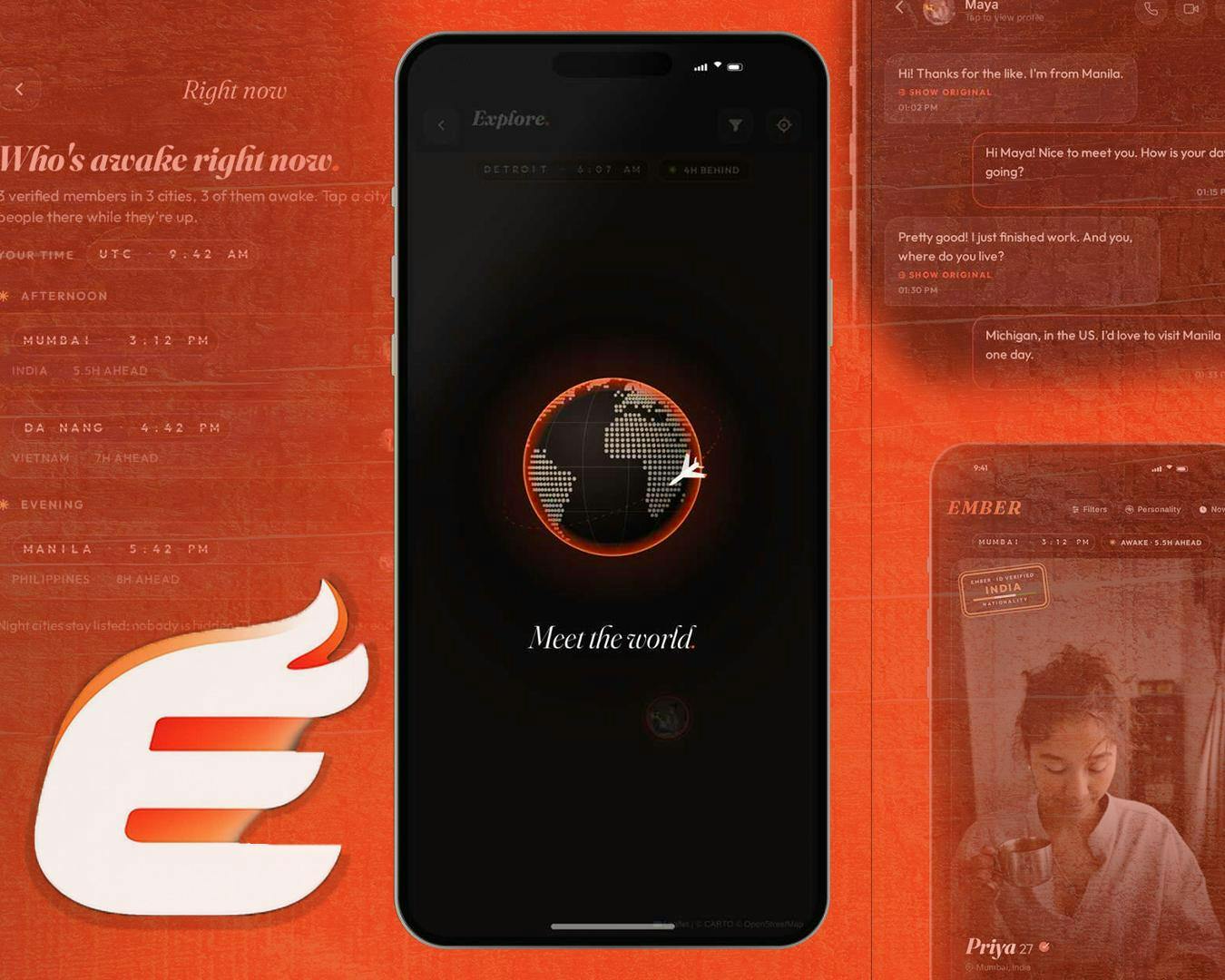
A dating app that matches you with someone in another country and translates your messages live.
Sounds like a tech demo, but for Michigan State University economics senior David Harrison, it’s his whole business.
Harrison built Ember solo, launched it with access to 177 countries, and is now trying to roll out the app to campus this fall.
Users find romantic matches on a world map instead of being confined to MSU's campus. The app's global reach is part of the appeal, and completely free, unlike other platforms that charge for seeing matches from a certain distance.
Harrison's target audience is users interested in long-term relationships across national and language barriers.
“MSU has a big international student community, and seeing how hard it can be to connect across languages and cultures shaped a lot of the app," Harrison said.
Harrison, who has traveled to 17 countries, also drew from his experiences navigating a language barrier. Now, Ember offers live translation for over 100 languages.
Live translation was his baseline, but he wanted to give people more options, so he added the international component.
Ember was built with real long-term relationships in mind.
“The biggest complaint about dating apps is mismatched goals," Harrison said.
As a full-time student, Harrison taught himself the tools to develop his own app. He found support in classes like a data analysis course, which deepened his understanding of coding. Harrison also leaned on The Burgess Institute for Entrepreneurship and Innovation, a nationally recognized resource hub for entrepreneurship education at MSU.
Harrison's biggest struggle was seeing the process of building an app alone through, but "seeing it work" and getting his first paying subscriber pushed him forward.
"Apple holds dating apps to a really high bar," Harrison said. Since dating apps are crowded on the App Store, new dating apps have to "prove" they're useful. The MSU senior has had to redesign the app to meet Apple's standards. It currently sits under review for the App Store.
Another barrier has been cultivating trust. Apps like Ember, which connect people across the globe, tend to "attract scammers," Harrison said.
On the app, users must verify their identity with a government ID and a live selfie.
“Nobody can lie about how old they are or where they’re from,” Harrison said. “Because every account is tied to a real ID, someone who gets banned can’t just come back with a new account.”
Harrison's next plan is to begin to advertise in other countries and build from there.
"A full launch in the U.S. needs venture funding," Harrison said. "The first stage is running trials and gathering enough data on how people use the app to show investors what's happening and whether it's worth investing in."
Once he receives investments, Harrison plans to go "all in" on the U.S. market and countries abroad.
Ember Dating App is currently available on Google Play.
Support student media! Please consider donating to The State News and help fund the future of journalism.