When students walk into a Michigan State University classroom, it's typical to see their peers on their phones or laptops, but when communications, sciences and disorders junior Lydia Stefanovski first walked into history professor Helen Veit’s class, she was confused.
No devices before and during class.
“I was like, ‘This is gonna be a long semester,’ and I had it for two classes, so I was like even more upset about it,” Stefanovski said. “I thought coming to college I would be able to have a bit more freedom.”
But as the semester went on, Stefanovski realized how much information she retained and felt like she could participate in more discussions.
Veit has a stricter technology ban than most. If students need to use their phones, Veit asks them to go out into the hall. The classroom remains strictly technology-free.
“I’ve been doing this for probably three and a half years now,” she said. “A lot of students have told me they really love it, they really appreciate it.”
When Veit started at MSU as a professor, iPhones were still a novelty. Classrooms brimmed with chatter and laughter to the chagrin of the lecturer, who repeatedly failed to capture the students' attention.
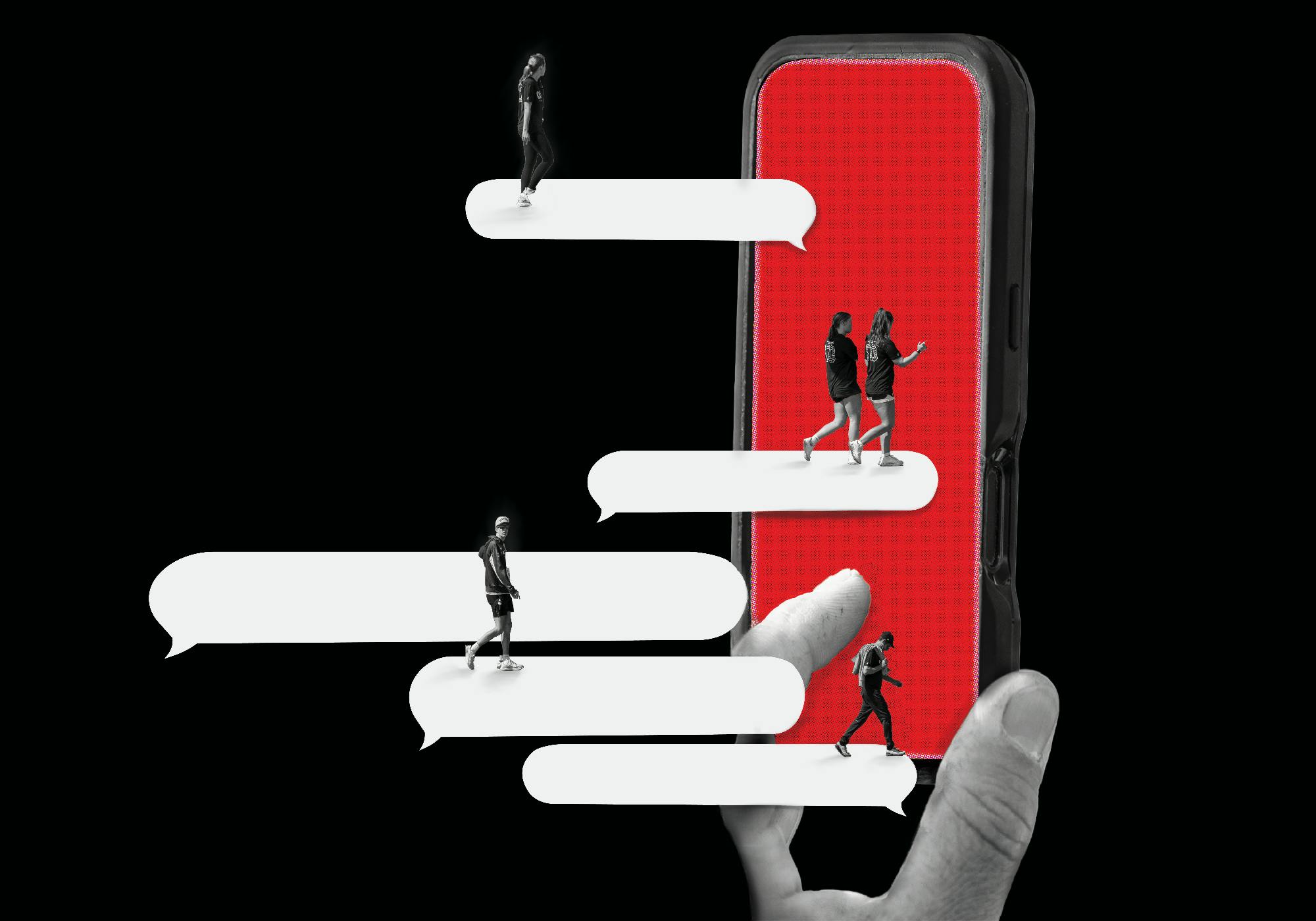
Now, lecturers battle with smartphones for students' attention, instead of fellow classmates.
“Classrooms became really silent, and at the same time, reports of student loneliness started increasing, and I was very concerned about that and felt that there might be some connection,” Veit said. “I do think meeting other students through your classes was always a really common way for students to make connections and often to make friends, and I felt that having smartphones was really preventing students from connecting with each other.”
Like Veit, history professor Charles Keith has been banning phones for years, although he's recently adopted the strict technology-free ban after years of urging from fellow faculty. Around a third of the history department now have phone-free classrooms, Keith said, yet interested faculty are skeptical that students would be on board.
Keith has taught classes where it’s “completely silent” at the tail end of the semester because students are “not in a space where they feel comfortable talking to each other.”
57% of college students report feeling lonely on campus, according to a recent Trellis Strategies survey, a nonprofit specializing in postsecondary education. Excessive social media use has also been linked to increased loneliness.
But Keith doesn’t want to force students to talk to one another.
His pitch to students is that no technology offers a great opportunity to make friends and have a couple of minutes to doodle, read a book or do anything other than scroll.
Keith recalled those brief moments when he had nothing to do as a student, like waiting in line, where he succumbed to his thoughts. Now, those moments are "filled to the brim" with phones, filling "every little crack" in people's lives.
The lack of focus is not exclusive to students. Even if Keith is sitting in a lecture with a visiting historian on his favorite subject, the professor finds it hard to avoid the screen.
“It’s really hard for me not to take out a computer, take out a phone, you know, take a quick peek at something," Keith said. "I tune out. I lose the thread of what’s going on. I try to pick back up. I’m a little bit lost or disconnected from what’s happening.”
In one of Keith’s two classes, the rule is working “particularly” well: Everybody is talking by the time he arrives.
It's not always so simple, however. Veit said her students don’t always know how to start a conversation with their peers, so she provides prompts to nudge the process along.
Stefanovski said she met some of her best friends in Veit’s class as a result.
Support student media!
Please consider donating to The State News and help fund the future of journalism.
“Any class I go into now, it’s dead silent; you walk in, everybody’s on their phone," Stefanovski said. "But those classes I’ve had with Veit, you walk in and it is so loud. She has to tell us to quiet down three or four times before we can start class.”
Keith implemented the ban in courses as small as 20 and as big as 100 people.
One of the hardest things about the policy, Keith said, is students used to typing their notes raising concerns. Keith always points out that retention and comprehension of the material go up significantly with handwritten notes.
To reduce the burden of note-taking in a lecture hall full of 100 people, Keith makes detailed PowerPoints and uploads them after the lecture, so students have a chance to focus on concepts they don't understand. Both professors honor accommodations when it comes to technology use. Keith also offers a seven-minute break in longer classes where people can leave the classroom and use their devices.
History Chairperson Michael Stamm has encouraged faculty to weigh similar bans based off of "strikingly positive" student feedback.
“I don’t think it’s for everybody,” Stamm said, saying he understood why some classes continue to have technology in the classroom; however, for classes with a “strong discussion component” and in small lecture halls, professors should consider the rule.
Many of the students' course evaluations said removing technology from the classroom solved some of the problems they had with college life, Stamm said. Students reported feeling less isolated and said they had "a genuine community-oriented learning experience."
"What the evidence shows is that students are gonna be, initially, a bit hesitant and maybe even oppositional, but that the overwhelming majority of the students who left student evaluations talked about how positive the experience was by the end of the semester without technology," Stamm said.
Discussion
Share and discuss “MSU history professors tackle college loneliness with broad technology bans” on social media.