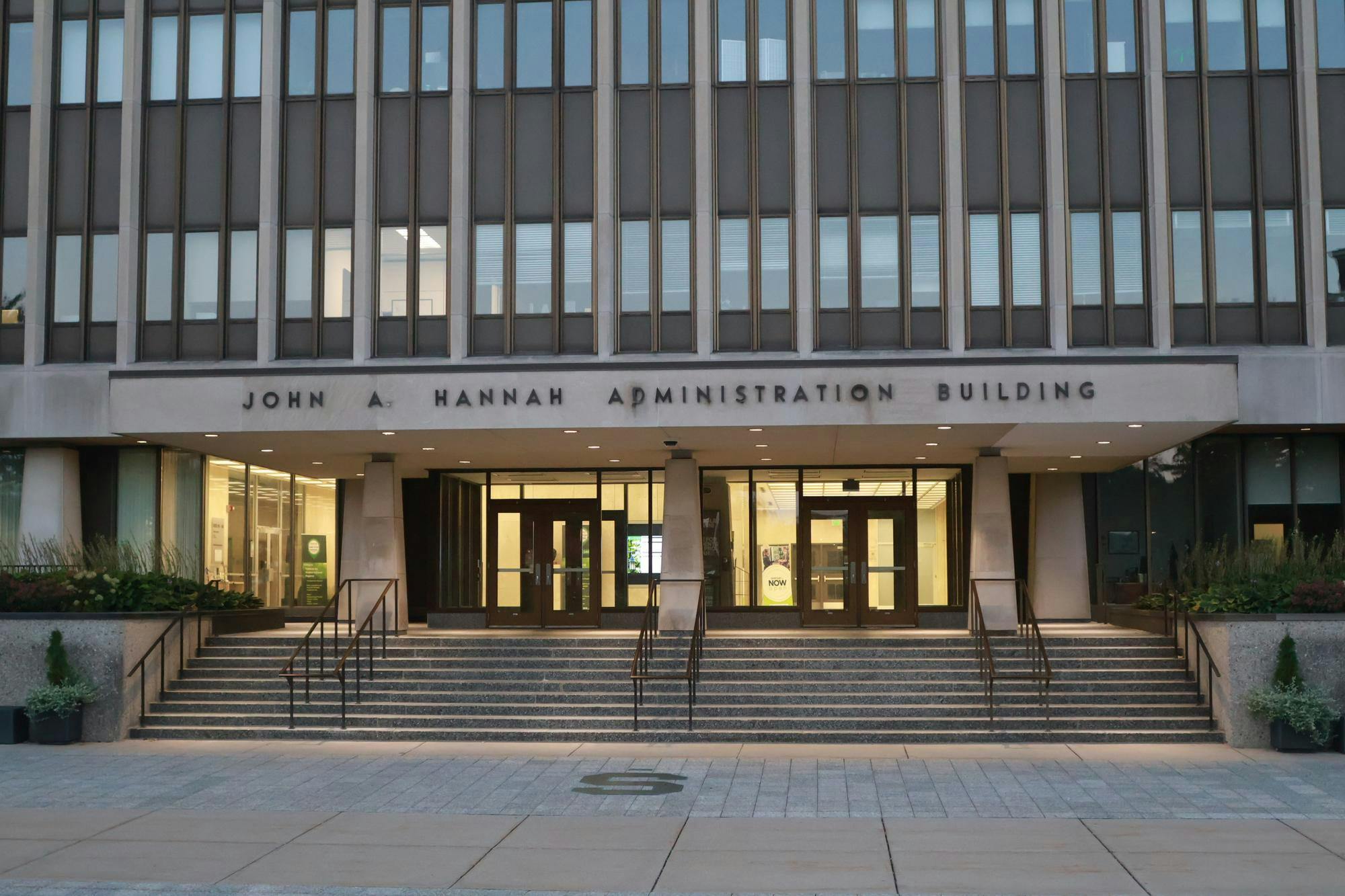
Michigan State University’s Faculty Senate voted Tuesday to call on President Kevin Guskiewicz and the Board of Trustees to hold off on responding to a U.S. Department of Education letter until they seek “rigorous and thorough” advice from university counsel.
The letter “attempts” to get universities to agree with a political agenda that “fundamentally conflicts” with MSU’s core mission, according to the resolution.
The “call to action” letter, sent Aug. 3, calls on university presidents and governing boards nationwide to publicly “reaffirm their commitment to serving the American people.”
As part of mounting higher education scrutiny since the advent of the second Trump administration, the letter asks American universities to respond to the letter on their institution's website in a bid for increased "transparency." Universities are being asked to address seven key points, most notably: merit-based admissions, grade inflation in the age of artificial intelligence and how universities “protect" academic programs from "foreign influence."
As part of mounting higher education scrutiny since the advent of the second Trump administration, the letter asks American universities to respond to the letter on their institution's website in a bid for increased "transparency." The letter also asks universities to publicly respond to seven questions about institutional policies and planned reforms.
The questions address the transparency and “merit” of admissions decisions, protections for free speech and questions disruptive protests, ideological diversity in departments and faculty hiring, the cost of degrees, grade inflation and rigor in the age of artificial intelligence, foreign influence over academic programs and research, and if universities are prioritizing American students and national economic and security interests.
Trump-appointed Secretary of Education Linda McMahon penned the letter, writing “this forthright conversation with the American people is long overdue.”
The advisory vote passed with 94% of the senate vote. The letter demands a response by the end of 2026, although it is unclear what the consequences are for institutions who do not respond.
When asked if MSU will be responding to the letter, university spokesperson Amber McCann said, “The university is built on shared governance, and the position of the Faculty Senate will be considered as university leadership continues to evaluate and discuss a possible response to the Department’s letter.”
During the meeting, Faculty Senate Leader John Aerni-Flessner pointed out that, since the letter is addressed to the president and governing boards, “we all have one message and one voice.”
“It was great to see the Faculty Senate, MSU administration and the Board of Trustees all on the same side defending the values of higher education, institutional autonomy, shared governance, and the right of all our students to receive the best possible education," Aerni-Flessner said in statement to The State News after the meeting.
No MSU trustee responded to requests for comment before publication.
So far, other higher education institutions have responded to the letter, including all 40 of Florida’s public colleges and universities and 17 institutions through the University of North Carolina System. No public Michigan universities appear to have publicly responded to the letter.
The vote comes nearly a year after the Trump administration introduced its “Compact for Academic Excellence in Higher Education,” which asked participating institutions to make a series of commitments in exchange for preferential treatment in federal funding. The tasks included abolishing any consideration of protected identities in admissions or hiring, freezing tuition costs for five years, capping international student enrollment and prohibiting anything that would "belittle" conservative ideas on campus.
The Faculty Senate also voted to oppose the federal government’s offer at the time.
Support student media!
Please consider donating to The State News and help fund the future of journalism.
Discussion
Share and discuss “MSU Faculty Senate ask Guskiewicz, trustees to delay response to Education Department” on social media.