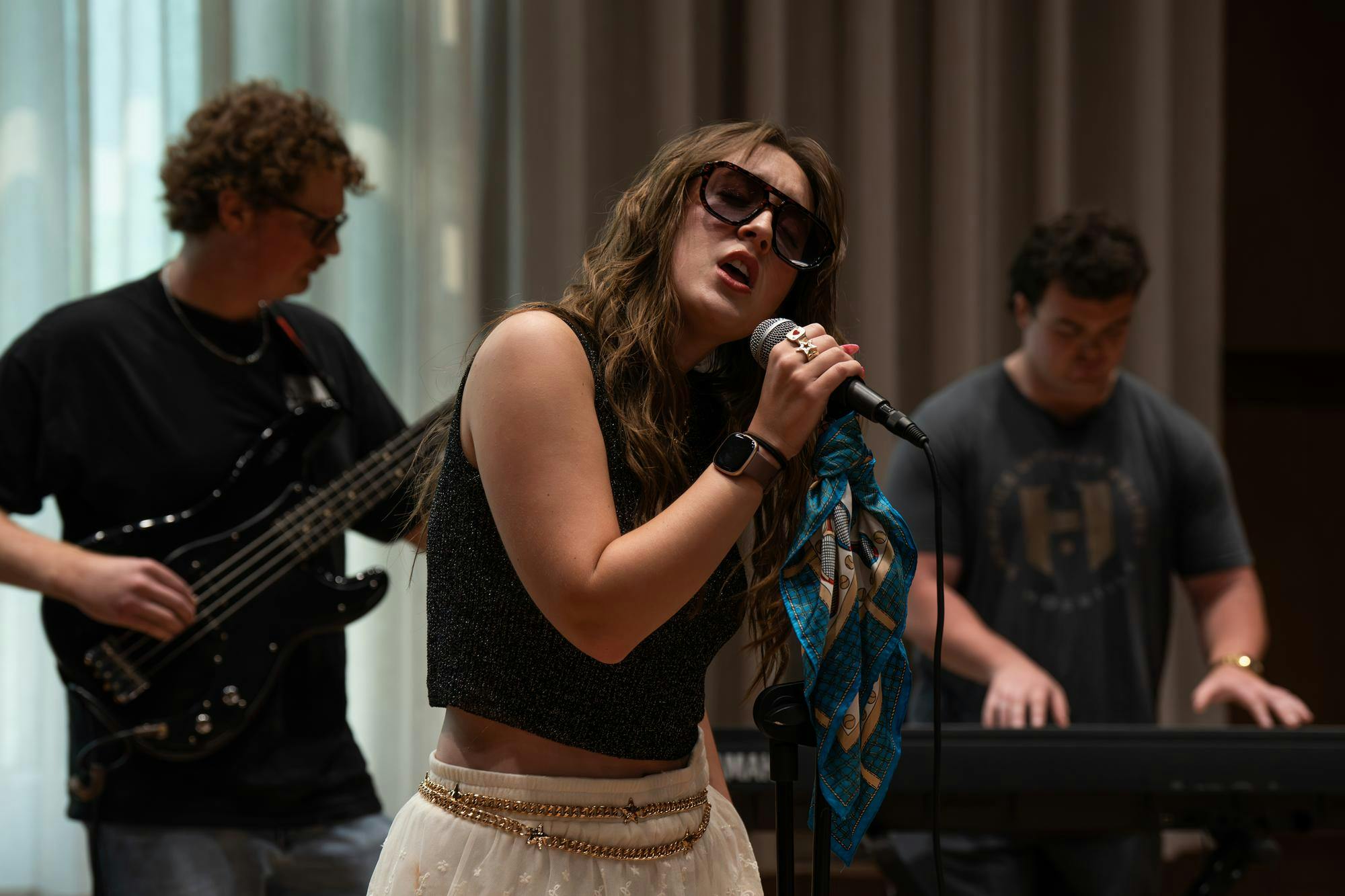
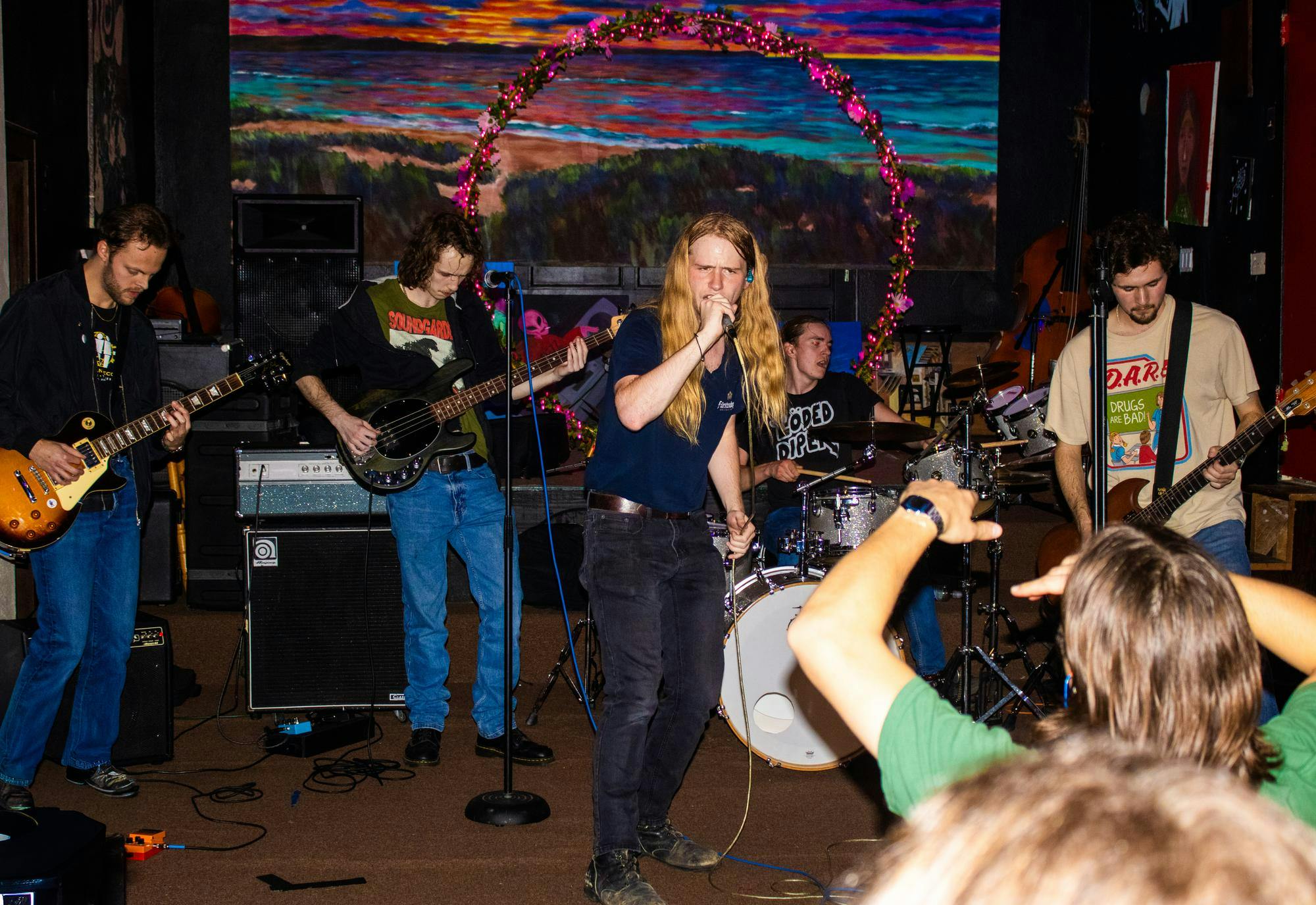
When you arrive at Michigan State University’s campus, the number of groups and organizations calling out for new students to join can seem endless and overwhelming. MSU’s live music scene, however, can feel difficult to break into without knowing where to look.
Upon quickly searching for how to get involved with live bands at Michigan State University on Google, recommendations for MSU’s College of Music ensembles, the Spartan Marching Band and open-mic night events at the Union all appear.
However, beneath the surface of MSU’s traditional collegiate music community is an independent student band scene that welcomes all experience levels, genres and majors that can be found in an East Lansing neighborhood near you.
“This is kind of a Midwestern thing where you squeeze like a hundred or so college kids into a tiny basement to watch a band play,” said Jay Maynard, MSU 2026 digital storytelling alum and member of Break Check. “Everybody's like, literally six inches from your face while you're playing, and there's a certain kind of love that makes each local band feel like they've made it in a sense.”
Most of the time, student bands play at a co-op house, which are houses just north of campus rented by MSU students. Sometimes, bands get the opportunity to play at a local venue such as The Fledge, Harpers, The Peanut Barrel, The Avenue or Green Door.
In 2021, MSU 2026 communications alum Griffin Schoener created the Casual Music Club with a friend after feeling there wasn’t a clear path to getting involved in the live music scene as a freshman. In addition, the Jam Club was created around the same time.
In these two very similar clubs, students can expect to have an opportunity to play music and network with other musicians.
After coming from a Greek life background, Schoener was able to not only occupy a different community but truly thrive in it as well, eventually creating his band Drop Ceiling through club connections and playing his first co-op show in his senior year.
“Being a musician, I enjoyed it more than any other type of party I've been to being a fraternity, house party, skate party or ski party. There was more community because everyone was there for the music, versus they're just partying,” Schoener said. “I’ve wrapped my arms around other people and done dances with them without even knowing who people are.”
Oftentimes, forming a band and scheduling shows tends to fall into place when you continue to show up in those spaces and make yourself known to the community.
Finance senior Alina Morse said that after creating her band, Roxy Riot, it only took a few small actions like posting on the MSU Snapchat story, putting up flyers around campus and making a band Instagram page until they felt a significant interest from the community and local establishments.
In addition, she found that her hesitation to enter the community because she was a finance major was unfounded and discovered the overwhelming, welcoming support and friendliness of other students in the scene. She added that many students like herself share a sentiment for continuing MSU's live music legacy and would be more than willing to mentor students who are new to the scene.
“Definitely what sets Michigan State apart with our live music scene is we have so many students, it's the friends of friends of friends that go to support these student musicians in these small spaces where like, it brings a lot of fresh energy. It's totally unique and it's totally different than just going to even local small shows,” Morse said. “I much prefer performing for a student audience of my peers. It's just really supportive.”
Support student media!
Please consider donating to The State News and help fund the future of journalism.