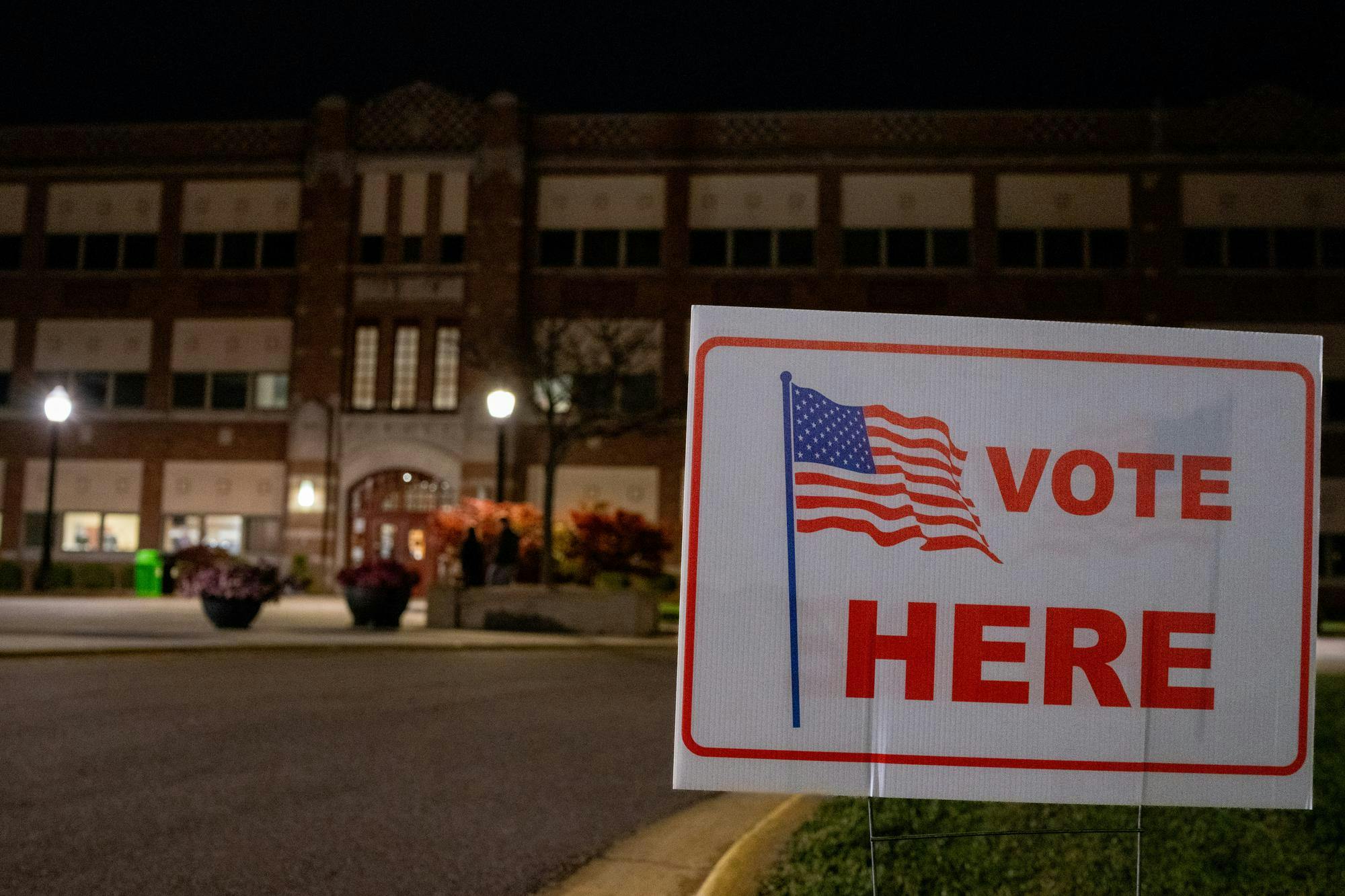
The U.S. Department of Justice sent letters to East Lansing, Lansing and Detroit in late June notifying the cities that federal election monitors would be deployed to polling locations during the primary election on Aug. 4.
Federal election monitors are being sent to five other states as part of the Trump administration's attempts to quell election fraud amid debunked claims that the 2020 election was stolen. It was unclear in the DOJ's letter if the East Lansing election monitors would also be sent to precincts on Michigan State University's campus.
The department questioned East Lansing's compliance with several election laws, including the Help America Vote Act (HAVA), on June 26.
East Lansing City Clerk Emily Gordon said she “welcomes the opportunity to explain why those assertations are inaccurate,” adding that East Lansing elections are “fair, secure, and transparent and are administered in accordance with all state and federal laws, including HAVA.”
Gordon also said that “poll watchers and challengers have been and will be a normal part of conducting elections in the State of Michigan,” and that they are “welcome within the confines of law.”
Michigan Attorney General Dana Nessel and Secretary of State Jocelyn Benson clarified that neither the election monitoring nor federal observer program gives the DOJ authority to interfere with state or local administration of elections, or to demand the production of documents or access to election materials.
“Michigan’s elections are transparent, accurate, accessible, and secure,“ Benson said in a statement. “And while the U.S. Department of Justice continues to pursue baseless allegations to confuse voters about those facts, we welcome anyone who wants to — in compliance with the law — observe Michigan’s elections process. When they do, they will see what we already know to be true — Michigan’s professional local clerks are committed to ensuring our elections are safe, accessible, and fair.“
In compliance with state and federal law, Michigan has begun public accuracy tests ahead of the August primary. Public accuracy tests are done before every election to make sure voting machines accurately count ballots. Lansing opened its election headquarters to begin testing for the August primary on July 20.
Testing also ensures that voting machines are programmed correctly and equipment includes physical seals and other security measures to prevent unwarranted access to information.
The DOJ said it would be contacting the affected cities a week prior to the election to “discuss the particulars of the monitoring effort.”
President Donald Trump renewed his claims of widespread voter fraud and interference in U.S. elections
during a primetime address on July 16. Trump has claimed that the 2020 election endured wide-scale voter fraud and referenced a 2020 Michigan voter registration fraud case in Muskegon as evidence that U.S. elections aren’t secure.
He cited concerns about foreign bodies like China meddling in U.S. election data, vulnerabilities in voting and ballot counting systems, and noncitizens appearing on state voter rolls.
Election officials say these claims are unsubstantiated. An investigation into the Muskegon case revealed that the fraudulent registration forms were detected before processing and no votes were cast.
“No further investigation is warranted because logical investigation and/or leads have been exhausted, and the investigation to date did not identify a criminal violation or a priority threat to national security,” read one of the White House documents released on the Michigan incident.
Gov. Gretchen Whitmer responded to Trump’s primetime address, saying the 2020 election results have been repeatedly reviewed and upheld.
“Conspiracy theories about the 2020 elections must come to an end,” Whitmer said in a statement. “Tonight, President Trump also made claims about Michigan intended to suggest our voting system is somehow rigged. It isn’t, and his claims have been debunked by experts time and time again.”
In addition to sending election monitors on Aug. 4, the DOJ also requested voter registration records, polling and precinct locations and maps, election worker training materials and the City of East Lansing’s plans for providing enough resources and staff for every primary election precinct.
The DOJ also outlined concerns about the city’s conduct during the Nov. 5, 2024 presidential election in particular.
Contrary to HAVA’s requirements, the computerized statewide voter registration list (qualified voter file) did not serve as the official voter registration list in the conduct of federal elections at all polling locations, according to the letter.
The DOJ claimed that long lines at some precincts could’ve been caused by a lack of provisional ballots, which are ballots for people whose name doesn’t appear on the voter registration list on Election Day, but who believe they are registered to vote. After the polls close, the registration status of those individuals are determined, and if the voter was in fact registered, it is counted like any other ballot.
Support student media!
Please consider donating to The State News and help fund the future of journalism.
The City of Lansing received identical claims in its letter from the DOJ, which Lansing City Clerk Chris Swope refuted.
"The city will gladly provide documents and information in response to all lawful requests. However, as Lansing voters and the observers of Lansing elections know, claims in the letter to Lansing about difficult or abnormal voting practices are simply false,” Swope said. “There were no delays at polling locations, the qualified voter file is the list we use for all elections, and provisional ballots are always available as provided by law.”
The DOJ has demanded lists of registered voters from several states, including Michigan in July 2025, to verify that no non-citizens are participating in elections.
Michigan refused to hand over a redacted version of its voter file that contained personal identification information, such as partial Social Security numbers, resulting in the DOJ filing a lawsuit against Michigan in September.
In February, a district court judge dismissed the case, arguing that none of the laws cited by the department required the disclosure of such records. The department subsequently appealed to the Sixth Circuit Court of Appeals, which upheld the lower court’s reasoning on June 24.
“The federal government continues to show a blatant disregard for voter privacy, but the rule of law has once again prevailed,” Nessel said. “This invasive demand by the DOJ was a transparent attempt to intimidate and spread fear among voters, but my office will not be bullied by this administration and will always stand up against unlawful actions by the federal government.”
Discussion
Share and discuss “DOJ to send election monitors to East Lansing” on social media.