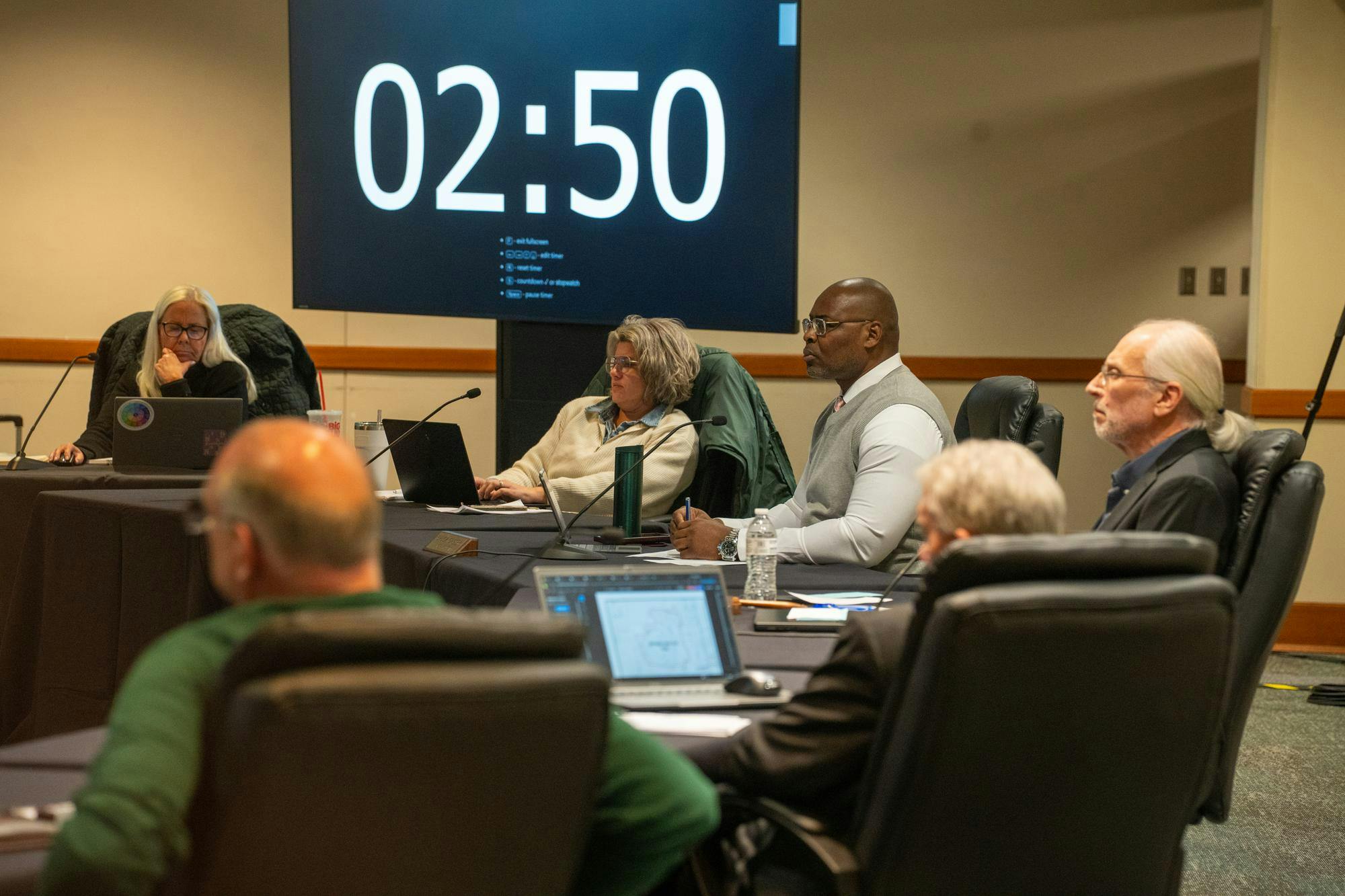
The East Lansing City Council unanimously passed the proposed amendments to the Human Rights Ordinance during its June 16 meeting.
Human Rights Commission members and community members called for a delay in the council’s vote on the ordinance revisions that would strip the commission of investigative powers it had held for over 60 years.
Under the amended ordinance, the HRC would instead have the limited power to receive complaints, review them, evaluate them based on the information presented and hear from both the complainant and the respondent at public hearings and consider evidence.
The revisions would also protect the City of East Lansing, and all its departments and officials from any complaints filed against them by the HRC.
The revisions propose that, instead, complaints against these individuals should be filed with the Michigan Department of Civil Rights, the Equal Employment Opportunity Commission, or the courts.
At the meeting, Carlito Young was introduced as the new lead City Attorney, taking over for Steve Joppich, who held the role for the past year. Young was present at the meeting to answer questions from the council about the ordinance changes.
After reviewing the ordinance for potential conflicts with state and federal law, including the delegation of judicial authority, due process and standards of review, Young’s office said that the original ordinance unlawfully bestowed the HRC with judicial powers. This information was outlined in a summary document for the East Lansing City Council at its May 26 meeting, Young said.
The East Lansing City Council does not have judicial power, according to the city attorney; therefore, it cannot extend judicial powers to its commissions. The council and attorney cited the need to comply with state laws in what some refer to as a “rushed” amendment adoption.
The ordinance amendment explains that although the granting of the HRC’s judicial powers happened decades ago, “the HRC has not, until now, endeavored to exercise those powers in a significant way, which has brought the issue to light.”
These changes come after the commission undertook a significant review involving the East Lansing Police Department. The HRC recently reviewed an incident where ELPD pepper-sprayed two Black men on campus during welcome week in August.
ELPD sent a press release after naming the two young men, violating a city policy that stops press releases from including the names of detainees unless a serious crime has been committed out of concern for reputational harm.
After the incident, the HRC issued corrective actions to the city at its May 27 meeting, including that the city pays the two young men $50,000 each for reputational harm and other damages, and that the city covers any ongoing medical, psychological and legal costs.
At the meeting, Councilmember Mark Meadows questioned the amendment that would protect the City of East Lansing, and all its departments and officials, from any complaints filed against them by the HRC.
In line with the previous City Attorney’s statement on the matter, Young explained that the HRC’s investigative authority violated the city charter.
He said it could create overlapping authority and responsibility conflicts with existing city employees, such as the City Manager or the Human Resources Department.
Young also cited limitations related to union contracts and restrictions that may occur in East Lansing city employee investigations conducted by the HRC due to conflicts of interest.
Meadows originally requested a review of the HRC’s abilities under its ordinance after he realized they may order restitution from the city in the Smith and Woods case.
In response to the changes, Mayor Pro Tem Chuck Grigsby recalled his time on the HRC and expressed understanding for where they’re coming from, but that they must comply with federal and state laws.
“With these revelations of the federal litigation and some of the conflicts of interest, according to our city attorneys, it just really made it a confusing place not only for them (the HRC), but for the community,” Grigsby said. “I also feel like this is not a one and done decision. I feel like we still have the opportunity as we move forward to make adjustments to this ordinance and really make sure they have the tools to do what they do best.”
At the special meeting Tuesday, the council also approved a separation agreement between the city and former City Manager Robert Belleman.
Support student media!
Please consider donating to The State News and help fund the future of journalism.
They also introduced Annette Irwin as the Interim City Manager beginning June 22, relieving Interim Fire Chief John Newman of his acting city manager duties.
Discussion
Share and discuss “East Lansing City Council passes amended version of Human Rights Ordinance” on social media.