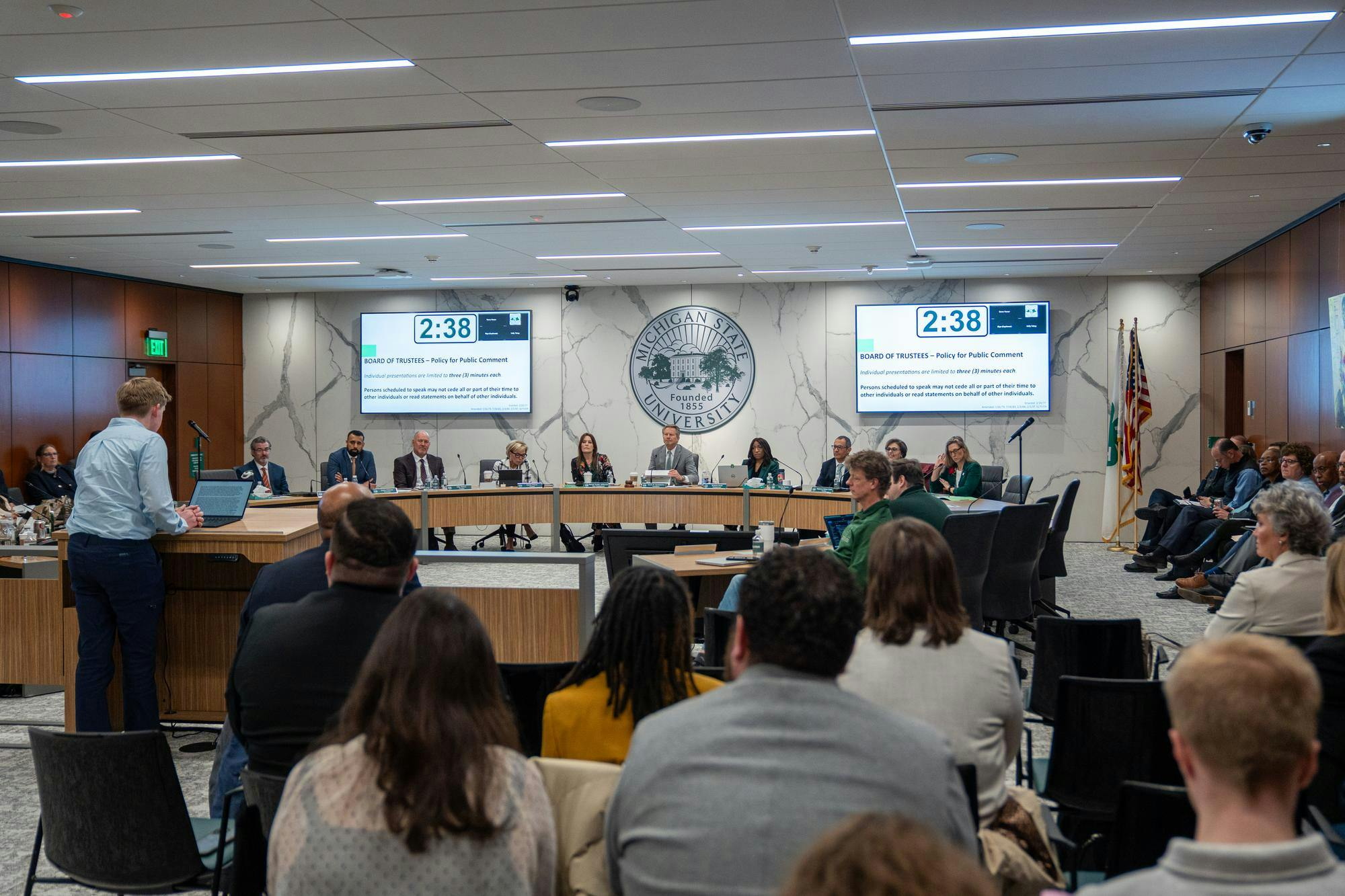
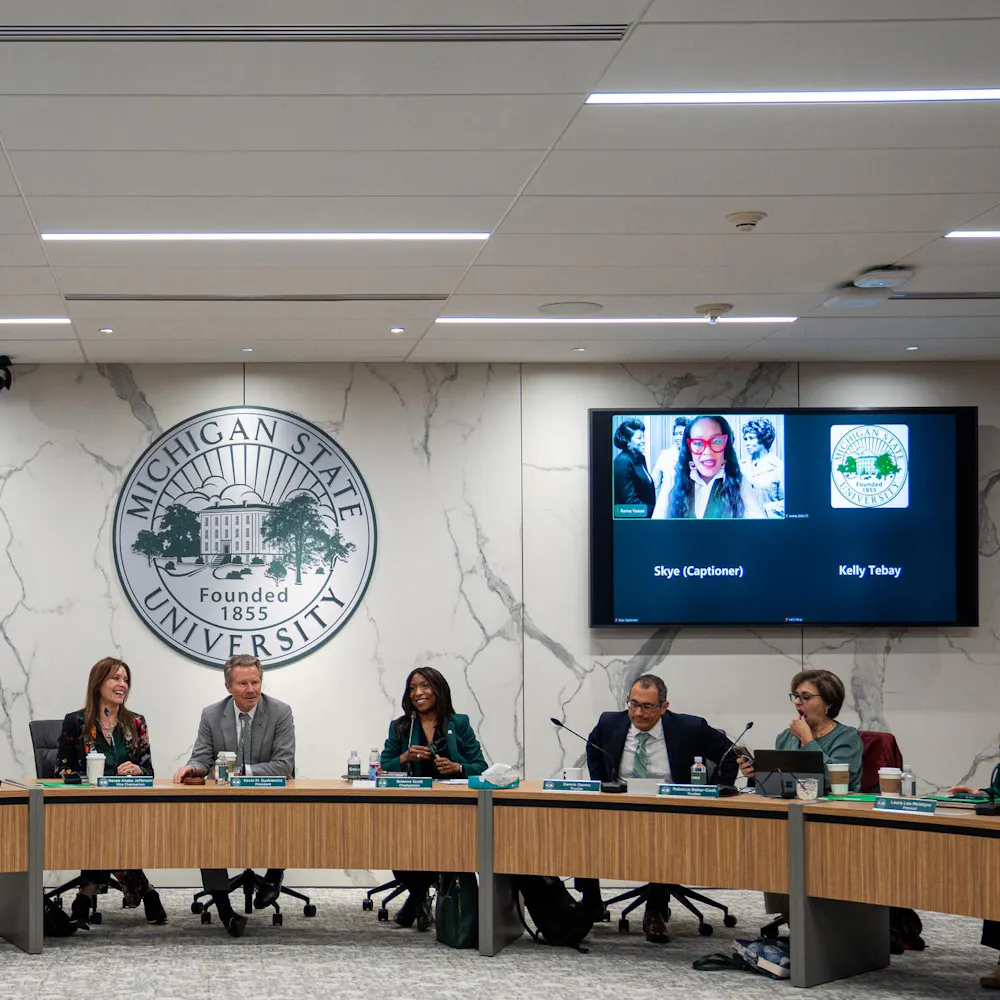
All eight members of the university's governing board were in attendance, debating edits to the code for nearly an hour amid concerns that the resolution's emphasis on showcasing public "loyalty" to the university restricted free speech.
Trustee Mike Balow said the edits to the code of ethics and conduct are "absolutely an assault on the First Amendment rights of any person serving in any sort of elected capacity."
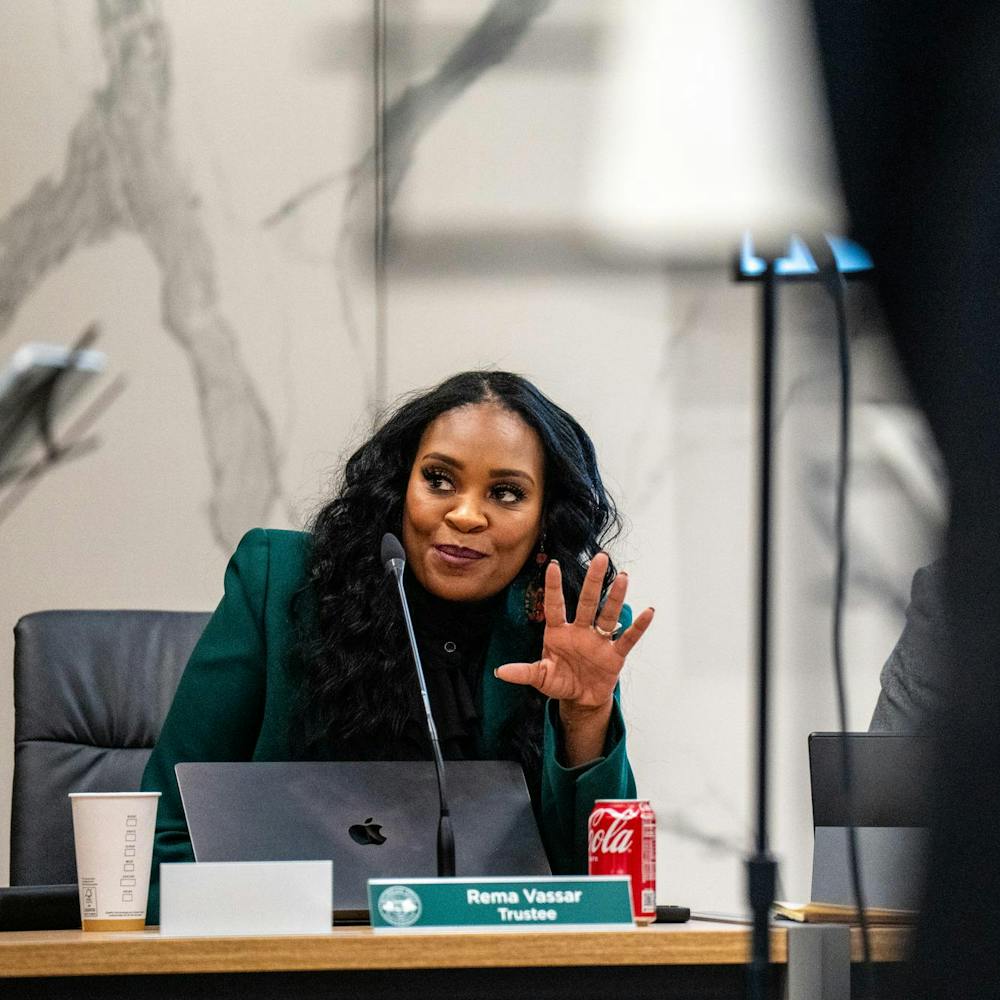
Balow, alongside trustees Dennis Denno and Rema Vassar, did not vote to approve the revisions.
In compliance with the revisions, trustees will need to sign a "statement of acknowledgement" within the next week. If a trustee chooses not to sign it, they will be met with consequences such as being blocked from MSU events that don’t require them to be present in their formal board capacity, loss of tickets to games, loss of reimbursements and the loss of university-funded legal representation.
Trustees have until May 24, 2026 at 5 p.m. to sign and submit the required statement of acknowledgment for the revised code of ethics and conduct.
The State News interviewed three experts specializing in higher education and free speech to provide clarity on the implications of the board’s decision.
Judith Wilde, a research professor specializing in university administration at George Mason University, said that she doesn’t know of a university that has enforced a similar policy.
Wilde said the revisions to the code could reduce ideological diversity on the board, saying that it "certainly violates that freedom of speech."
"You need to have people with different points of view," Wilde said. "That’s the best thing for the university."
Wilde compared the code revisions to prohibiting national political leaders like Chuck Schumer and Hakeem Jeffries from speaking out.
"It could also end up being negative for the students. We've seen some places, not very many, where boards have tried to limit, or more fully define, what can and cannot be taught," Wilde said.
James Finkelstein, a George Mason University professor emeritus who studies college leadership, also said he hasn't seen similar changes implemented "anywhere."
"It's contrary to the spirit of a university, which is supposed to be a place where there is open debate, where people can be open disagreements, and have free expression," Finkelstein said.
The same concerns were echoed by Balow and Vassar during the meeting. Both trustees have opted to take their concerns with the board's decision-making process to public forums, often choosing to pen opinion pieces in major Michigan outlets.
In February, Vassar published an opinion essay in Bridge Michigan protesting MSU's decision to curtail its diversity, equity and inclusion programs in response to pressures from the Trump administration, which had failed to gain the legal backing to pause federal funding at universities that continued DEI initiatives.
"It’s time for MSU to reinstate everything it destroyed," she wrote.
The op-ed was met with immediate resistance from other members of the board, including University President Kevin Guskiewicz, and university administrators, who said that the piece mischaracterized the efforts of the university.
Balow and Denno co-wrote an opinion piece in The Detroit News publicizing their frustrations with the board in April. During the April board meeting, Balow said Denno, Vassar and himself wanted a resolution to be added to the meeting, but that it was blocked by their colleagues.
Support student media!
Please consider donating to The State News and help fund the future of journalism.
The resolution would have heightened transparency for MSU’s for-profit athletics enterprise Spartan Media Ventures, dictating that Spartan Media Ventures be subject to Michigan’s Freedom of Information Act law and allowed trustees to view organizational documents without signing a nondisclosure agreement.
The State News also reported in April that the university’s board was divided over allegations against Brian Quinn after Balow, Denno and Vassar raised what they called "serious concerns" about his conduct within the Office of General Counsel.
Vassar claimed that the revisions to the code of ethics and conduct were introduced to intentionally silence certain members of the board.
"I want the Attorney General of the state of Michigan Dana Nessel to hear this," Vassar said of the revisions. "I will be following up with her office regarding the constitutionality of this document."
"Michigan’s Constitutional officers do not surrender their First Amendment rights as a condition of service," Vassar continued.
First Amendment expert Kevin Goldberg, who serves as the vice president of the Freedom Forum based in Washington D.C., said that a court may determine the revisions as "problematic" and restricting the speech of trustees.
However, allegations that the revisions to the code restrict free speech become more complicated when taking public perception into account, Goldberg said.
"If you are being viewed as speaking as a board member on behalf of the board or on behalf of the university, then yes, you lose your First Amendment rights, essentially," Goldberg said. "The university and the board of trustees generally can control what you say in ways like this, but that doesn't mean you lose every right to speak on any public matter."
Typically, members of the board will be seen as speaking on behalf of the university. "Any dissent is going to naturally undercut that," Goldberg said.
Goldberg acknowledged the legal complexities of the issue, saying the issue is "unique" because of the nature in which MSU trustees assume their position. Michigan is one of four states in the country where the governing board members of its public institutions are appointed through statewide elections.
"You willingly give up some of your own rights and powers to become part of the board as its own almost individual," Goldberg said.
In a statement to The State News, the Association of Governing Boards wrote that approaches to public facing boards vary but ultimately remain a balancing act between responsibility and transparency.
"Many college and university governing boards maintain ethics or conduct policies that address confidentiality, fiduciary responsibilities, and expectations for board members following official board actions," the statement read. "While approaches vary among institutions, effective governance generally depends on balancing open dialogue and transparency with the board’s responsibility to deliberate constructively, protect confidential matters, and govern in the best interests of the institution. Questions regarding the interpretation or application of specific policies are ultimately matters for each individual institution and applicable state law."
MSU spokesperson Amber McCann defended the revisions in a statement to The State News, saying the board "did its due diligence in seeking a legal review" before approving the code.
McCann pointed to similar provisions that exist in the Wayne State University Board of Governors' code of conduct and in Michigan’s State Ethics Act.
"These codes of conduct are not about limiting speech or restricting members of governing boards from raising concerns," McCann said. "Instead they establish good governance practices."
She added that the revisions are intended to "clarify expectations around conduct, confidentiality, fiduciary responsibility and respectful engagement."
These expectations may be tested at the annual Mackinac Policy Conference from May 26 to May 29, which falls two days after trustees are expected to sign the statement of acknowledgement on May 24. Six of the eight trustees plan to attend the conference, MSU Vice President of Communications Emily Guerrant confirmed to The State News.
Guerrant clarified that some trustees will be attending with their employers, but may still attend events pertaining to the university.
The revisions to the code state that trustees "shall immediately be subject to the following sanctions," although Guerrant said it remains unclear whether any trustee who does not sign the statement would still attend the conference in their official capacity or face sanctions before the policy conference begins.
Discussion
Share and discuss “MSU board ethics policy limits trustee dissent, ignites free speech debate” on social media.