Student demands on environmental issues
Five students from the MSU environmental student group Sierra Club spoke to the board during public comment, arguing the university has not followed through with environmental promises despite student demand.
Applied conservation biology sophomore Mikaela Johnson, a member of the Sierra Club, says the university is falling short of its commitments to carbon admissions by not improving CATA buses.
“We need to discourage student reliance on personal vehicles by improving the MSU bus system,” Johnson said.
MSU has outlined its role in reducing emissions, as part of its commitment to become carbon neutral by 2050. However, the Sierra Club members said that the university is falling short.
“We learned about the 2012 commitment to reduce emissions by 60% and the honest reasons we are falling short in the most recent 2025 gap greenhouse gas report. MSU submissions have gone up for the first time in a long time,” said Colin Reese, a comparative culture and politics senior.
The group is calling for MSU to make changes to its transportation systems, energy use and to better align itself with the initiatives they have made.
Union of Tenure-System negotiations
MSU was also chided by the a leader of the Union of Tenure-System Faculty for its handling of contract negotiations. In late March, the union alleged that the university violated the proper negotiating procedures between the two parties.
These violations have resulted in faculty grievances going unaddressed and adjustments to the process for salary increases — the latter of which has caused the union to shift their negotiation timeline to focus on this sole issue, rather than a complete contract.
UTSF Vice President Zachary Kaiser, during public comment, directly addressed those violations with the board.
Kaiser said that in August 2025 a document for administrators prepared by the Office of Faculty and Academic Staff and reviewed by the General Counsel stated that there would be no changes to existing policies, practices or bylaws surrounding working conditions, and that administrators should maintain the status quo of terms of conditions of employment. That agreement, Kaiser said, made the union “feel at ease.”
A memo from the MSU President and Provost sent in September violated that status quo, he said. The memo, Kaiser said, prohibited certain shared governance activities, including the University Committee on Faculty Affairs which advises administrators on raises.
“UTSF has nonetheless been working hard to help members navigate the new uncertainty resulting from the disregard of status quo during an already stressful time of budget cuts and attacks on higher education,” he said.
Kaiser, looking at future contract negotiations between MSU and the union, expressed hope that the university adheres to the proper policies and procedures in place.
“As we move forward to bargaining, we can together look forward to the transformative potential of strengthened faculty voice, mutually beneficial collaboration with shared governance and materially meaningful improvements in employment conditions that will result from our Union's efforts,” he said.
Committee renamed
At the request of Trustee Dennis Denno, the Student Life and Culture Committee will add “safety” to its title. The revised title will be the Committee on Student Life, Culture and Safety.
Support student media!
Please consider donating to The State News and help fund the future of journalism.
Guskiewicz said, “The board is strongly supportive of maintaining a safe environment,” and by adding the “safety” to the title, this will continue this.
Infrastructure advancements
The board voted to split a budget item regarding the construction of a heating and power unit and the water plant in two, in order to yield a greater federal tax credit.
Chair of the Budget Finance Committee, Trustee Sandy Pierce, apologized for approving the budget item originally and not seeing the potential benefit of the split.
Pierce said “We approved it without really understanding the breadth of the project, and I put that on me as chair of the budget and finance committee.”
In June 2024, the board approved these projects as a singular project to install a heat and power unit at the T.B. Simon Power Plant and construct a chilled water plant, which would receive utilities from the unit.
The $185 million combined heat and power unit will generate electricity and replace roughly 80% of steam capacity that was lost when one boiler at the power plant was shut down in 2022.
The water plant will provide water to the upcoming $180 million Engineering and Design Innovation Center which the board approved the funds for the fall, in addition to aging buildings on campus. The plant would cost $145 million and would be completed by the end of 2026.
The $185 million combined heat and power unit will generate electricity and replace roughly 80% of steam capacity that was lost when one boiler at the power plant was shut down in 2022.
Overall, the two projects will cost a combined $330 million. The projects will be funded through a mix of federal tax credits, university reserves and debt, with some costs expected to be offset by long-term energy savings.
Conflict of interest policy
The board also voted to revise its Board of Trustee Conflict of Interest policy to strengthen documentation and clarity.
The revised policy calls to formalize written documentation requirements when Trustees disclose potential conflicts of interest, including clearance responses from the Board Secretary and General Council when no conflicts exist. Those documents will be retained by the Board Secretary for the duration of the Trustee’s term.
The revision establishes a fixed annual certification deadline of October 31.
Student success center
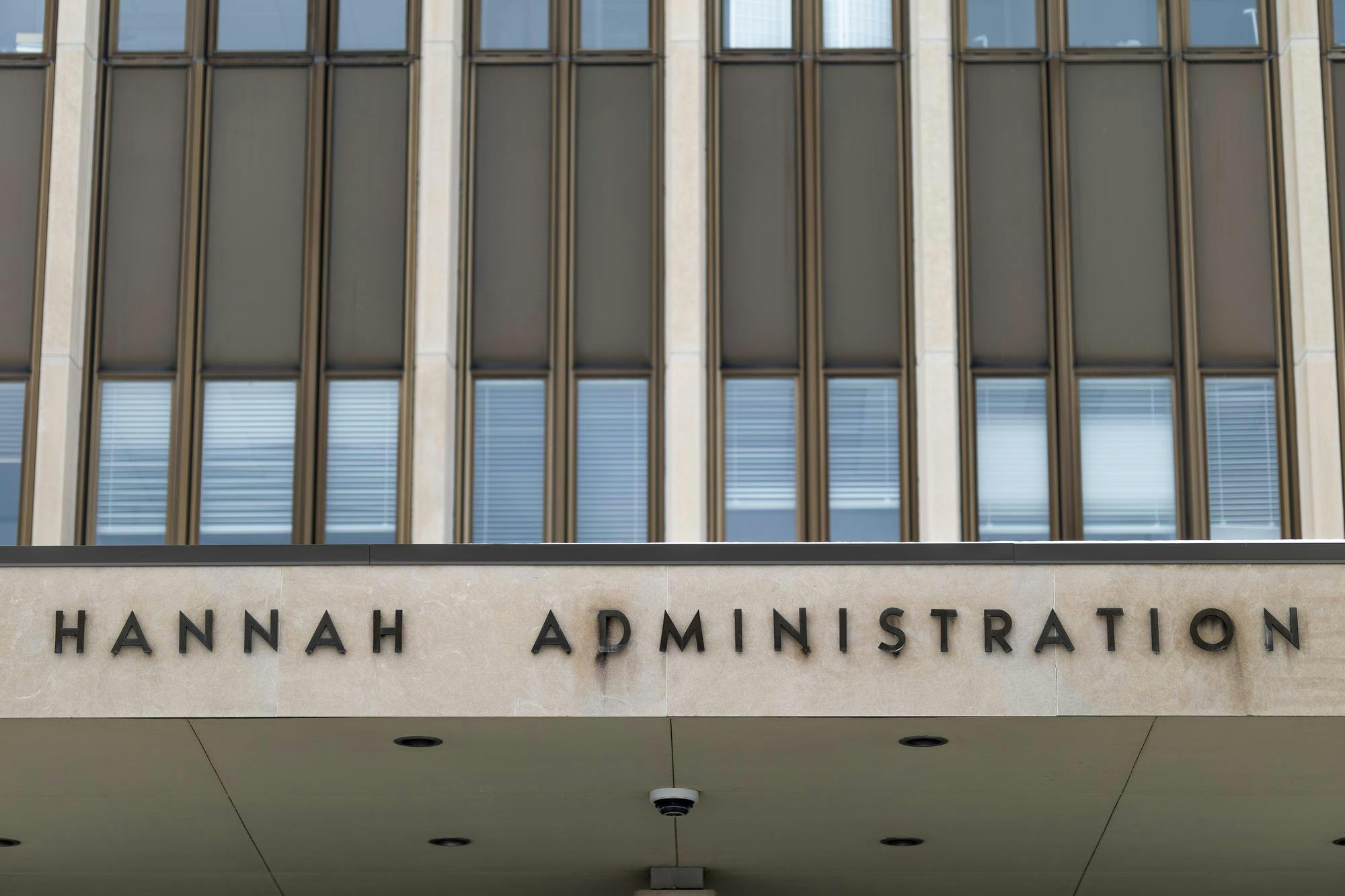
The board voted to proceed with the plans for the “Spartan Success Center” that will be located in the Hannah Administration building.
The center will offer academic advising, health and well-being services and tutoring among other benefits.
In a press conference following the meeting, Guskiewicz said that the center will work to keep MSU’s graduation rates high.
Upon the center first being presented to the board, the center would have been exclusively to help first-generation students, but has now been opened broadly to help all students. As passed, the $5.2 million center will help offer academic advising, health and well-being services and tutoring among other benefits.
According to the resolution, the project will be funded by short-term debt and later paid through university resources.
Land donation
The board voted to accept a donation of 98 acres of land in Escanaba, Michigan. The land is located in Michigan’s Upper Peninsula and will not only be used by MSU, but also by Bay College and high school students.
Discussion
Share and discuss “Students call for improved sustainability and Student Success Center approved at board meeting” on social media.