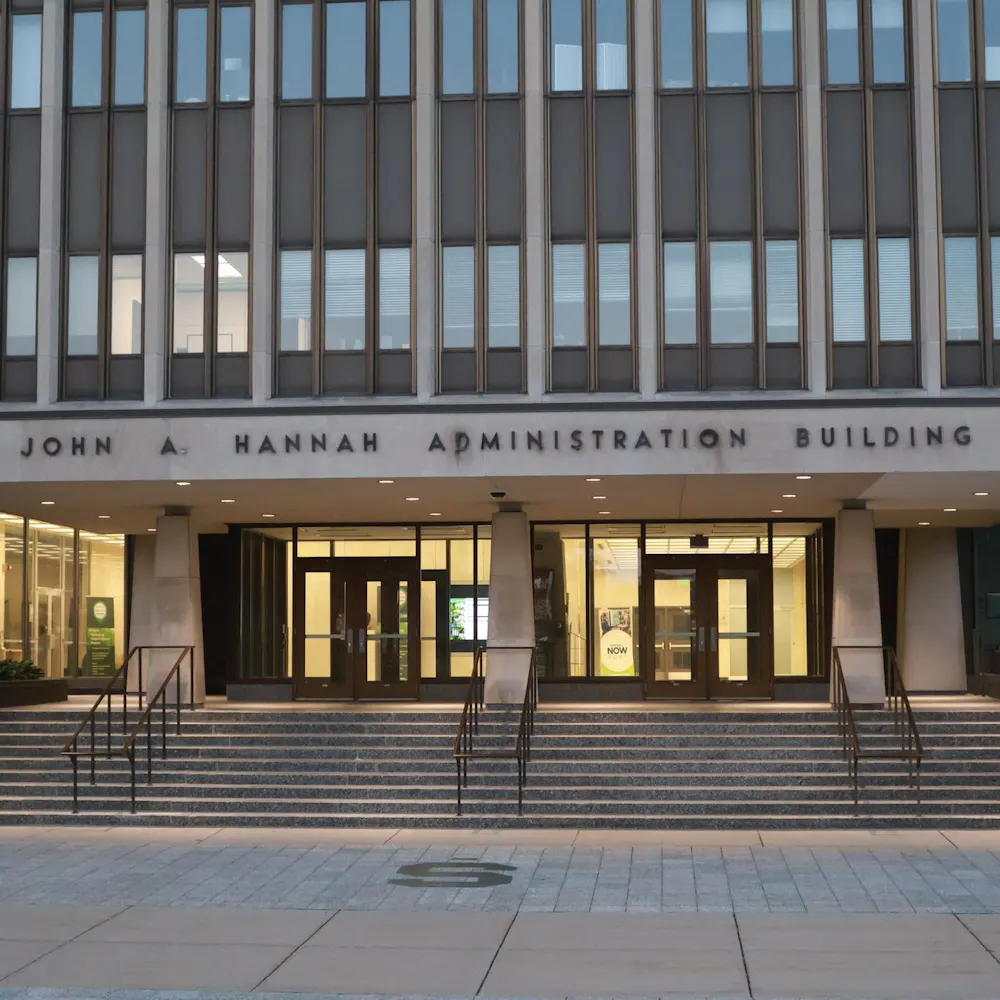
Marking a little over a week before Earth Day, the Michigan State University library hosted "How Green is Your Chat?" on April 14.
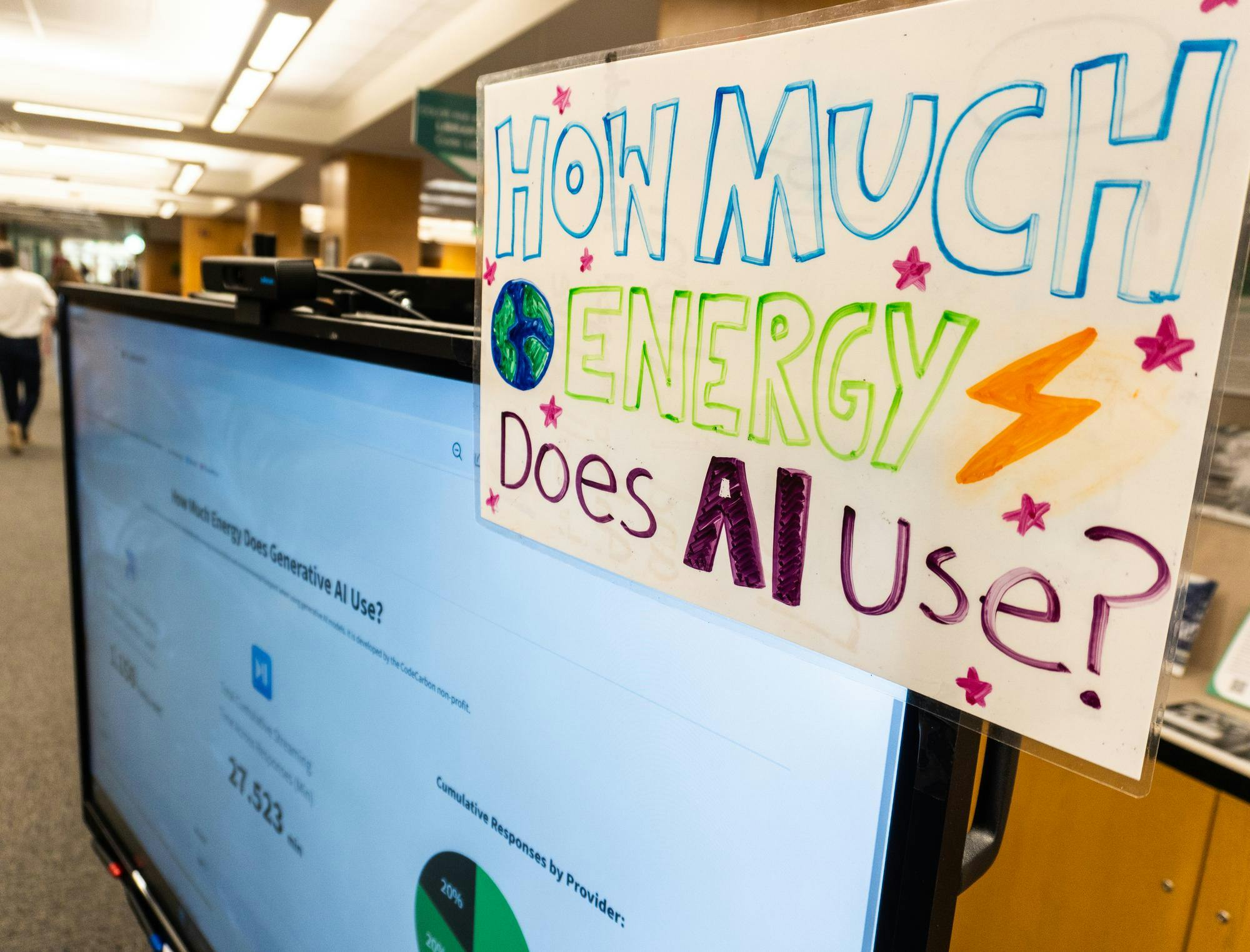
"How Green is your Chat?" an interactive tabling event at the MSU library, showcased the effects of water and energy use associated with artificial intelligence (AI). The MSU Library Environmental Committee (LEC) hosted the event, and according to the MSU Libraries website, the committee "focuses on the Libraries' use of natural resources with an eye toward sustainability that maintains and improves [their] overall working and learning environment."
Specific hosts of the event were Justin Wadland, head of Digital Scholarship Services at MSU Libraries; Alyssa Davis, media preservation resident librarian at MSU Libraries; and Leah Morin, information literacy librarian.
The table showcase, open from 12:30-2:30 p.m., allowed the visitors to choose which provider they wanted to see in a hypothetical scenario (ChatGPT or Gemini, for example). Next to that dropdown menu was another dropdown menu, where one could say what they were using the AI for "Typing a tweet, writing an email, small conversation with a chatbot, writing a book report," etc.
Carbon footprint is often taught to kids in schools, but few exhibits and interactions actually show the real-life effects of it. By showing how much water each AI chatbot prompt uses, users could see the actual implications of potential actions. The large flat screen had customizable inputs to churn out results for the amount and significance each AI input had on the environment, allowing visitors to see their hypothetical real-life carbon footprint for tools like ChatGPT.
Doug Bessette, associate professor in the Department of Community Sustainability, shared a bit regarding his thoughts about his talk being featured in the second half of the event. His talk, "Artificial Impact (AI): How the Rapid Development of Hyperscale Data Centers Impacts Michigan Communities," was held on zoom from 3-4 p.m.
"I enjoy talking about data centers because I feel really confident about my position on them, as well as AI. The bulk of my research is on solar and wind development, and I often feel conflicted about what that data shows, and what the implications of that work are. But that’s not the case with data centers," Bessette said.
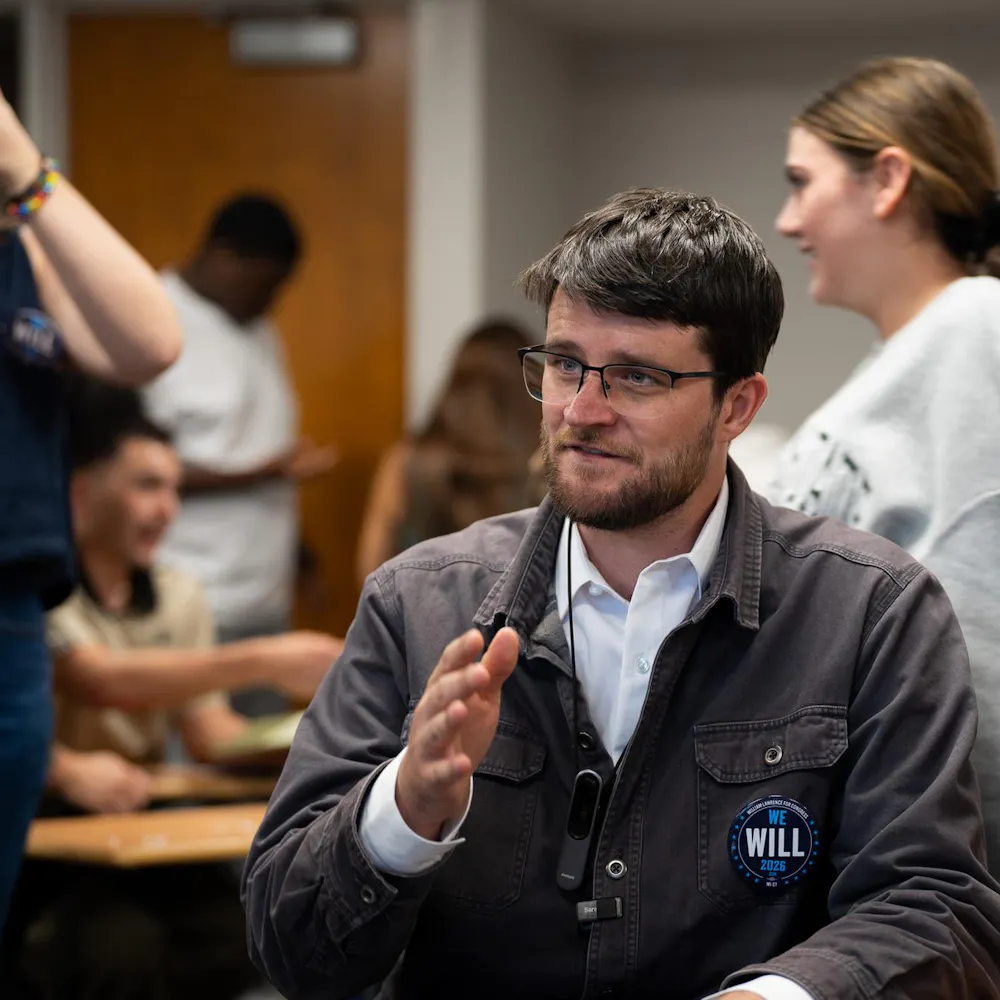
Wadland was one of the speakers at the event, which included answering questions and operating the interactive tool on a laptop computer that connected to the larger screen that users could customize with their own lifestyle choices and responses.
"Well, I think we just wanted to have a tool that could show in a very direct way the energy impacts in using generative AI, and one of the main things that we use is a cookie here — we have real life cookies that we're giving out. And I think that we're trying to create a bridge between making people aware of their individual usage, and then what the more systemic impacts of that usage is in terms of building data centers and creating an extractive model for resources to support this technology," Wadland said.
An unconventional method was used to show AI effects was, in fact, a well-loved baked good. Davis also spoke to visitors and had a box full of cookies for attendees to take. Davis discussed how the event also took a local approach, showing how data centers could impact Michigan.
"Our amazing graphic designer here in the library put together this satellite image of Michigan that has pinpointed dots where the different proposed data centers are happening across the state. So we thought it would just be a fun representative image to show exactly the scale of this issue, and how it is impacting every corner of the state," Davis said.
Support student media!
Please consider donating to The State News and help fund the future of journalism.
Discussion
Share and discuss “'How green is your chat?' Interactive showcase aims to educate, bring awareness” on social media.