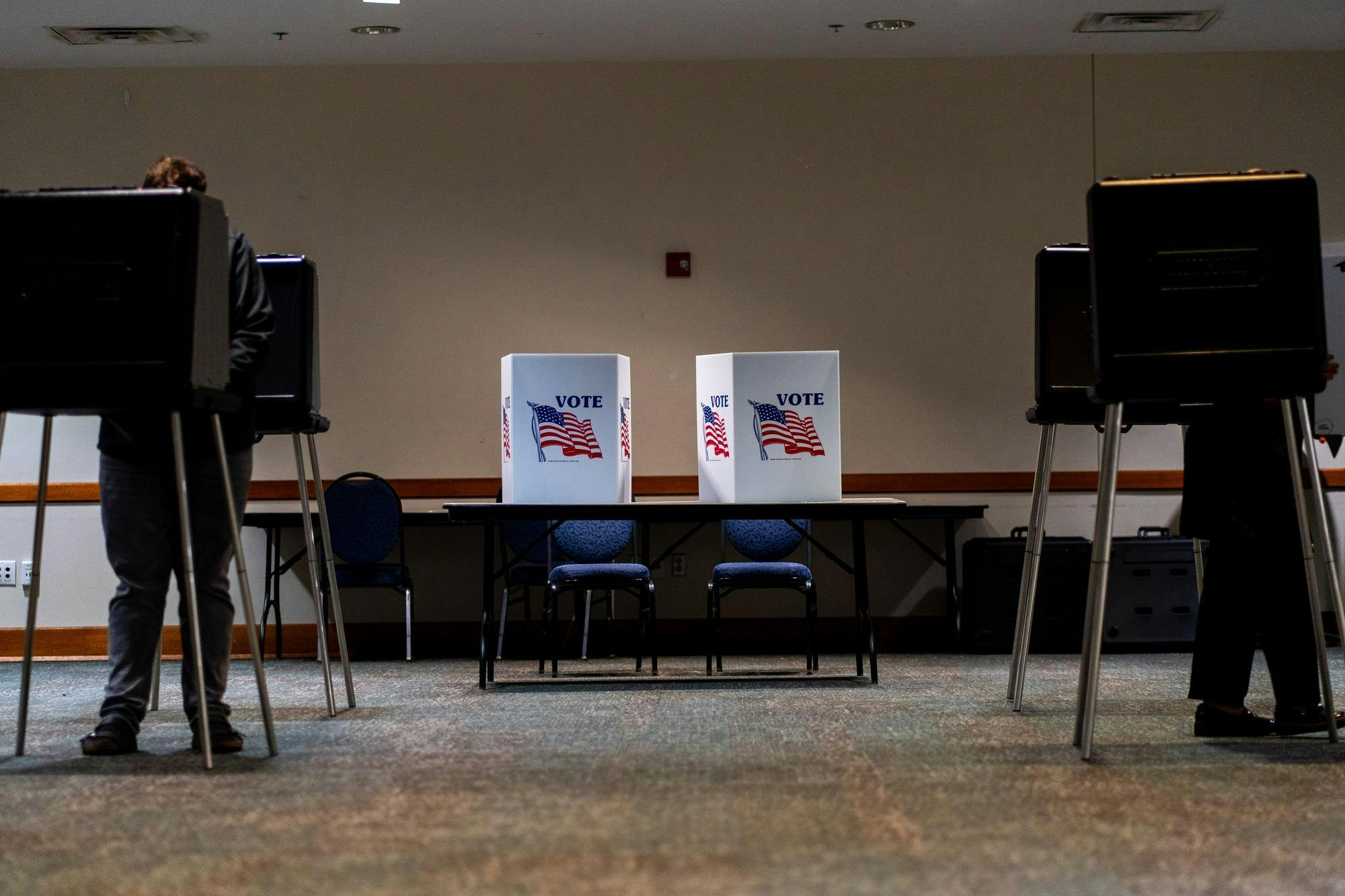
A federal investigation into a study of college student voting trends is leaving Michigan State University in the dark about student engagement ahead of the November midterms.
Since 2013, Tufts University has conducted its National Study of Learning, Voting and Engagement (NSLVE) in an effort to catalogue, among other things, registration and voting rates across student demographic groups, class year and fields of study. MSU has participated in the study since 2016.
That information is particularly useful for MSUvote, a non-partisan campus group that tries to increase voting rates on campus and inform students on candidates and issues. In 2022, Tufts released a 18-page analysis of campus voting trends at MSU.
“We would use that information to be able to understand when a good time is to reach out to students, what locations on campus, what colleges do we need to do more tabling or more education [for],” said MSU Vote Co-Director Renee Miller Zientek.
In February, the U.S. Department of Education announced it was opening an investigation into the study based off suspicions that the study violated student privacy laws. The department claims it received multiple reports alleging that the process of compiling voting data “involves sharing college students’ data with third parties to influence elections.”
Tufts has defended the legality of the NSLVE, arguing that all the data it receives from the National Student Clearinghouse is anonymized on arrival and the findings are reported as de-identified, aggregated data. Even so, later that month, Clearinghouse announced it was abandoning the project, and Tufts is pausing the release of any report pending the conclusion of the investigation.
Since they won’t have a clear picture of voting data across different student demographics such as year and discipline, MSUvote will be leaning on unchanging missions backed by historical trends, such as improving voter turnout among first-time voters and ensuring outreach and education stretches across campus.
“We're going into a midterm, and it would be wonderful to be able to say, ‘Hey, our last midterm we had this percentage of student voters, this time we have this percentage,’ And we won't be able to do that,” Miller Zientek said.
Precinct-level data can only reveal so much. An election-night analysis of East Lansing precinct results revealed that students casting ballots on-campus voted for then-Vice President Kamala Harris at lower rates than they had for past Democrats. However, that data only captured students who voted on-campus, and not those who casted absentee ballots or traveled home to vote.
Being able to understand who was voting and who wasn’t allowed them to focus on how to tailor education programs around voting, Miller Zientek said. Without that data, it’s not possible to, for example, count students who may have voted out of state or remotely.
MSU Vote had also been benchmarking the data from different elections to compare student voter turnout with peer institutions. In 2024, MSU was awarded the “Most Improved Voting Rate” among Big Ten colleges for the 2022 election in the ALL IN Campus Democracy Challenge, which used the NSLVE data to compare campuses across the nation. With the loss of data, these initiatives will also be put to a halt.
Heading into the 2026 midterm, MSUvote will be focusing on programming centered around civic skills and identity and more educational workshops and tools. Miller Zientek emphasized that while it would be helpful to have the data to tailor their education efforts, they have to keep moving forward without it and find different ways to fill the gap it left.
“I think that's human nature and part of our culture to want to know how many students and how we've improved or what have you,” Miller Zientek said. “But it doesn't change the mission about providing voter education and making voting accessible to MSU students.”
Support student media!
Please consider donating to The State News and help fund the future of journalism.
Discussion
Share and discuss “Fed investigation leaves MSU in the dark on student voting trends” on social media.