Courtesy of the Residential College of Arts & Humanities
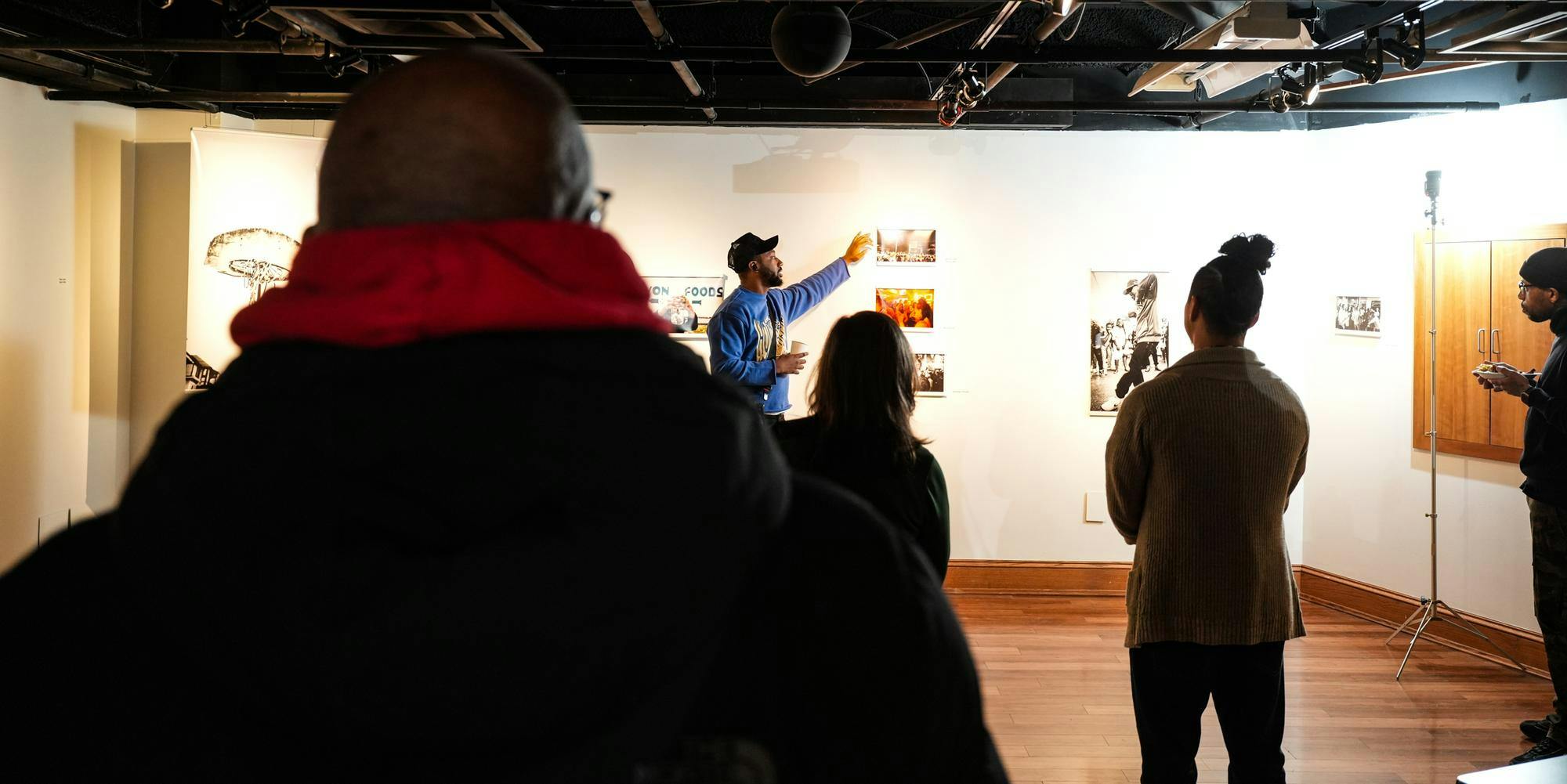
Award-winning photographer Elonte Davis is redefining education through his newest exhibit: Homeroom: Detroit Taught Me First, housed in RCAH’s Look Out Galleryinside Snyder-Phillips Hall. More than an art show, Homeroom uses photography to convey how Detroit has shaped both Davis and the broader community, making the city itself a teacher. The exhibitis also part of the annual Emerging Vision Exhibit that seeks to celebrate African and African American culture.
Homeroom serves as a portal straight to the east side of Detroit, where Davis lives, featuring over 50 photographs that transform ordinary moments of “overlooked and unseen people” into lasting lessons and stories.
A Kresge Award Winner and self-taught photographer, Davis realized the impact of capturing moments when his photographs of his community gained attention on social media amid sudden deaths. This response from his community inspired him to reframe his work as what he calls “memory engineering.”
“I just know what I’m doing is something different. Basically, a memory engineer is someone who preserves the culture, the people, and the places. And that’s what I feel like I’m doing in my pictures," Davis said. "I’m immortalizing people through my photography. I’m building a 100-year archive. I’m building something that’s going to outlive me.”
Academic Specialist at RCAH and Director of the Lookout Gallery Steve Baibak was initially drawn to Davis after seeing his exhibit inside a liquor store, noting that Davis' commitment to centering his work around the community made him want to reach out. When Baibak and Davis were collaborating on the show's design, Davis initially sent over 80 photos that they had to cut down.
“[Davis] is just a spirit. I love that. And I love that it is not through academic tracks. He came in, stepping from one rock to the next. You know, figuring out a lot on his own, through his own kind of ambition,” Baibak said.
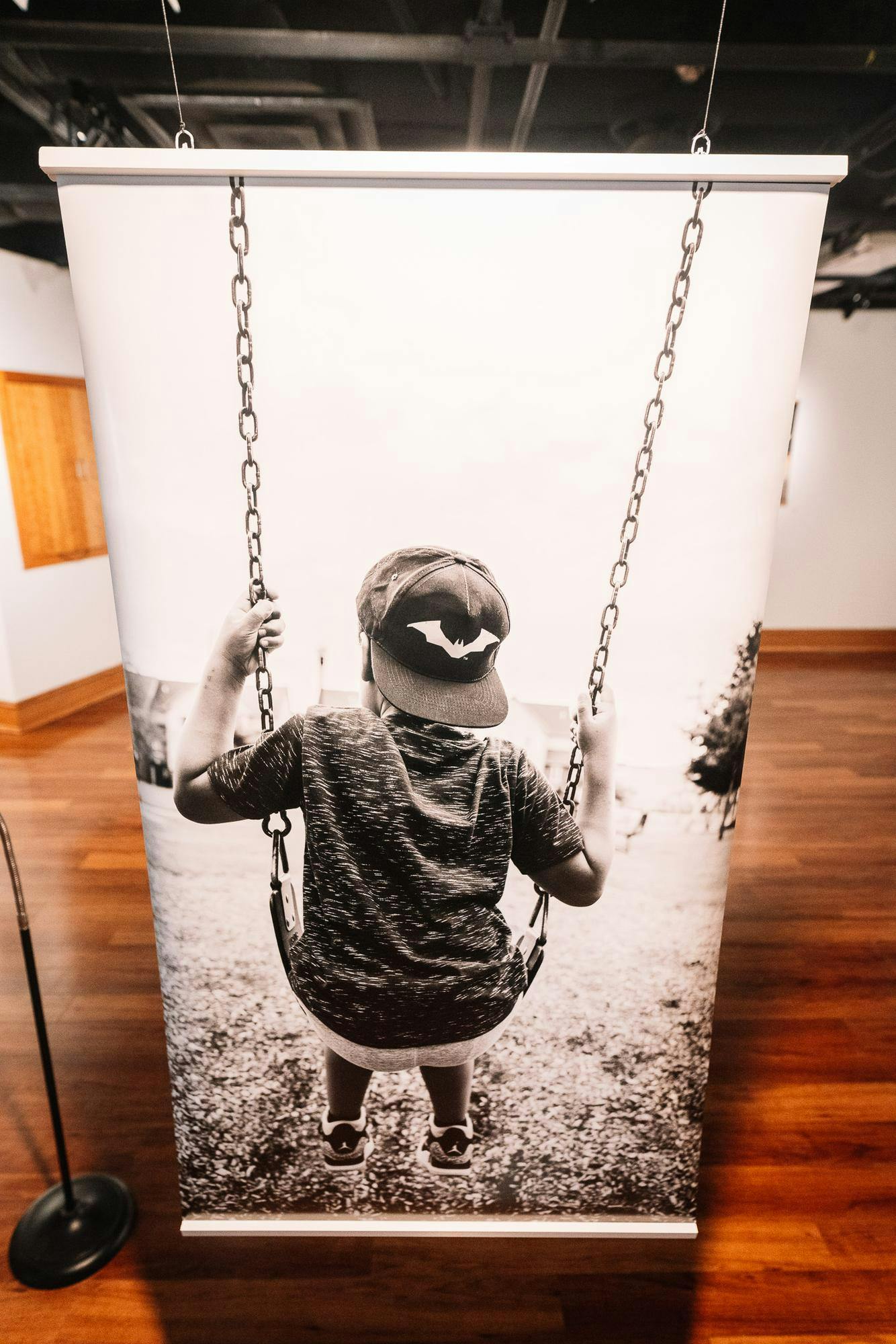
The exhibit also challenges stereotypes about Detroit. Shaped like a neighborhood, it features photographs suspended from ceilings, tucked into corners and collaged along the walls. Davis explains that the photographs are meant to showcase the city’s grit and the community's strength.
Photos featured in the museum include a black and white photograph of an older Black man giving advice, a snapchat of a Michigan State graduation in the Breslin Center and a Black woman dressed in a Detroit-classic fur. In the center of the exhibit is a collage of photos on a chalkboard titled “Life Lessons," collaborated by artists Joe Cazeno and Oshun Williams.
“Detroit never left. All the new people were like, 'It’s making a comeback,' but it’s the same city, with the same soul. And that’s where I got the homeschool [idea from] to say everything Detroit taught me,” Davis said.
This soul is showcased through the range of intimacies in Davis' work that juxtaposes childhood innocence with the realities of living in the city. For example, “Snow Fight” places the viewer directly in the line of sight of two joyous Black boys engaging in a snowball fight with the camera.
Another piece, “Hanging with Neff,” hangs from the ceiling, capturing a young Black boy swinging. Baibak describes the photograph as a critical piece in the exhibit, particularly in its reflection on Tamir Rice and the presence of guns in the neighborhood. To Baibak, the children in the exhibit still keep their childhood innocence while addressing the realities of the neighborhood.
Davis shares that the presence of children is intentional in the gallery.
“That’s another stereotype I wanted to [fight against], that Black men don’t take care of their kids. [...] 'Hanging with Neff' means I gotta be such a positive role model. I want him standing on my shoulders to do better than me, to go harder and know that anything is possible,” Davis said.
"As we are kind of in these times of struggle politically, we can also say that things in our own neighborhoods kind of continue on some other level. Some of this stuff is generational and goes back. [Davis’] neighborhood reveals a certain legacy,” Baibak said.
Freshman Audrey Hastai was introduced to Davis’s work in her RCAH writing course. She now works in the Lookout Gallery, touring people through the Homeroom exhibit.
Hastai shared in an interview that she believes museums, exhibits and art galleries are the best way to get people to be more empathetic towards one another. She says it was the humanness in Davis's exhibit that captured her the most.
“[The exhibit] is about being open-minded towards other people’s experiences, which I think is really valued in RCAH. His photography showed that," Hastai said. "People go in with one idea about what an exhibit looks like, or what art should look like, or what Detroit should look like. And I think you have to put that aside and really listen to what the Homeroom exhibit is [sharing].”