Since OpenAI released ChatGPT in 2022, kicking off the mass adoption of generative artificial intelligence, faculty, students and administrators have been forced to wrestle with how to adjust to its impacts on higher education and the workforce.
Skeptics have long decried the technology for its potential to displace workers and worried its ease-of-access could spell doom for essential critical thinking and writing skills. Meanwhile, institutions like Michigan State University have moved towards further integration of AI into its curriculum, even giving students free access to Microsoft's CoPilot.
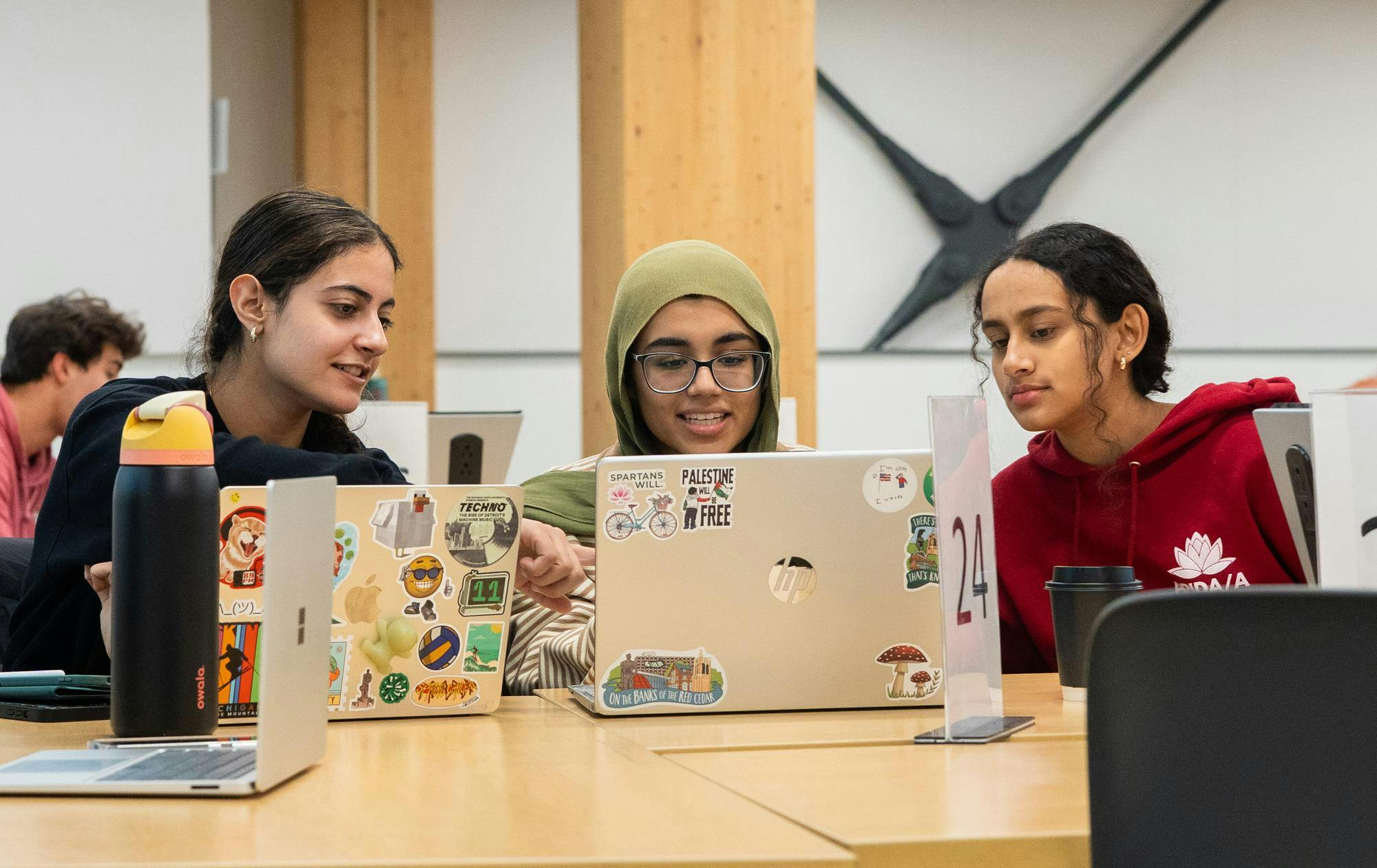
At meetings of the MSU-AI Club, however, the impending ubiquity of the technology is far from a worry. In fact, its members are some of the most ardent supporters of the technology and hope to leverage in their own careers.
“AI club is very educational, we teach members the bare bones (...) and then we obviously consider the huge impact AI will have on jobs,” said workshop coordinator and computer science sophomore Yash Kalani.
The members of the club are interested in using the technology to enhance their productivity and create interesting projects, said Kalani. But the club isn't blind to the potential downsides of AI, either.
Take for example, a recent workshop the club held on vibe-coding — a new trend among tech-savvy software developers that takes advantage of many models’ impressive ability to turn human text into code.
While the trend can lead to new websites and apps being developed blisteringly fast, too much vibe-coding can result in sloppy, glitchy software. It can be tempting to simply input a prompt to a mainstream AI tool and implement its output blindly.
“(There's) two sides of that coin, on one side vibe-coding can be very profitable. We also show the other side of that coin where not knowing the basic fundamentals can really catch up to you.” said MSU-AI club vice president and data science senior Clara Linjewile.
The club's main mode of outreach is through weekly workshops that cover a wide range of AI-related topics, with a yearly workshop about ethics in artificial intelligence and the potential pitfalls of overreliance on the technology.
Planning workshops can be complex, something Kalani and his co-coordinators keep in mind when designing a good workshop.
Students from across a multitude of majors attend the workshop, so tweaking workshops to appeal for both non-computer science majors and junior and senior computer science majors is important, Kalani said.
MSU alumni, and past AI Club leadership Pratham Pradhan said that the AI Club also provides a professional network and a place to learn about new technologies and data from other people.
“The thing with technology is that there’s always something new that comes out, and it's hard for an individual to keep up with, and learn together,” Pradhan said.
Pradhan added that the vast amount of ever-changing technology contributes to quick turnover in the computer science field.
That’s where the club's fundamentals and lessons come to support students and emphasize that there is still human involvement and impact in the world of artificial intelligence.
“Every AI system is only a product of whoever created it and the kind of data information it’s being trained on. It’s just iterations of the same information,” said Linjewile.
Pradhan shared a similar perspective on the two sides of job displacement caused by AI, where it causes a plateau in technology but inadvertently opens up more niche areas and shifts job markets.
Even for those who aren't members of MSU-AI and don’t attend the meeting, Pradhan emphasized the importance of having a daily relationship with technology, to learning to work with it.
“Read and research about artificial intelligence almost every day to catch up with it, and only then can you make an impact,” Pradhan said.
Support student media!
Please consider donating to The State News and help fund the future of journalism.
Discussion
Share and discuss “For MSU-AI Club, new tech generates excitement” on social media.