For most college athletes, the sport they play doesn’t just shape their schedules — it starts to become central to their entire college experience. From early morning workouts to late-night study halls, their time is structured around practices, competitions, and recovery. Seasons become years, and their identity becomes inseparable from performance.
But eventually, every athlete reaches the same moment: the last game. Finally, the question emerges — one they rarely have time to confront while competing: What happens after the game?
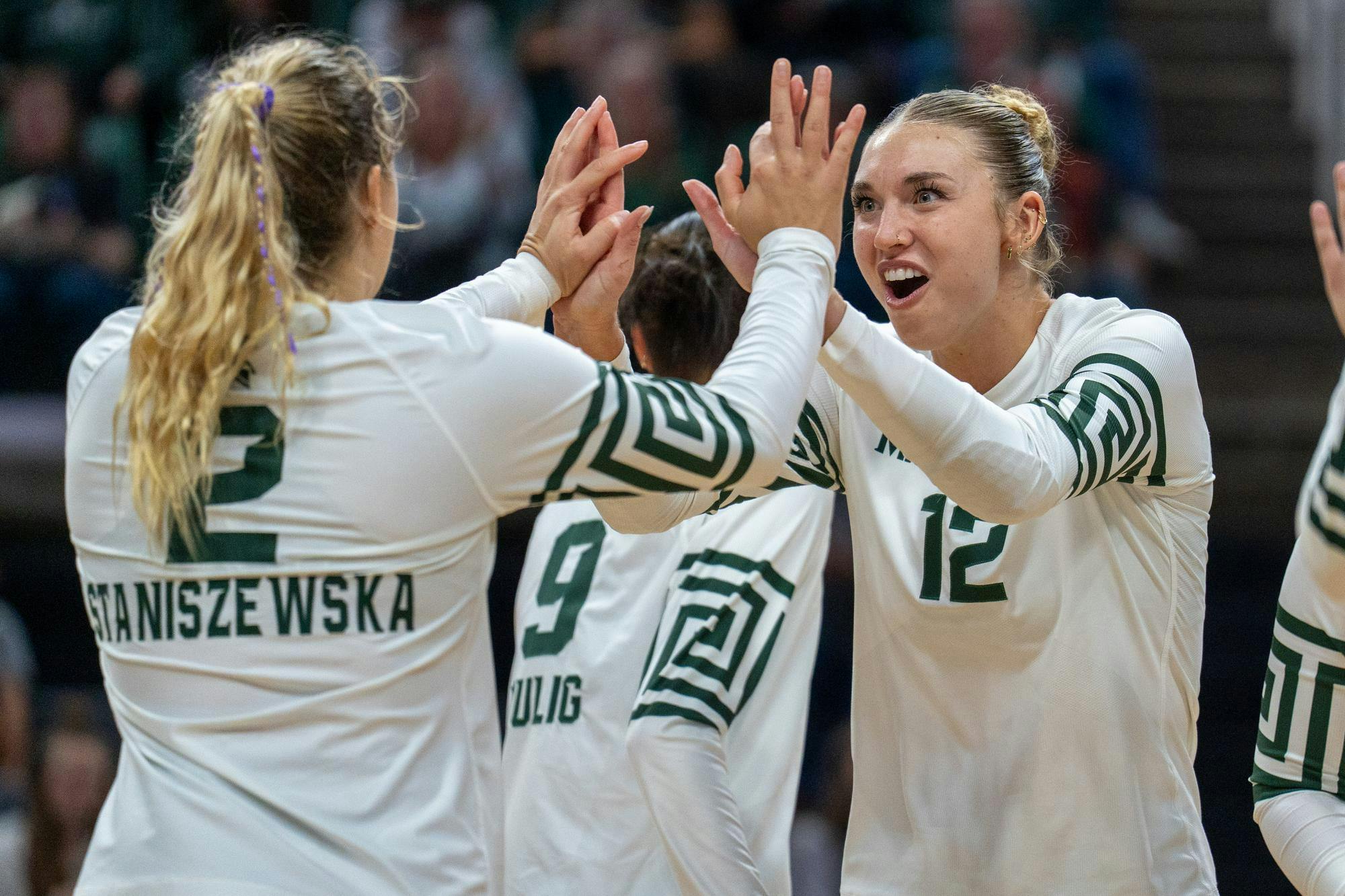
For Evie Doezema, that moment arrived after four seasons on the women’s volleyball team at Michigan State University. A Division I athlete in the Big Ten, Doezema graduated in three and a half years with a bachelor’s degree in psychology, closing a chapter she had been building toward since childhood.
“Gratitude, I think is, like, if I had to pick one word. Genuinely looking back, it’s still kind of crazy to me to think that I was able to live that dream. Over such a long career of playing volleyball, it was always a dream of mine to go play collegiately, and then it became playing Division I, and then it became playing in the Big Ten. And to just look back at my younger self and be like: I did it. I accomplished my dreams, I accomplished my goals — I’m really grateful to MSU for giving me that opportunity.”
But beyond the pride and fulfillment, college athletics also creates a deeply structured way of living — one where time, movement and motivation are constantly externally regulated. For many athletes, that structure becomes normal, even comforting. When it disappears, the transition can feel disorienting.
“You go from seeing everyone every single day and spending hours and hours and hours every day together, to just, like, all of a sudden, snap of fingers, it’s done. You’re not in that routine anymore. And it’s hard going from knowing you have to be somewhere, because it’s required and people are telling you what to do, and you’re always following directions, to all of a sudden, it’s totally in your lap.”
The shift from collective discipline to individual responsibility is one of the most difficult parts of life after sport. Without practices and competitions anchoring the week, athletes must learn how to self-motivate — physically, emotionally and mentally.
“There’s a really hard transition of knowing you just finished a super long, hard season and your body needs to rest, but then also finding that self-motivation. For so long, when you’re with your team, your trainers, your coaches, you have people laying out your schedule. Then all of a sudden, it’s like, okay, now it’s on you to initiate that.”
This sort of liminal space exists between competition and whatever comes next. It is not quite closure, but no longer a continuation. And for many, it forces a deeper confrontation with the future.
“I am packing up my entire life that I just spent four years building. I’m packing up my normal, my safe space, and just shipping myself out across the country to meet people I don’t know, play a sport I don’t really know much about, and start over. I kind of felt like a freshman again, like, ‘I have no idea what I’m doing.’”
For athletes who do not continue competing, that sense of uncertainty can be even stronger. Although professional sports often dominate the public imagination, only a small percentage of collegiate athletes go on to play professionally. Yet many enter college believing that “going pro” is the natural next step.
“I think too often people have this dream of like, ‘Oh, I’ll just go pro after. I’ll just keep playing.’ Especially in sports like football and basketball, where that pro world is so visible. But sometimes it doesn’t work out for whatever reason, and for us, as athletes, having a major you like is so helpful because you can go back to it. That’s what’s going to make you money and run your life for the rest of your life.”
Doezema says this mindset — prioritizing sport without equal attention to life beyond it — can leave athletes emotionally unprepared when their careers end.
“I’m not banking on the fact that playing professionally will happen. I’ll try, but I’m not like, ‘This has to be it.’ I think that needs to be the mindset of more people. You want to do it, but you can’t assume it will work out.”
Still, even when the competitive chapter closes, the athlete's identity rarely disappears. The desire to compete, improve and push limits often finds new forms.
“I don’t think that competitiveness ever leaves you as an athlete. Whether that’s finding a rec league, or being competitive in your work, or coaching — whatever outlet I can find, I know I’ll always need that. I’ll always love volleyball. I’ll always watch it. That part of me isn’t going anywhere.”
Looking back, Doezema says her college career taught her two lasting lessons for life after: embracing uncertainty and letting go of control.
“I kind of had this one-tracked mind of like, ‘I know what I’m gonna be. I know who I’m gonna be.’ And my career ended up nothing like that. I changed positions three times. I changed coaches three times. It was crazy. I learned that progression isn’t linear — it’s up and down. You can’t control everything, and you just have to roll with the punches.”
Now, when she hears the phrase life after the game, her interpretation has changed.
“For current athletes, I would say uncertainty is the word. But now, I would say — world’s your oyster. As nerve-wracking as that is, there’s no limit to options after school. It’s genuinely your choice of whatever you want to do with your life. And that’s kind of a blessing.”
For athletes who spend years with every hour scheduled and every goal defined, that freedom can feel terrifying. But it can also be transformative. When the game finally stops dictating their lives, athletes are left with something unfamiliar — silence and space.
Support student media!
Please consider donating to The State News and help fund the future of journalism.
Discussion
Share and discuss “Evie Doezema navigates life after college athletics” on social media.