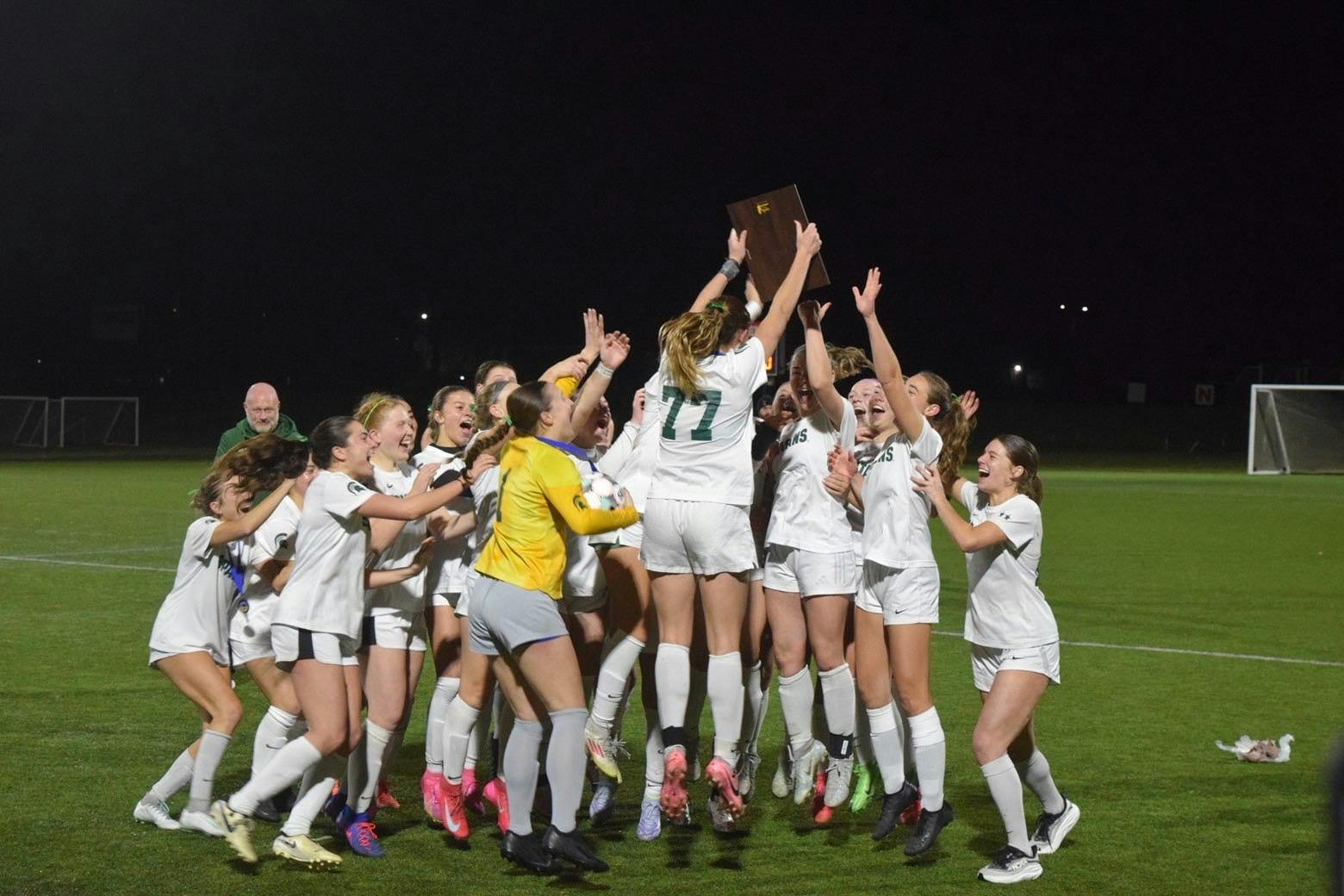
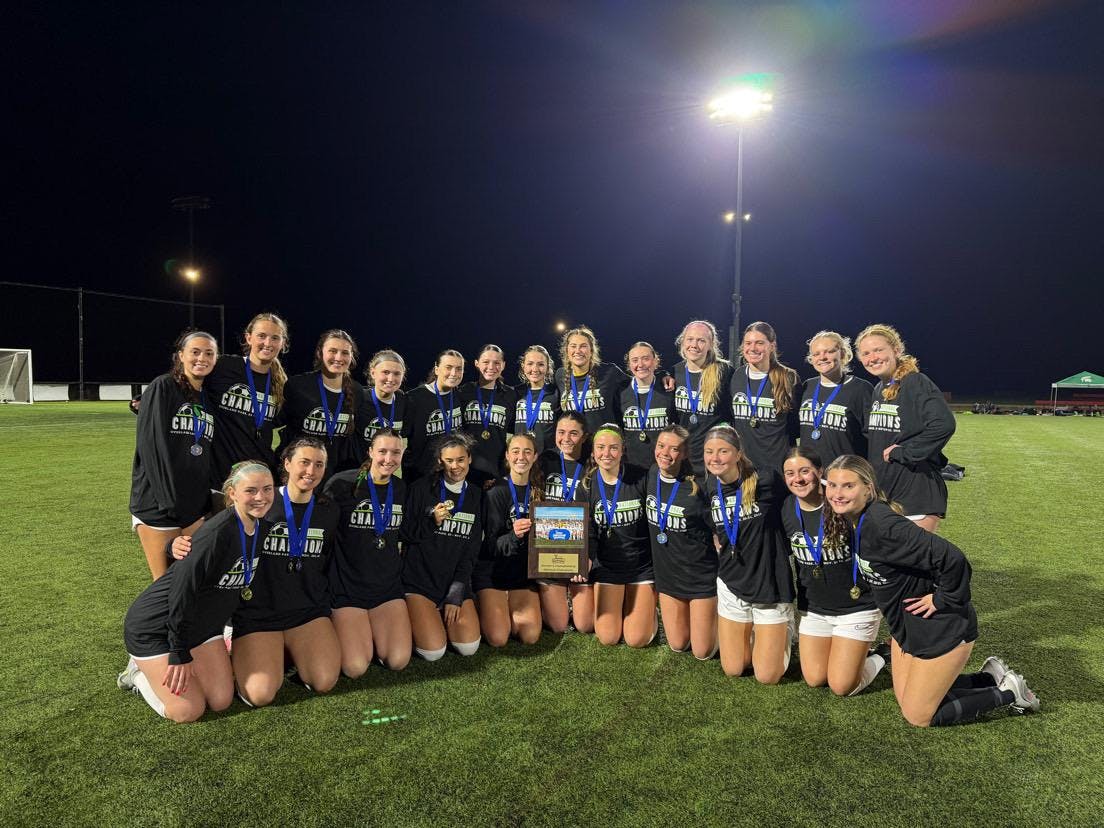
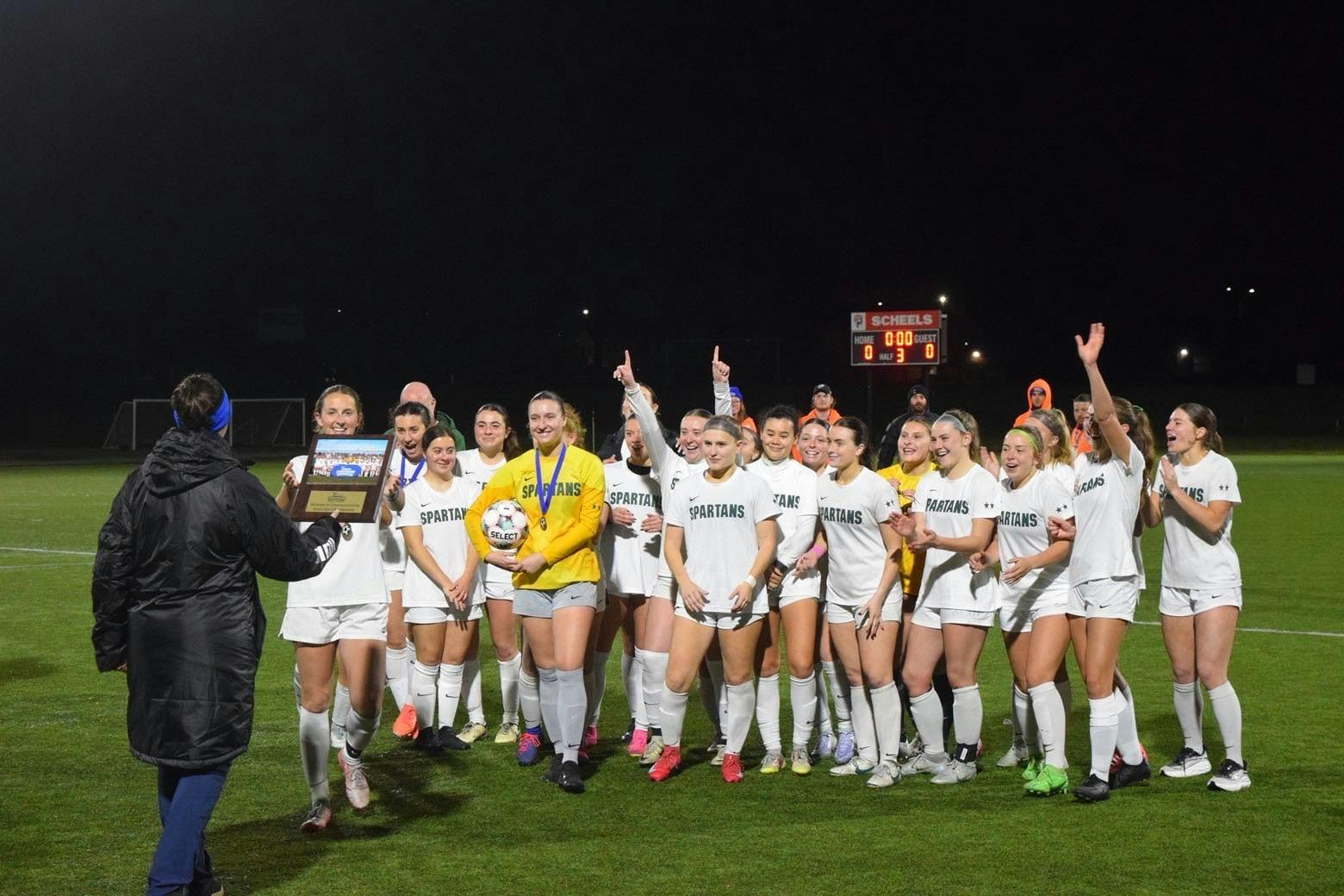
Games every weekend. Practices three times a week from 9 p.m. to 11 p.m. Travel paid out of pocket. A typical college life abandoned. But it’s not all hard for members of MSU’s women’s club soccer team. There are lifelong friendships made, a rediscovery of their love for the game and — most importantly — a national championship secured.
For the team’s current four-year members, it’s a championship that’s been years in the making but "felt really far out of reach," according to club president Emily Woods. Woods, a human resources and labor relations senior and four-year member, said her team was not satisfied with previous seasons, in which they lost in the Elite Eight twice and, last year, fell on penalties in the Sweet Sixteen — to Michigan, no less.
"I still cannot believe that we can say that we're the number one club team in the nation," junior kinesiology major and third-year member Isabella Frick said. "That's insane to me."
The more competitive of the two available women’s club soccer teams on campus, the team holds tryouts at the end of August, typically meeting 75–100 hopeful players and taking 25–30 of varying grade levels. From that moment, it’s a nonstop grind. From three late-night practices a week to two games most weekends, players have the opportunity to continue playing high-level soccer while maintaining a semblance of the regular life of which many athletes are deprived.
"Sorry, I can’t hang out, I have a soccer game."
Social studies education senior and four-year member Ally Maloney said this has been a mantra throughout her experience at Michigan State — something her friends have come to expect from her. While it may seem like a lot, players are still able to have lives outside the sport, helping them maintain a healthy balance between soccer, academics and everyday life.
Many of the players who end up on the team went through the recruiting process during high school or even played at another college before switching their attention to academics or a life outside sport.
"A lot of us wanted to play somewhere, but maybe the only places we could play would be just a smaller school. But for me personally, I knew I wanted to do it at Michigan State," Maloney said. "I wanted that big-school environment, and so it's just like the best option in the middle — I'm at a huge, amazing school, and I also can play soccer at a competitive level.”
Information science senior and third-year member Lauren Carrico, who serves as the team’s social chair, shares a familiar path with several teammates. Her journey took her from playing Division III soccer during her freshman year to moving back home to Michigan — transferring for soccer felt too daunting a process to commit to.
"It's such a great outlet for people who want to keep playing a sport that they've played their entire life," Carrico said. "They're not ready to give it up. They want that competitiveness. They want that commitment and they want that community."
It’s a community that derives its culture from winning. The team remained unbeaten throughout their season, even with structural changes that meant more out-of-state travel such as Notre Dame and Marquette. From their high-scoring regular season, they traveled to the outskirts of Chicago to play in regionals — which they won too. Next up was Kansas City and nationals. All of this travel had to be paid for either out of the players’ pockets or through fundraising.
The travel comes on top of the dues and fees members are required to pay — a $25 tryout fee, $300 in dues, the cost of jerseys and gear and the previously mentioned gas and hotel expenses. The dues cover referees, field usage and other miscellaneous costs. The team isn’t responsible for all expenses, however. They fundraise for nationals, relying on support from parents and alumni.
Woods also works as a student manager for the varsity women’s team and although the differences in resources for near high-level soccer could be frustrating, she views it only as a positive. She employs what she learns there in her team, specifically when it comes to nutrition and warm-ups — although at a lower cost and without the same support.
Similarly, without the privileges afforded to varsity athletes, club players have to simply hope their professors will understand when they miss class for away games and tournaments. The club’s director, Zach Wallace, issues letters of excusal for these extended absences, but professors are not required to accept them. It’s one of many challenges added to the players’ academic load, alongside structuring their days around practice and operating as an almost entirely student-run organization.
While the student-led executive board handles everything off the field — arranging the season’s structure, scheduling games, ordering jerseys, organizing travel and much more — head coach Dan Jury, who has coached the team since 2004, manages everything on the field.
"It's really nice to have an actual coach on the sidelines between all that," Maloney said. "Having him there not only as a coach, but also just to support us with his knowledge, has been amazing and really helpful."
With his support, players on this team have the opportunity to play soccer in a more positive environment than many high school and club teams offer. While many players on this team experienced burnout after high school, Maloney said, their club and coach brought them back to the sport in a more positive way.
"A lot of my team went D1, and it just kind of didn't work out for me in that way," Frick said. Instead of letting that take away her love for soccer, joining the club team changed her view of her sport. "I feel like a lot of club teams or high school teams kind of ruin the sport for a lot of people. This team and our coach has brought back a love of the sport that I lost during high school."
Support student media!
Please consider donating to The State News and help fund the future of journalism.
"There are so many people who went through injuries that lasted years or people who were D1 and they had the worst experience – this rejuvenated their love for this sport." Frick said. "There's people who lost their parents and just came over so many obstacles to win this. Everyone fought their individual battle to get to where we are."
Getting to win the national championship not only took tactics and skills on the field, but a special connection off it. For these players, everything circles back to having each other’s backs. With little player turnover in the past few years, many of the juniors and seniors have been able to grow together as teammates and friends — something that has evidently helped on the pitch, from kick off to the final whistle.
This spirit is evident in their pregame cheer. Instead of saying "Michigan State" or a team name as is typical, the players put their hands in and yell one word: We.
"It’s to remind ourselves that we're doing it for like ourselves and each other and not for any other outside factors." Maloney said.
That’s what women’s club soccer’s special national championship boils down to: self-motivation and a love for each other and the game. Although it requires time, money and immense effort, each player puts in the work to get to that final stage – a stage they all want to be at, together.
"Everyone's there because they want to be, not because they have to be," Carrico said. "We all have a choice and that choice is to show up for each other and work hard."
Discussion
Share and discuss “MSU women's club soccer wins national championship” on social media.