Tensions are growing inside a Michigan State University department as it faces its biggest test yet.
University Advancement, the office responsible for courting benefactors and securing their donations, is in the midst of a record-setting capital campaign.
It’s a timely endeavor. As MSU navigates massive cuts to federal research funding and anxieties about the future of its state appropriations, money is tight.
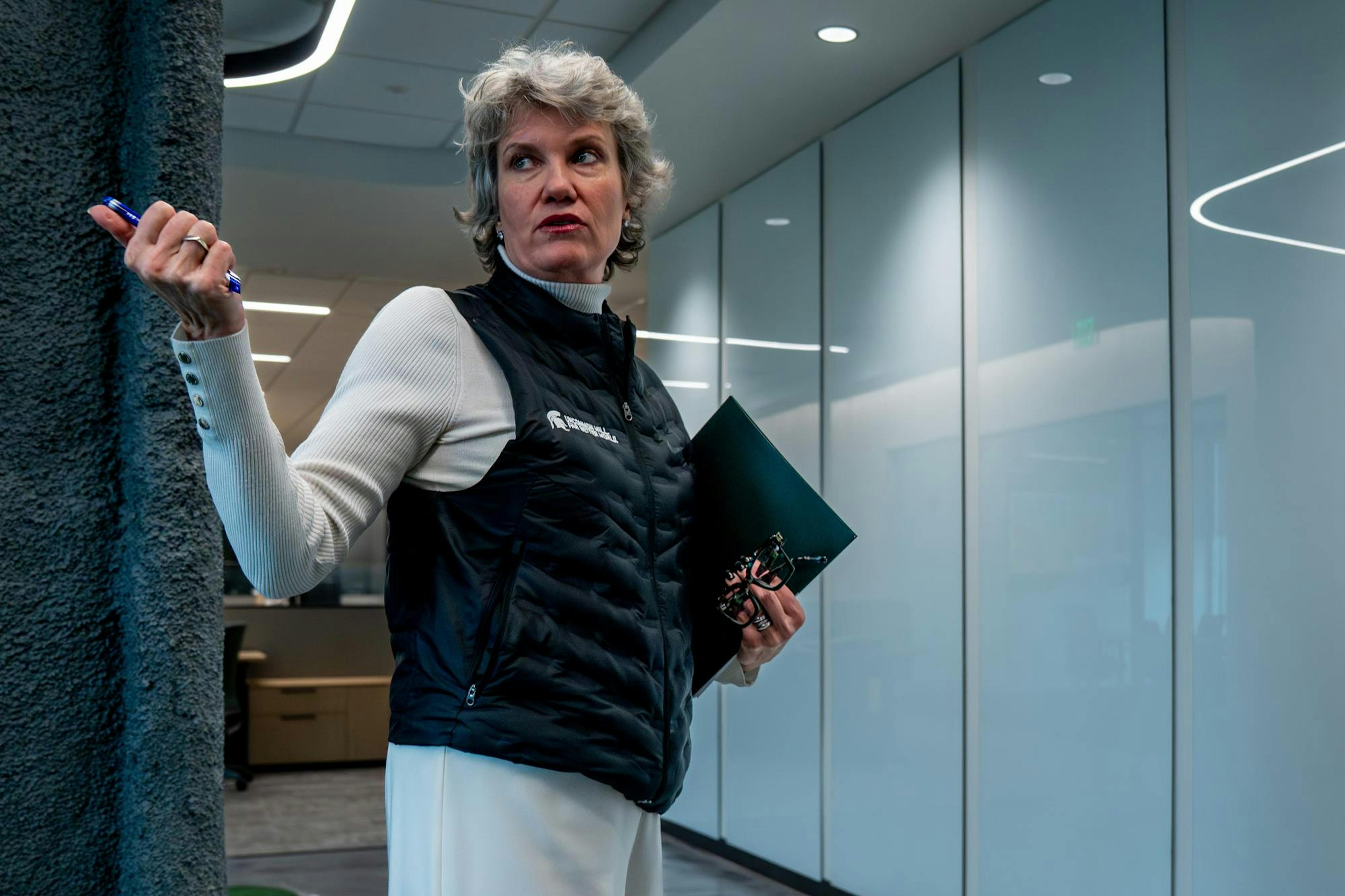
The Vice President in charge of fundraising, Kim Tobin, projects confidence that her department is up for the tall task. She leads a staff of hundreds, charged with eagerly cheerleading the university to deep-pocketed alums.
But behind closed doors, their green-and-white grins are fading.
Since Tobin took over in 2022, her leadership style has alienated some staffers. A consultant she hired to assess morale once noted that employees "do not feel safe at work," and a recent assessment of Tobin’s leadership style described it as "authoritarian or fear-based." In her three years at MSU, Tobin has also been the subject of six complaints submitted to the university’s misconduct hotline.
As tensions have grown, staffers say Tobin has insulated herself with a circle of loyal lieutenants drawn from her previous institution.
Some live out of state and fly into East Lansing for meetings on the university’s dime. Another bills the university as a consultant, even when occupying a full-time role. One was recently given what staffers perceive as lenient treatment after a donor was reportedly upset by her alleged drunken misconduct.
Tobin’s family has joined the fray too, with her sister’s recent hiring to run the iconic Sparty Mascot Program.
The result, staffers said, is a culture defined by loyalty. Tobin demands it above all else, they say, and harshly punishes any dissent.
Soon, those claims could see a courtroom, with a former advancement official announcing her intention to sue MSU. She alleges that Tobin fired her for reporting sexual harassment within the department.
Tobin, meanwhile, points to her results. Advancement just had a banner year, she said, and plans to follow it with another.
By 2032, they plan to raise $4 billion under their "Uncommon Will, Far Better World" capital campaign. They've already raised almost $1.3 billion, according to Tobin.
Of the record-breaking $401 million commitment brought in by MSU Athletics last week, $11 million will be counted towards advancement’s goal.
While employees may gripe about her methods, Tobin says she has done what MSU hired her to do: more than double its previous fundraising goals. It’s a job that couldn't be done if her office functioned the way MSU "used to do things," she said in an interview with The State News.
This account is based on interviews with 22 current and former advancement employees and nearly 1,000 pages of MSU documents obtained through public records requests. The employees spoke on the condition of anonymity because they feared retaliation.
'Targeted expertise'
Advancement staffers broadly described the unit as lacking in cohesion, saying leadership wields outsized influence on decision-making, is siloed off from lower-ranking personnel, and accordingly unresponsive to their concerns.
Such insulation, the current staffers said, is partly explained by Tobin’s hiring practices. Two of her top advisers — Chief of Staff Natalie LaRose and Associate Vice President Simone Clasen — were brought over to MSU from Tobin’s previous institution, Colorado State University, where she was vice president before being hired by MSU in 2022.
Support student media! Please consider donating to The State News and help fund the future of journalism.
Though they left their jobs to work at MSU, they didn’t leave their homes.
LaRose, for example, comes to campus once a month, Tobin said, while still living in Colorado — an arrangement some staffers called ironic for a "chief of staff."
And, while Tobin maintains that Clasen has a "full-time residence" in Michigan, records show the university has regularly paid for her travel to and from Colorado.
Between July 2023 and February 2025, MSU paid for 12 round-trip flights for Clasen, each of which departed and returned to Denver, Colorado, according to invoices obtained by The State News through a public records request.
While in town, records show that Clasen regularly expensed meals at high-end East Lansing restaurants.
Many of the meals are described as routine discussions among advancement leaders, not meetings with people external to the university, like the donors that the department courts.
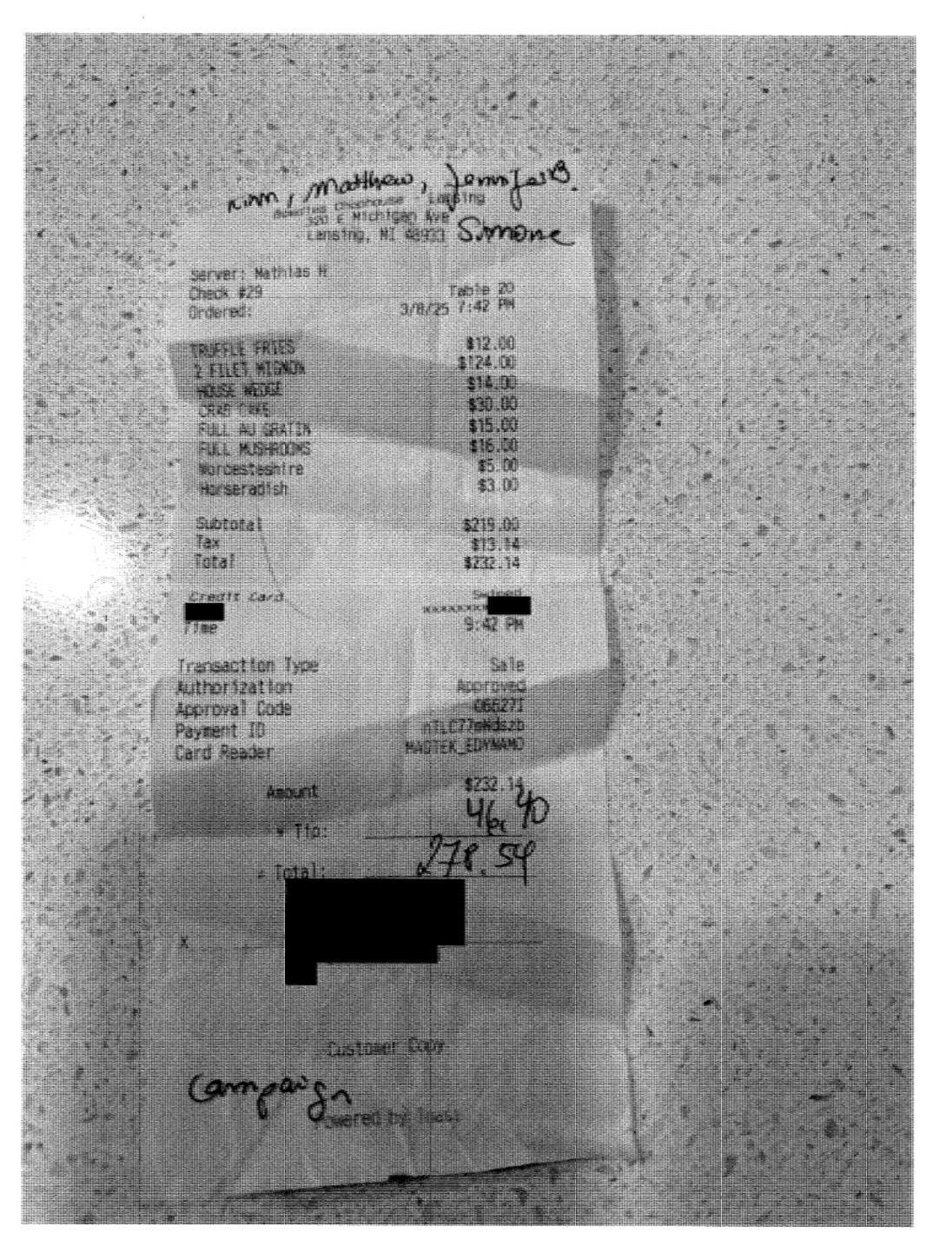
One day in March, for example, she had a more than $120 lunch with the AVP of operations, described in her expense report as a "Vivianne Robinson HR fund review discussion." That same day, she also logged a $278 dinner at Bowdie’s Chophouse, labeled "dinner with Kim, Matthew, and Jennifer."
In a statement emailed to The State News, MSU's spokesperson, Amber McCann, said that Tobin expects all employees to adhere to policies regarding expenses and, "would address any concerns that required additional review."
Tobin used an unusual structure to bring over another employee with CSU roots — Matthew Helmer, who spent over two decades in that university’s advancement and events branches.
When Tobin brought Helmer to MSU, she didn’t hire him as an employee. Instead, he’s been contracted as a consultant.
Helmer was tasked with providing "targeted expertise" in areas undergoing significant transition, including donor relations, data management and campaign preparation, Tobin said. Over time, she added, his responsibilities shifted to broadly assessing advancement’s relationships with donors.
When the AVP for engagement position became vacant, Tobin contracted Helmer for additional work to fill the gap. His hours were expanded and pay increased so that he could provide "fractional leadership" in the role. Such a practice is standard for universities that have brought on consultants, Tobin said.
It’s unclear how much he was paid for that work. Because Helmer was compensated through the consulting contract rather than MSU payroll, he does not appear in university salary records.
The AVP position Helmer was filling was eliminated amid university-wide budget cuts earlier this year, but his consulting for advancement continues, Tobin said.
To current advancement employees, Helmer is largely a mystery. Numerous staffers told The State News they didn’t know what he did for the department or why he was contracted as a consultant rather than being hired as an employee.
Helmer declined requests for an interview. In an emailed statement, he said that he "is focused on empowering teams to catalyze their fundraising by cultivating extraordinary relationships with donors."
'Feel trusted'
Another contentious hire: Tobin’s sister, who was recently selected to run the Sparty Mascot Program.
It’s one of the university’s most iconic traditions. It manages the various students who don the suit, ensures their safety, protects their anonymity to preserve the mascot’s magic, and schedules Sparty’s frequent appearances at events on campus and beyond.
Before landing the position, Tobin’s sister, Shannon Hagerman, spent her career in education administration in the Denver area. Hagerman succeeded Sue Petrisin, an MSU alum who spent four decades working at the university, the last one leading the Sparty Mascot Program.
Petrisin told The State News she wasn’t ready to retire when she left the role, but felt compelled nonetheless to get out of advancement: "People stay at work environments when they feel trusted, respected and they feel valued," she said.
Current staffers said news of Tobin’s sister’s hiring prompted immediate concern in the department. For one, there was skepticism around the fairness of the hiring process. But, the most immediate worry was whether preferential treatment would be dealt to Hagerman within the department — not least because she’d be reporting to an AVP, who, in turn, reports to Tobin.
In an interview with The State News, Tobin said that she recused herself from the hiring process "the minute" she learned her sister had applied. She also said she notified MSU’s president and stepped out of all discussions related to the search, including the formation of the hiring committee and its final decision.
Tobin said the university put a conflict-management plan in place to ensure she has no involvement in her sister’s hiring, pay, or evaluations, adding that such firewalls are routine across the university.
'What a story'
Concerns about the culture inside advancement have been repeatedly conveyed to MSU.
Documents obtained by The State News from MSU’s Office of Audit, Risk and Compliance show it received six misconduct hotline reports about advancement’s internal operations between October 2024 and August 2025.
Even with heavy redactions, the reports contain a clear through-line: reporters described "continued growing concerns about the lack of leadership, communication, and respect within the organization," a "collective morale issue," and decisions "made without input or explanation.”
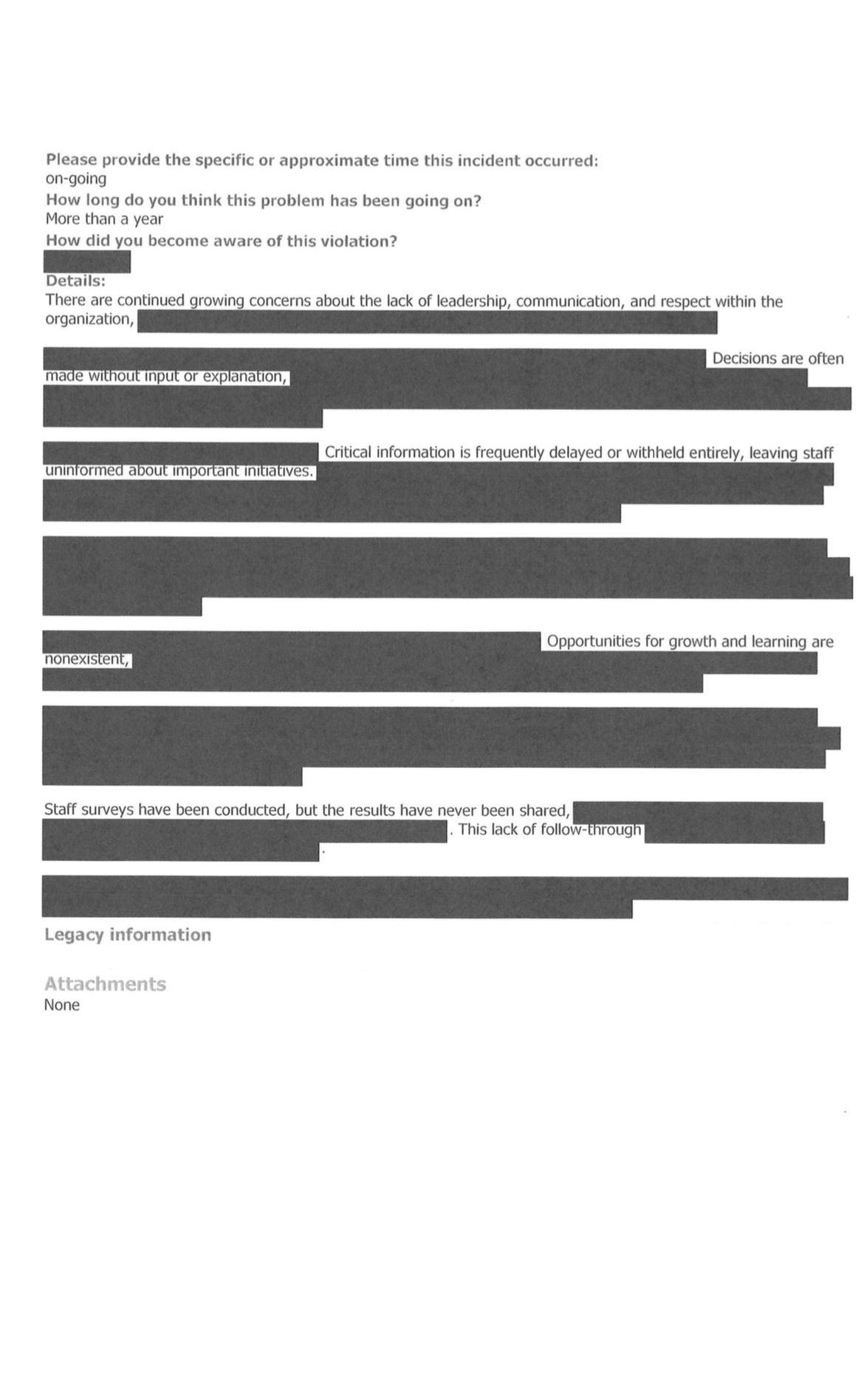
One report urged auditors to "check out the number of people who have left the department." Another wrote there was "too much to write." A separate report categorized as "fiscal misconduct" alleged questionable spending connected to a company hired by advancement, though redactions obscure further information.
"What a story there is to tell," said one heavily redacted report.
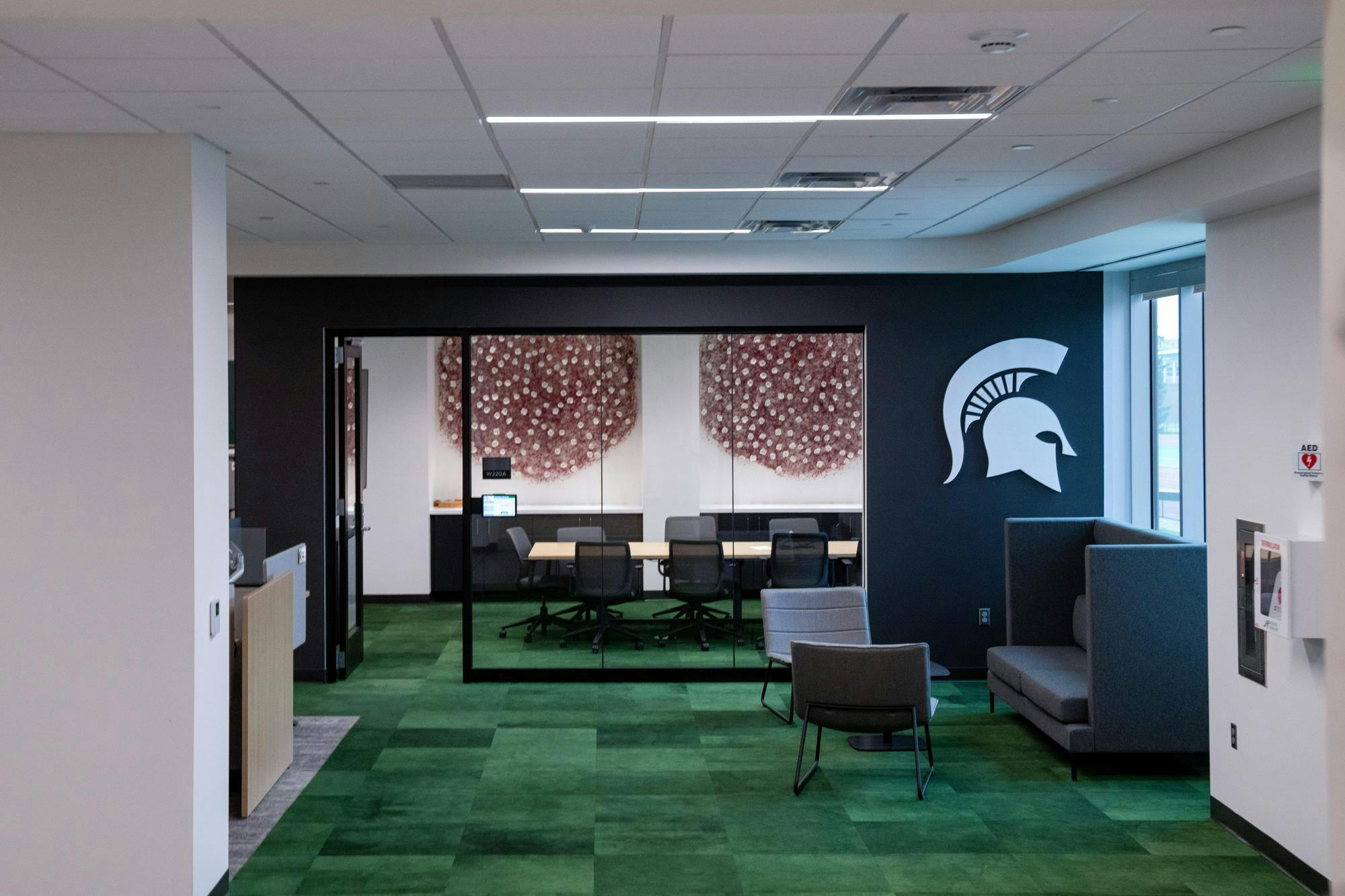
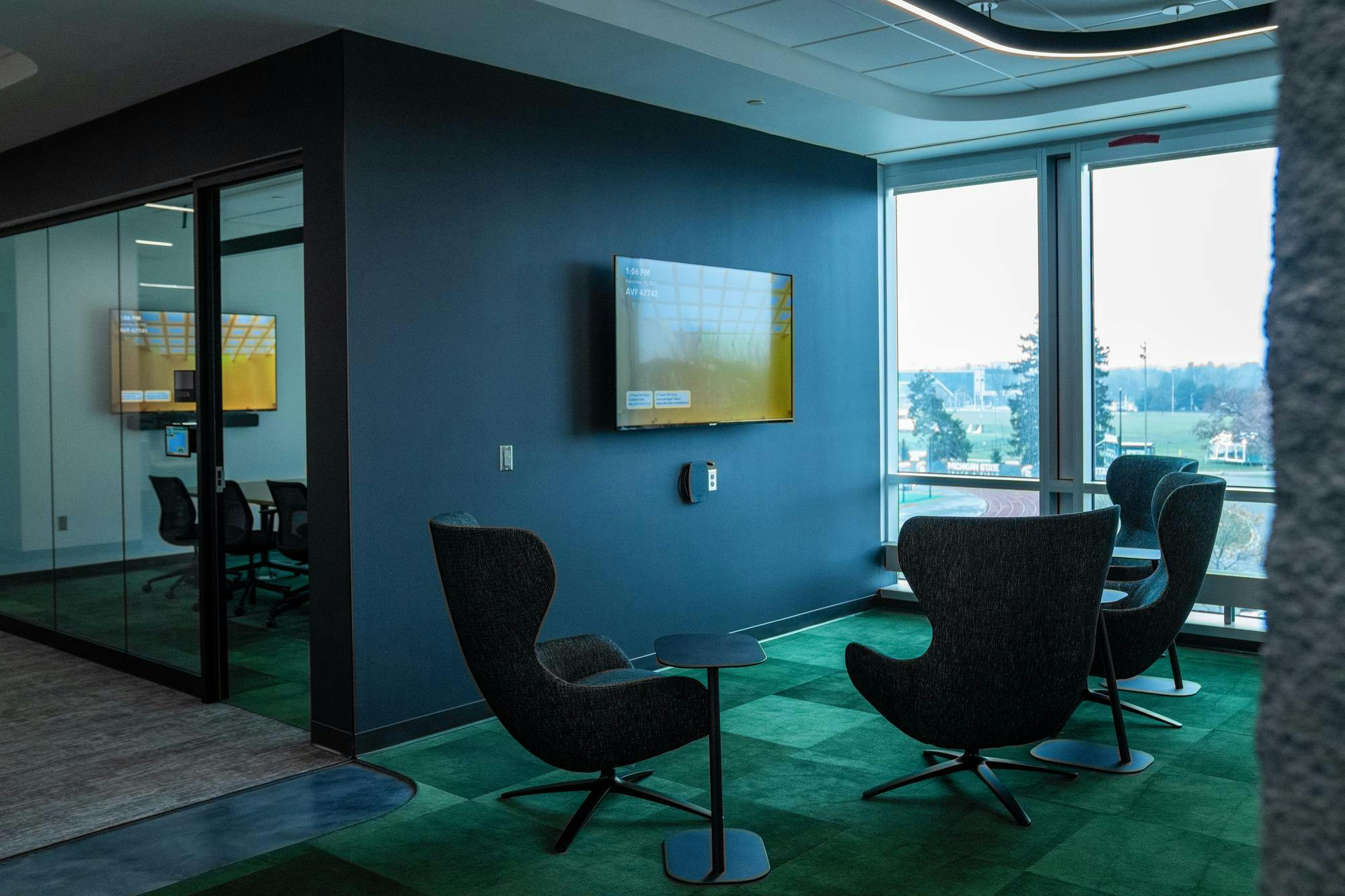
There was also a complaint about the ongoing $15 million renovations to advancement’s offices in Spartan Stadium. It said that staff had “no input” in the process and were struggling with an unfinished layout as the complex renovations stalled. (Through a spokesperson, Tobin declined to comment on the allegations submitted to the hotline, saying MSU never shared the full reports with her.)
Taken together, the documents closely comport with employees' characterizations to The State News of dysfunction within advancement. Over her years atop the department, they say, Tobin isolated herself from rank-and-file staffers as she relied more closely on a small circle of loyal advisors.
"If you surround yourself with yes-people the whole time," one long-time employee said, "you’re not getting the truth."
As Tobin has become more insulated, staffers have grown reluctant to dissent on department decisions. Raising concerns is viewed as being "not aligned" with leadership, they said, leading many to withhold frustrations about communication, transparency and spending.
Some of the staffers’ concerns were once raised by a consultant brought in by Tobin.
As Tobin settled in at MSU, she hired another former CSU colleague, Kathy Drucquer Duff, to conduct professional development workshops through her firm, KDD Philanthropy.
From July 2022 to July 2023, KDD held a series of leadership coaching and teambuilding sessions with Tobin and her staff, according to documents obtained by The State News through public records requests. Invoices show that MSU paid $66,905 for the sessions and associated travel expenses.
In an August 2022 draft of KDD’s findings, she wrote that the most disconcerting theme from the sessions was the number of staff who "do not feel safe at work."
She didn’t lay blame on Tobin alone. Her report suggests that "all members of the senior leadership team" should have a more "consistent approach" and be reminded of Tobin’s "zero tolerance approach to bullying/exclusion/etc."
McCann said in an email that the report was a reflection of previous leadership, but that advancement leadership has "thoughtfully reviewed and discussed the findings and implemented change and updated or clarified policies and practices to address the report's findings as appropriate."
A later review came to a more pointed conclusion.
In August, a "360-degree leadership assessment" conducted by an executive coaching firm found recurring issues with organizational culture, internal communication, delegation and trust, according to a copy included in Tobin’s personnel file.
The report praises Tobin’s donor-facing strengths, but also includes criticisms about her staff turnover from 2023 through 2025 and gaps in collaboration with other units. It recommended that Tobin adopt a more empathetic approach and move away from "a perceived authoritarian or fear-based style."
Critiques about transparency and employees feeling "talked at" rather than engaged led to her lowest competency score — a 67 out of 100 rating in "People Leadership."
A breakdown of the score highlights a disconnect between Tobin’s closest advisors and the rest of her staff. Her direct reports, on average, rated her 19 points higher than other staffers, "indicating a significant difference in the perceptions of her overall competency between these groups," the report said.
In a statement emailed to The State News, McCann said that Tobin "appreciates the frank and thoughtful feedback," and is actively working to incorporate those suggestions into her leadership style.
In September, staffers say, Tobin tried to mend some of the tensions by inviting employees to a luncheon. The goal was to bond with those who otherwise got little face-time with their vice president, they said.
The plan didn’t work. Tobin arrived late, staffers recalled, then only delivered a brief speech about herself before thanking the group and leaving. (McCann said in a statement that the lunch was organized as a gesture of appreciation for advancement’s hard work; Tobin attended to "offer her personal appreciation to the team," she said, before turning it over to an associate vice president while Tobin attended other obligations on campus).
Pay gaps
The insular culture criticized by employees can also be seen in the way the department’s staffing and compensation have shifted over time.
In 2015, under then Vice President Robert Groves, advancement had four Associate Vice Presidents, according to org-charts obtained by The State News through public records requests.
When Marti Heil assumed the VP role in 2018, she reconfigured leadership to have just two AVPs.
Until June, when MSU implemented university-wide budget cuts, Tobin had six.
The pay for those positions has also grown under Tobin. In 2015, the average AVP was making $163,949. In 2025, they make $300,498.
Tobin’s pay has greatly increased, too. Grove earned $332,000 in 2015, while Tobin is making $515,000 in 2025.
There have not been similar raises for lower-level employees in advancement. In 2024, for example, as Tobin and AVPs were given 6.41% raises, on average, while everyone else got a 3% bump.
McCann said in an email to The State News that salary equity is reviewed twice a year for all advancement employees and "is addressed as appropriate"
Looming litigation
Even as the tension with staff builds, advancement is growing more ambitious and is reportedly more successful than ever. The department has just posted a banner year, setting a record with $380 million in gifts.
"Our results stand for themselves," Tobin said.
A looming lawsuit could raise the temperature.
An intent to sue letter filed earlier this year touches on the culture of loyalty criticized by advancement staffers. In it, former AVP of engagement Alison Gaudreau alleged she was fired in retaliation for reporting sexual harassment and discrimination — reports she says she was required to make as a mandatory reporter.
The filing says Tobin took issue with the reports Gaudreau submitted, and claimed they reflected poorly on the department’s leadership.
Rather than supporting the reporting process, Tobin allegedly told Gaudreau she should have worked first with the division’s HR lead, Robinson, to resolve the matters within the department without involving MSU’s internal investigators at the Office of Institutional Equity.
The filing said Robinson advised Tobin that reprimanding Gaudreau for submitting the reports would violate university policy. Even so, Gaudreau said in the filing that Tobin continued to criticize her performance — questioning her communication and loyalty — despite giving her a satisfactory performance review in September 2024 and raising no concerns before the reports were filed.
The alleged victim and perpetrator were advancement employees, according to Gaudreau’s attorney, Sarah Howard, though she declined to identify them.
Gaudreau was terminated on Jan. 17 and was given no reason beyond being classified as an "at-will" employee, according to the intent to sue letter and a termination letter obtained through a public records request.
Howard said that Gaudreau expects her right-to-sue notice from the Equal Employment Opportunity Commission soon, which will then allow her to file a lawsuit in federal court by the end of the month.
McCann said that Tobin refrains from commenting on pending litigation, but that she takes her responsibility as a mandatory reporter seriously.
'Conduct yourself'
When a donor reportedly raised concerns about the conduct of another one of Tobin’s AVPs, she received a different treatment.
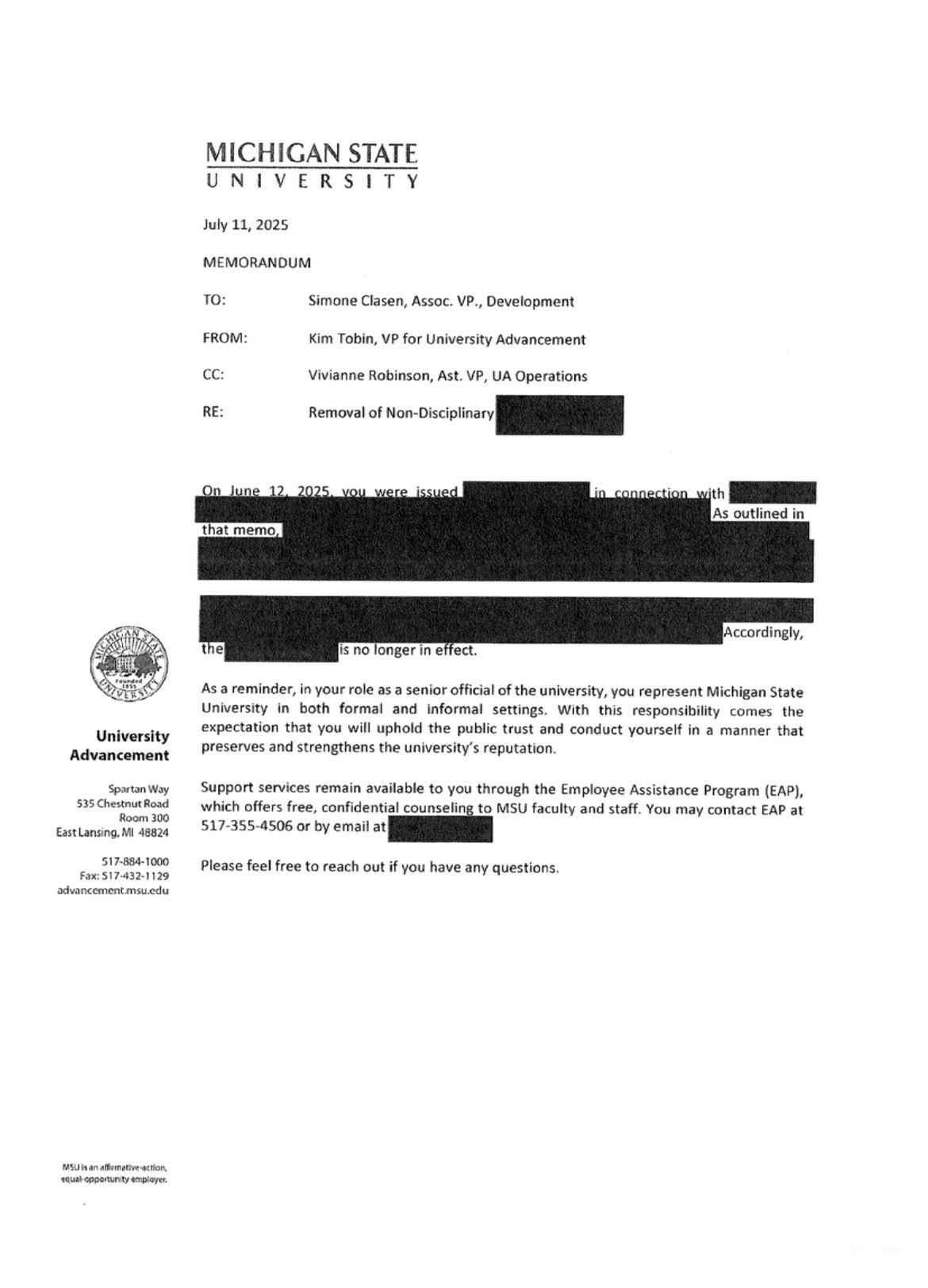
In June, Clasen – the AVP who followed Tobin from CSU and appears to live in Colorado – was placed on a "non-disciplinary" leave of absence, according to her personnel file, which was obtained by The State News through a public records request.
McCann, the MSU spokesperson, declined to disclose the reason for the leave, saying the university doesn’t comment on personnel matters. Tobin declined to comment on it.
In July, about a month after the leave of absence began, Tobin emailed Clasen to inform her it had concluded, according to the personnel file. Though the leave was labeled "non-disciplinary," Tobin’s message suggests unspecified conduct of Clasen’s had come to bear on evaluations of her professional performance.
In the email, Tobin reminded Clasen that she represents the university in both formal and informal settings, and must "conduct yourself in a manner that preserves" the university’s reputation.
According to 15 current advancement staffers, Clasen has repeatedly become intoxicated at fundraising events. The habit reportedly came to a head earlier this year.
Following the launch of the capital campaign in March, advancement leadership was contacted by a donor who complained that Clasen had acted inappropriately with a donor while drinking, according to two people with knowledge of the exchange between the donor and advancement.
McCann and Tobin declined to answer questions about the donor’s alleged complaint or current staffers’ claims about the pattern of drinking. Clasen said her leave was related to a death in her family, but declined to comment further.
In the eyes of some rank-and-file advancement staffers, Clasen’s case and Gaudreau’s alleged ouster offer a striking juxtaposition.
Gaudreau joined advancement just after Tobin started. Staffers described her as a notable foil to the otherwise close-knit circle of AVPs. She was known to have disagreed with Tobin.
When she reported sexual harassment? She was fired, they lament.
Meanwhile, when a loyal lieutenant who followed Tobin from CSU reportedly upsets one of the very people advancement is designed to please? She gets, as they see it, a slap on the wrist.
To get rewarded, one employee said, "you just have to drink the Kool-Aid."
Administration Reporter Emilio Perez Ibarguen contributed data analysis