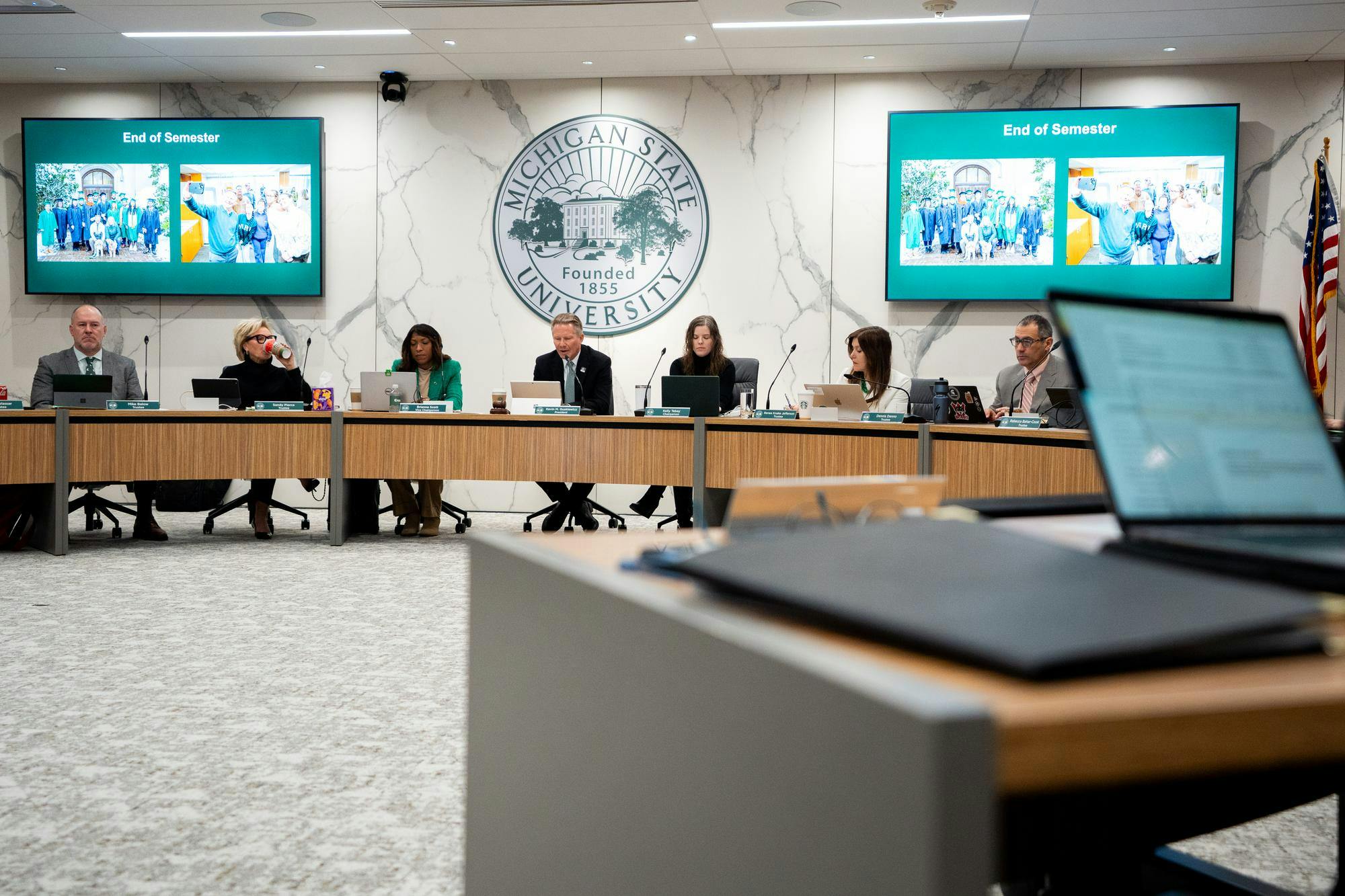
The MSU Board of Trustees at Hannah Administration Building in East Lansing, Michigan on Friday, Dec. 12, 2025.
Michigan State University student activists expressed their discontent about the structure of a soon-to-be bureaucratic committee meant to consider divestment requests from campus.
The Board of Trustees unanimously approved the procedures at their meeting Friday, establishing a presidentially appointed group of students, staff and faculty would use to decide whether concerns over particular investments merit making a non-binding recommendation to the university president. The board had committed one year prior to establishing the committee in response to student activists’ calls for MSU to divest from an Israeli bond and holdings they tie to weapons manufacturers.
University leaders have championed the committee as a more productive means for addressing concerns about its investment portfolio, as opposed to those anxieties being aired during public comments at board meetings.
“It’s going to create another avenue for voices on our campus, and I think that’s important,” President Kevin Guskiewicz said at a press conference after the meeting.
That rhetoric has done little to satisfy divestment advocates, who have argued that the committee’s existence is, at best, an empty gesture to placate them while making it impossible for their divestment goals to come to fruition.
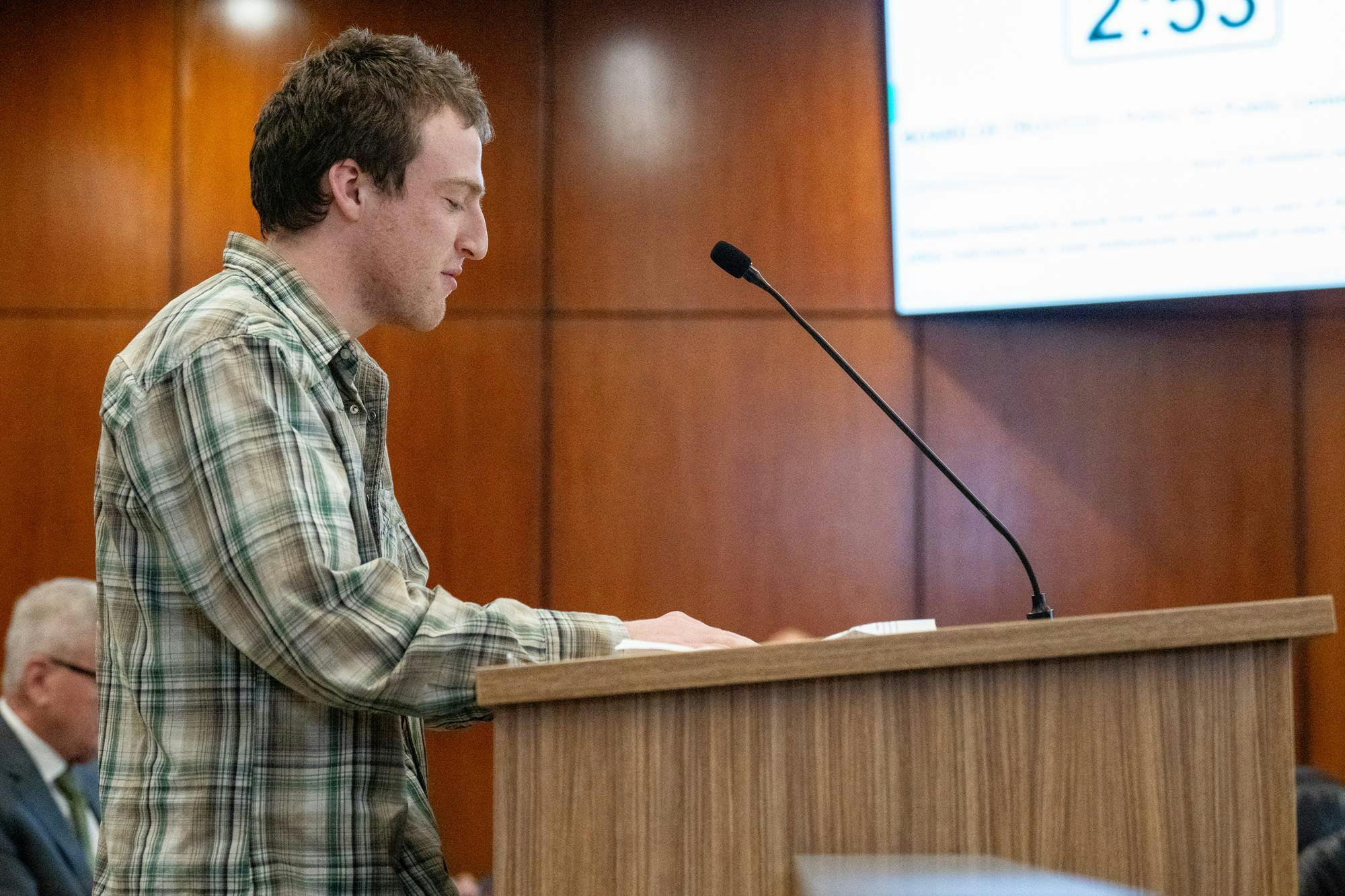
“The committee has little to no actual power,” journalism sophomore Anna Wildman said during public comments. “If you aren’t willing to consider divestment after seeing our countless protests and public comments, then why should we believe that the creation of a powerless committee would change that.”
Wildman was one of three students who criticized the committee during the meeting, which was held on the final day of exam week.
A meeting between trustees and student activists held Monday did appear to yield some changes to the committee structure: The voting membership was expanded to include 13 members, with two seats allocated for undergraduate students and another two for graduate students.
The original plan only included three seats for all students, and 12 members overall.
The respective graduate and undergraduate student governments will each submit at least two nominees, of which the president must select at least one.
Thanks to input from the students, Trustee Dennis Denno said, “I think we made this a lot better.”
Students also criticized the strict guidelines the committee will be using to decide which requests can be passed along to the president.
Under the proposed rules, a request made to the committee must prove that there are "extraordinary circumstances" that warrant potentially altering MSU’s investment pools even if doing so could hurt the university financially. The committee would also only consider taking action that could have a tangible impact on the issue at hand.
After the meeting, MSU spokesperson Emily Guerrant said the term “extraordinary circumstances” could include geopolitical events, like the war in Gaza. The inclusion of the phrase, she said, is likely meant to signal that the committee wouldn’t consider frivolous requests.
A request would also need to be backed by "considerable, thoughtful and sustained campus interest" into the actions of an organization in the university’s investment portfolio, which the committee would be charged with determining. The committee will also only take up requests about issues where a "central (university) value" is at stake, such as its commitment to equity or to "the highest ethical" standards.
Finally, the committee would need to agree that it's possible for the campus community to reach a consensus on how the university should respond to the situation.
Social relations and policy senior Henry Jerred contested those procedures, saying that student activists repeated protests on campus and frequent participation in public comments easily demonstrate a “considerable, thoughtful and sustained campus interest.”
Board chair Kelly Tebay, however, pushed back against the notion that the activists represent a consensus on campus on the issue of divestment.
“The charter talks about making sure that there’s a consensus amongst the universities, which, in my mind, is more than the people that are just showing up at our board meetings six times a year,” Tebay said at the press conference.
Support student media!
Please consider donating to The State News and help fund the future of journalism.
If the committee determines that a consensus is reachable, it would then be able to make non-binding recommendations to the president, who can then choose to share them with the board, the ultimate steward of the endowment. Those recommendations can range from divesting from certain investment to making the university share a public statement on a given situation.
Multiple MSU leaders said although today’s vote establishes the initial guidelines the investment committee will use, they’re open to ongoing discussions with students and faculty on how to improve it.
“We made some, I think, good changes from yesterday’s conversation with faculty and students, and that doesn’t mean it’s in concrete,” Trustee Sandy Pierce said during the meeting. “So, we will continue to evolve as we experience this committee.”
Regardless, the activists signaled that the committee’s existence would not end their presence at board meetings.
“You will not stop hearing what we have to say as long as our tuition is still being used to fund genocide and accelerate climate change,” Wildman said.
Discussion
Share and discuss “Board establishes divestment committee amid student dissent” on social media.