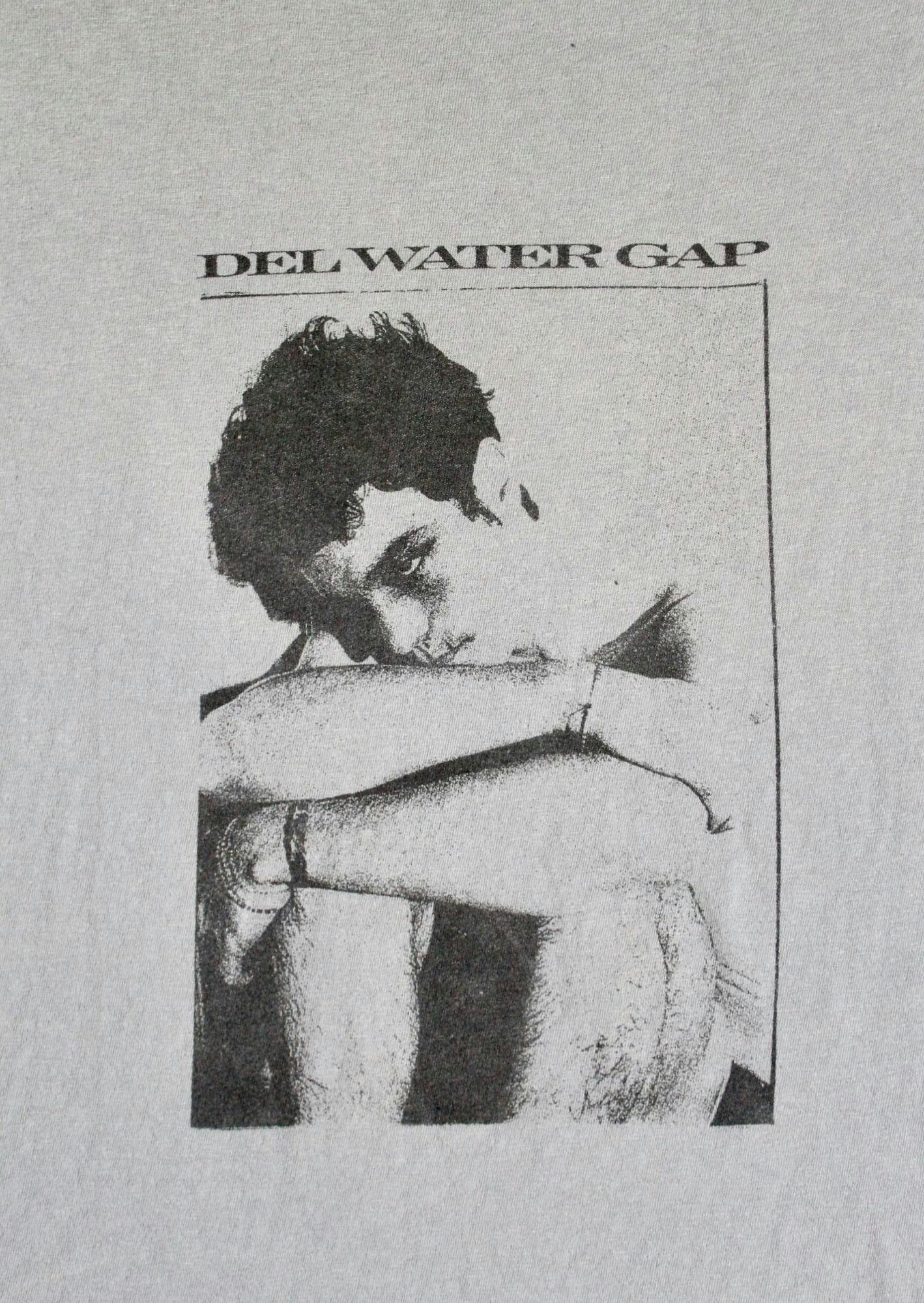
If you’ve never heard the name Del Water Gap, it’s time to get familiar.
Samuel Holden Jaffe has been releasing music under the name Del Water Gap since 2012 but has yet to break through to the mainstream. His third full length studio album, Chasing the Chimera, was released on Nov. 7 and has a rather promising feel of an artist on the brink of stardom.
The album is an easy listen, and, admittedly, its songs do not entirely separate themselves from the sound of other, more popular artists today. There are times when it feels very Faye Webster-esque or maybe even a little Daniel Caesar-esque. But when all put together, there is no recent album that comes to mind in the exact same league as, Chasing the Chimera. Jaffe’s mix of sonic influences intertwined with the unashamed confessions and vivid imagery within his songwriting sets him apart from an otherwise overpopulated music scene and keeps the listener hooked for the entire 41 minutes.
If you’re not up to date on your Greek mythology, allow me to acquaint you with the chimera. It is most well known as a fire breathing creature that is one-third lion, one-third goat and one-third snake, but the term can really be used to describe any monster fashioned by multiple different animal parts. The fire breath is non-negotiable, though.
Once this definition is understood, the album all clicks together. Chasing the Chimera is just what the name advertises, it is a chase. But Jaffe is not chasing one static object. The songs are not one static sound. The emotions are not one static feeling. The only sustained theme is the knowledge that hazards will be faced en route, much like the ever-changing chimera’s ever-constant breath of fire.
Listening to the album straight through will give you whiplash. While one song is a folky, upbeat tale of admiration, the next will be a slower, more R&B inspired list of regretful questions and pessimistic reflection. However, with each song’s passing, more details are unraveled, and a complete picture is painted and fully taken in by the time the record's final note is reached. Nothing in life is linear, even if you try to structure it to be so. The album’s architecture mimics this truth. We are never going through just one thing; we are never holding just one opinion. If you’re looking for simplicity, look elsewhere.
Chasing the Chimera opens with "Marigolds," a fade in from silence that soon morphs into a quick yet calm outpour of existential wonderings and admissions about a love now lost. It perfectly sets the stage for what can be expected in the remaining eleven songs. As each line builds off of the previous and each measure becomes livelier than the last, so each track evolves from its predecessor. We are on the journey alongside Jaffe; we are not witnessing a retelling of events after the fact. As our narrator realizes, so do we.
The record is received as a late-night chat with a good friend. It may begin with one topic but it very quickly mutates into multitudes. The album is genuine, raw and human, and Jaffe is a true virtuoso of songwriting. His lyrics are deeply detailed and perfectly precise, there is no room for guessing what he is trying to suggest. It is all laid out, unapologetically. "How to Live" and "Ghost in the Uniform" are prime examples, utilizing scenes from Pompeii just before its ruin and the imagery of being stuck outside of the Louvre to best translate his complex thoughts into something that is obtainable yet still elaborate for the listener. You feel quite close to Jaffe by the end of the album, almost as if you could call him Sam instead of Del Water Gap.
Sonically, the album’s peak comes in the fifth track, "Eastside Girls." The previous songs had more of a generic, lately overdone folk-pop sound, but "Eastside Girls" is dreamy and jazzy. The soft drum, bass and brass complement Jaffe’s voice in a way that is unmatched by any other instrumental mix on Chasing the Chimera. It is honey for the ears, gentle and smoothly flowing. It works as the perfect backtrack for the desperate and desiring lyrics that Jaffe delivers. He is more than willing to put himself aside to regain the past person he’s singing to, and the tender sound is indicative of the tired, detached feeling that comes with such a task.
Though it is no doubt a primary theme, Chasing the Chimera depicts more than a yearning for somebody out of reach. As the album moves towards its close, Jaffe is reflecting on his own humanity and what it means to be of such a classification. The final two tracks, "Damn" and "Eagle in My Nest," serve as the final scene and the end credits and do so exquisitely. "Damn" has a cheerful sound and an accepting nature. "Why wear my armor when I can be soft? Why be a hero when I can be me?" Jaffe sings. After the back and forth, up and down, left and right that the album portrays, he is at peace. Life is tough, but wouldn’t it be boring otherwise? This realization frees our protagonist.
Never mind. Spoke too soon. "What a shame to be born" is the line that opens the final song.
"Eagle in My Nest" proves that a happy ending cannot be expected in all things. The song is heavy and defeated, although it is not without glimmers of hope. The chorus states that, "it’s so hard being alive, no wonder everybody dies,” the aforementioned armor in "Damn" has been stripped and Jaffe is more honest than ever. But, despite this demoralized declaration, Jaffe ends the album with an admittance that works as the perfect conclusion: "In the end I know I’ll be alright."
Chasing the Chimera is an impressive introduction to the world of Del Water Gap for any who may be paying their first visit. Samuel Jaffe cannot be placed into one category, and the album showcases his strengths in various styles. Each song exists as its own planet in a wider solar system, distinguishably unique and heterogeneous yet still cohesive and connected. Like space, the record is vast and unwalled. Jaffe’s chase is ongoing and anyone who listens becomes engaged in the journey, seeking too, the multiplex and mysterious chimera.
Support student media!
Please consider donating to The State News and help fund the future of journalism.
Discussion
Share and discuss “REVIEW: Del Water Gap is searching for an answer and it pays to watch his journey” on social media.