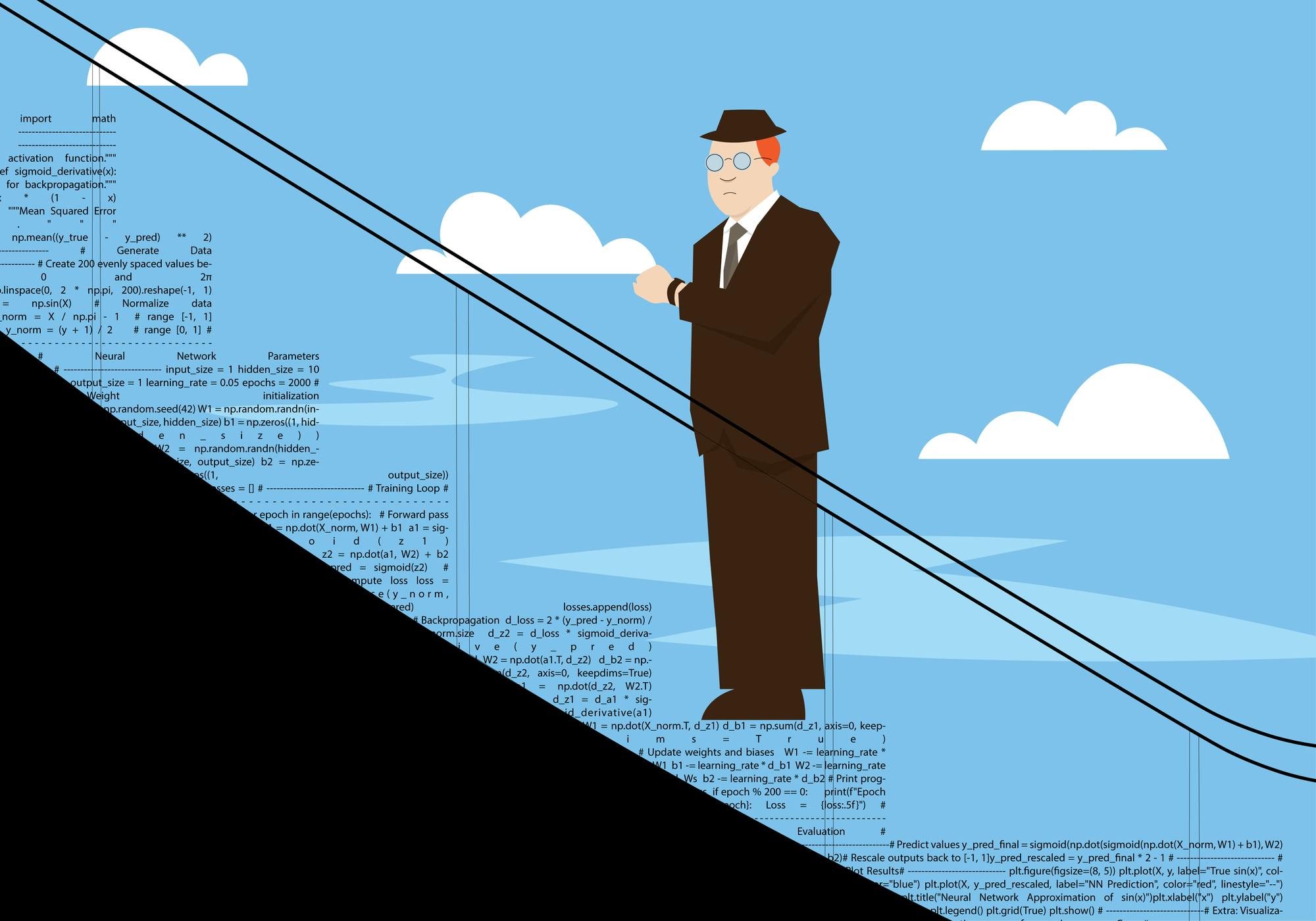
Tech companies tell us we’ll have more time to spend with our families. We’ll be able to take that hiking trip we’ve been meaning to go on for months. We’ll learn how to play piano. We’ll finally get coffee with that one friend from high school. All we have to do is let the AI do the busywork for us.
If we do that, we get more time to be human.
Or at least that’s what I've been hearing from OpenAI, Google, Microsoft, Apple, Anthropic, Oracle, Palantir, Amazon and every other evil-sounding organization I can name for the past couple of years.
The commercials have been around long enough, and they seem to say the same things: imagine how much you could enjoy your life if you simply allowed an AI software to write your emails! It’s particularly attractive to students whose time is consumed by reading textbooks, responding to discussion posts and making presentations that summarize content from previous presentations. AI can do all of that while giving you back free time.
Classes have picked up on this, and rather than discouraging AI usage in class, many now encourage it (I would also imagine this is related to the fact that they cannot really police it).
So we've arrived in the future. A robot can do your homework, and you can spend the day however you wish. It’s a beautiful promise that leaves out one crucial wrinkle: what are you actually doing with all that free time?
We would all love to believe that if we just had two extra hours a day, we would spend it climbing mountains, taking painting classes and doing whatever else people do in pharmaceutical commercials. But looking around at other MSU students, I’m not buying it.
In reality, I know just as well as you what you’re doing with your newfound free time. You’re scrolling on TikTok.
Research from the National Library of Medicine put the majority of university students spending at least six hours a day on social media. Reporting by Inside Higher Ed also indicates that ⅓ of college students have never participated in an extracurricular activity. AI tools are not filling club meetings with eager prospective members; they’re trading work for scrolling.
And while it's probably easier for us to prefer scrolling to work, I just can’t believe that it’s actually making anyone’s life better. There's a well-documented link between increased social media usage and increased rates of depression and anxiety among young people.
Thank you for reading our voices, we want to hear yours.
The State News is accepting guest commentary and letters to the editor. Guest commentary should be between 600-800 words and contain well-reasoned arguments that inform and engage readers like you. Letters should be fewer than 300 words and provide commentary on issues of interest and stories we've covered. We will not publish any anonymous submissions.
For more information, go to our submissions portal under the 'commentary' tab at statenews.com.
Questions? Contact Opinion Desk Coordinator Jack Williams at opinion@statenews.com
But beyond that, there’s value to "busywork." I don’t normally enjoy writing essays or presentations, but I also know that I get something out of them.
I can’t help but feel like we lose something when we let the robots write our papers. The anxious anticipation of a cursor blinking against a bright white google doc, meetings with friends that are purportedly for working on papers but inevitably devolve into gossip sessions and the unparalleled gratification of making something you’re genuinely proud of.
More than that, I know that even when schoolwork feels painful, it makes me feel way better than raising my end-of-week screen time report with joyless scrolling. In the immortal words of Bo Burnham, "My phone makes me sad."
To those who still don’t feel like they have the time to truly live, I would offer a different trade-off: instead of exchanging working for scrolling, exchange scrolling for living.
We get so enamored with the promise of efficiency that we often forget becoming happier requires, first and foremost, actively filling our lives with the things we love. If you focus on adding joy instead of removing work, the things that don’t really matter naturally fall away.
You’re a human being. You want to spend your days doing the same things we all want to do: getting exercise, enjoying art, being in nature and spending time with family and friends.
To get more of those things, you don’t need AI to make your presentations. You don’t need to be any more efficient than you already are. You need to do something that is more terrifying than any sci-fi AI apocalypse: go outside and make plans.
Jack O'Brien is a junior studying Political Theory and Constitutional Democracy and a columnist at The State News. The views in this article are his own and independent of The State News.
Support student media!
Please consider donating to The State News and help fund the future of journalism.
Discussion
Share and discuss “OPINION: What we lose when we opt for efficiency” on social media.