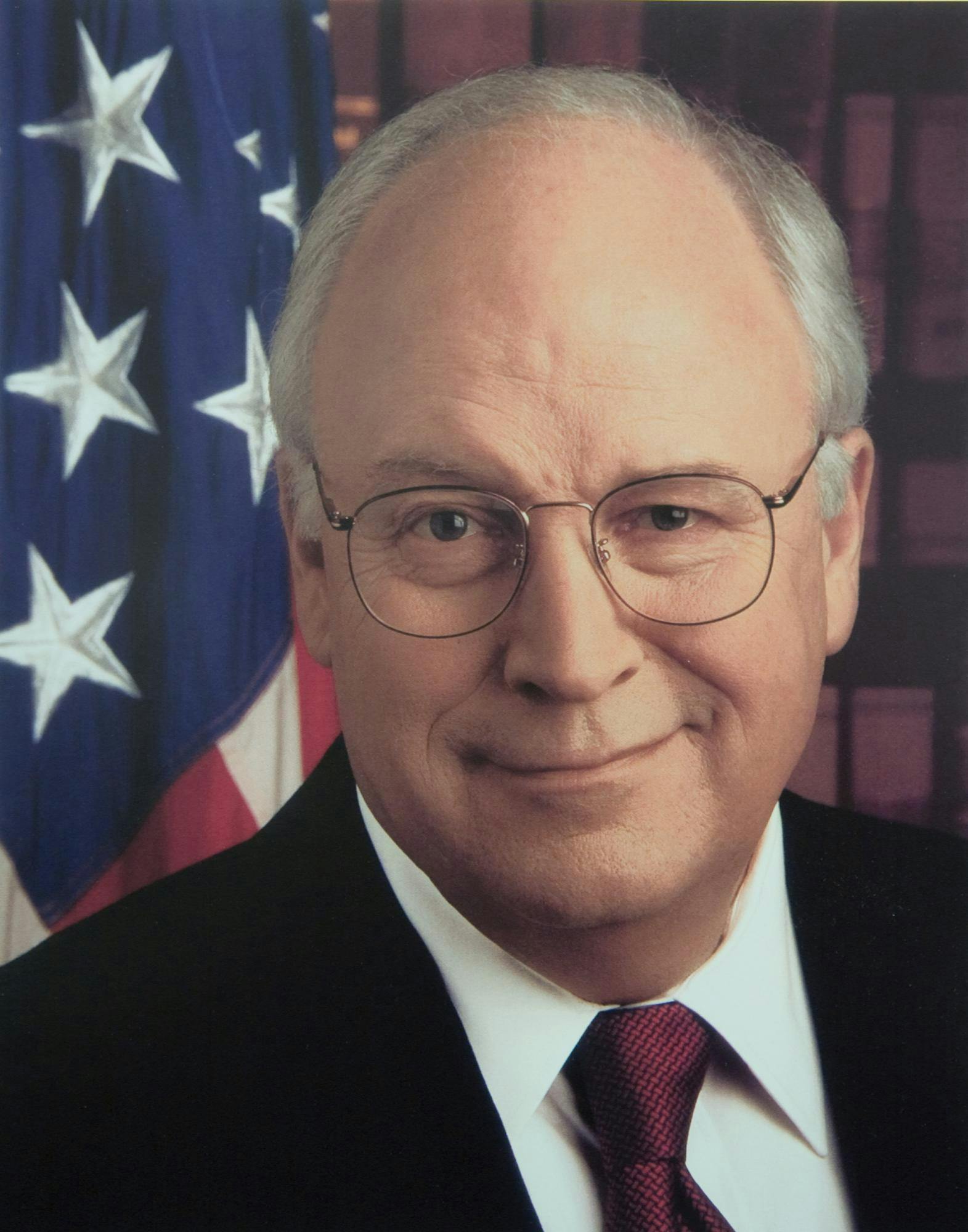
With condolences and tributes pouring in for former U.S. Vice President Dick Cheney, who died Monday at the age of 84, a small part of his legacy in politics is interwoven into Michigan State University– specifically, his selection as a commencement speaker.
One year into the George W. Bush administration, the White House announced in May 2002 that then-Vice President Cheney would be a part of the MSU commencement ceremony as a speaker, sparking both excitement and protest.
Cheney joined a small but unique group of U.S. vice presidents who have spoken at an MSU commencement ceremony, following Alben Barkley in 1950, Richard Nixon in 1957 and Hubert Humphrey in 1966.
Shortly after confirming the vice president's plans to speak during commencement, then-MSU President M. Peter McPherson said "MSU is honored to have Vice President Richard Cheney address our undergraduates, students who soon will be following in the footsteps of our country’s leaders in business, government, the sciences, education, the arts and humanitarian endeavors,"
In an eight-minute address to graduate students and scholars, referencing what he's learned about Beaumont Tower and Landshark Bar, Cheney encouraged them to prepare for change, as he did when asked to be Bush’s second in command as vice president.
But his visit to MSU, much like his time as vice president, was viewed as controversial, with roughly 40 people protesting his presence outside of the Breslin Center. The small crowd protested Cheney’s involvement with the oil industry, the Bush administration’s economic policy and the war on terrorism declared shortly after the Sept. 11, 2001 terrorist attacks.
For MSU officials, they viewed the vice president’s visit as an opportunity to attract future students and scholars to the university, with talks of using his address for brochures, though it’s unclear if this plan came to fruition.
Further cementing his involvement with MSU, Cheney’s signature on the concrete walls down in the locker room hallway of the Breslin Center joins the crowded wall of Sharpie signatures from celebrities and public figures who've passed through the building.
Viewed as a powerful and polarizing figure in U.S. politics, Cheney’s legacy, much like his timely presence at MSU, is forever sketched in history.