Students weren't eating their Philly cheesesteaks.
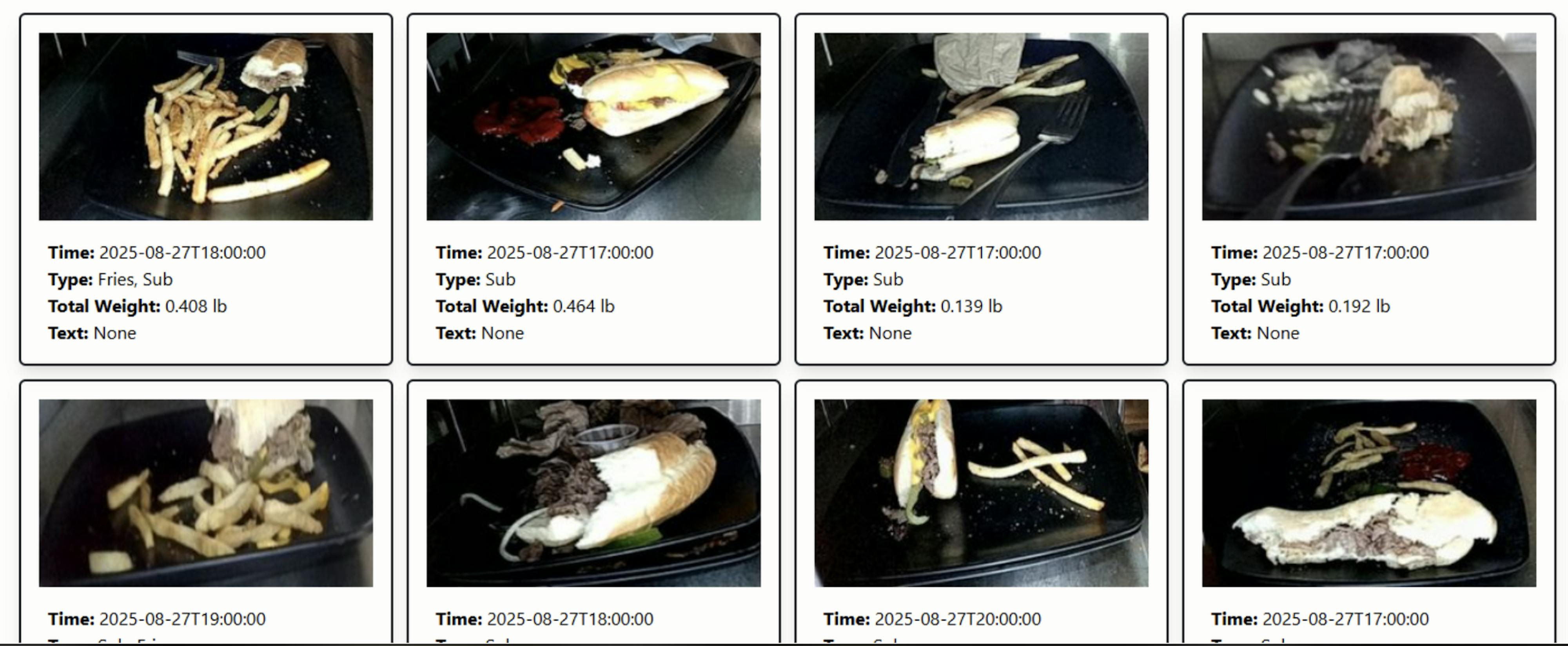
"Those subs were just way too big," said Ivan Zou, co-founder of Raccoon Eyes, a startup that’s partnering with Michigan State University to promote food sustainability.
Since August 18, the firm's artificial intelligence-enhanced technology has been snapping pictures of uneaten food at two of MSU’s dining halls, and its creator says it's already making insights into the causes of food waste.
Raccoon Eyes' special cameras, seated in the dish returns at Heritage Commons at Landon Hall and The Edge at Akers Hall, create 3-D models of food waste as plates roll by. AI is then used to estimate the weight and type of food on each plate. It has a 90% accuracy rate, Zou said.
As Raccoon Eyes begins to identify larger trends in what and how much students throw away, MSU can learn to better portion meals and change recipes to reduce food waste, said Carla Iansiti, the sustainability officer in MSU’s Residential & Hospitality Services.
The partnership, which will last for the academic year, builds on a previous initiative to measure food waste. For seven years, dining hall staff dedicated a day to manually weighing what dining hall-goers left on their plates, Iansiti said. In 2019, the last year it was active, MSU reported that students wasted 2.96 ounces of food per person per meal. It stopped after COVID-19 cut staff and budgets, Iansiti said.
While the new AI technology makes obtaining data on food waste easier, it has some limitations. To ensure a clear view of the food, dining halls now have signs asking students to remove napkins from their plates. And Iansiti has some concerns about Akers, where students like to stack plates on top of each other.
Raccoon Eyes also installed interactive kiosks in the dining halls that ask students questions about food offered that day to contextualize trends picked up by the cameras. Once the technology has collected enough data, the displays will start spouting off statistics on food waste and playful reminders to be sustainable, Iansiti said.
Until that happens, the kiosks are a test of whether students will meaningfully engage with Raccoon Eyes’s mascot, an environmentally-conscious cartoon raccoon named Rowdy.
Psychology senior Adam Duffy said he's seen the kiosks and likes the innovative way of getting student input on their dining experience. But, like dozens of others that walked past Rowdy's perch in Landon dining hall Wednesday, Duffy never bothered to interact with it himself.
"I honestly don't know why," he said as Rowdy sat idly behind him, waving his tail, beckoning dining hall goers to "rate today’s food variety."
Scores of students walked past the display during Wednesday's lunch, trays of wasted foodstuffs in hand, without giving the raccoon much more than a passing glance.
In an hour’s time, only one person timidly stepped up to the kiosk and, after some consideration, tapped a button marked "Good."
Support student media! Please consider donating to The State News and help fund the future of journalism.