When Michigan State University Communications Professor, David Markowitz, thinks of legacy, he thinks of his late grandma.
"She tried," her tombstone read.
When Michigan State University Communications Professor, David Markowitz, thinks of legacy, he thinks of his late grandma.
"She tried," her tombstone read.
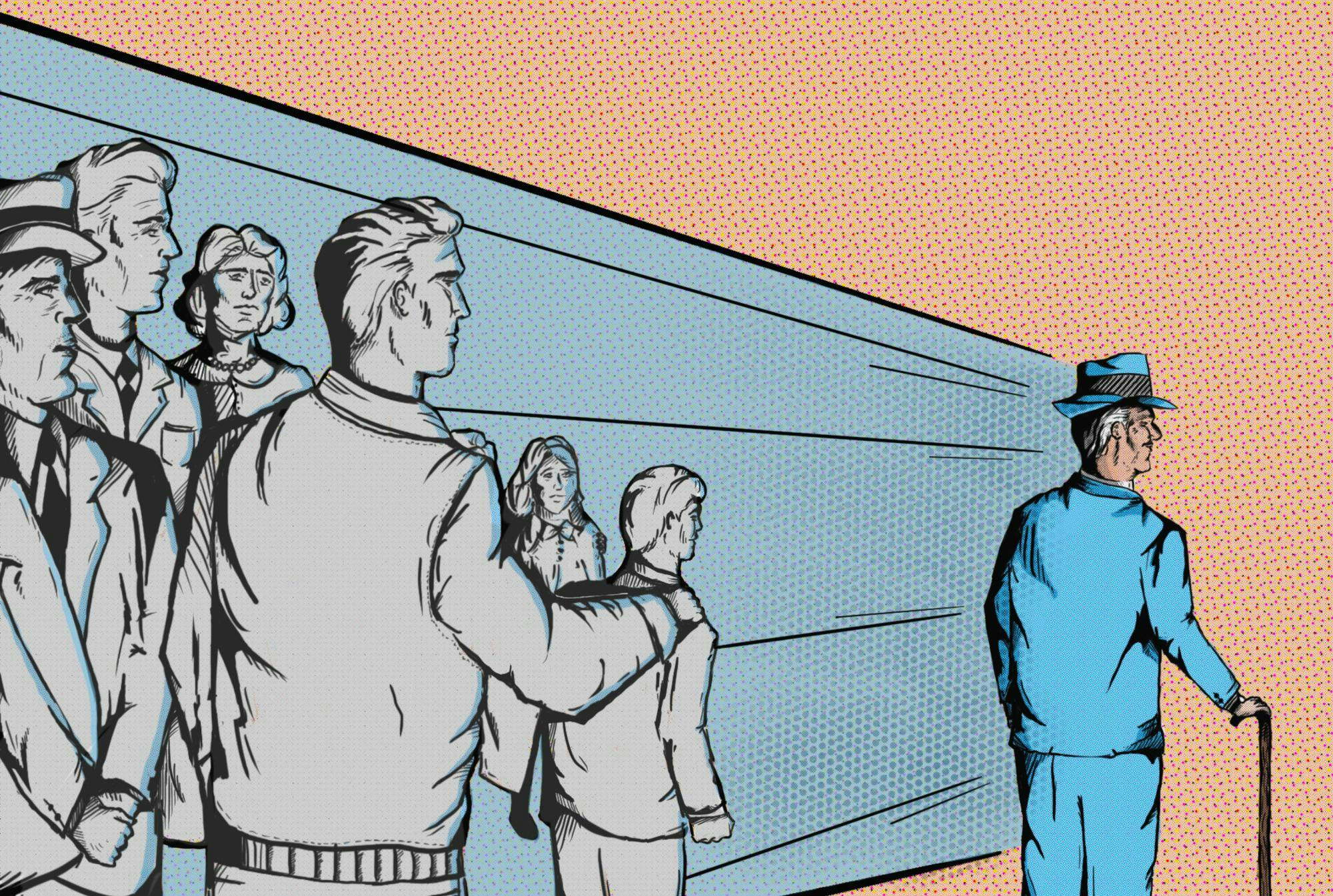
For him, those words capture the idea that a life well lived isn’t measured by final accomplishments but by the ongoing effort itself — the continual trying, the connections you make and the way you put your best self into the world. The outcome, he says, matters far less than the process.
This idea — that the stories of those who came before us can guide how we live now — is at the heart of a new study led by Markowitz and his colleagues at Boston College and Arizona State University.
By analyzing 38 million obituaries spanning three decades, the researchers examined how Americans are remembered and what those remembrances reveal about cultural values.
They used computer programs to scan the obituaries, coding based on Schwartz’s theory of basic human values — a framework that identifies ten universal guiding principles for life.
Out of those categories, two stood out: tradition, which appeared in roughly 80% of obituaries, and benevolence, which showed up in about 76%. Tradition often came through in references to religion or cultural customs, while benevolence was reflected in descriptions of people as caring, dependable and devoted to others.
The study also revealed differences in how people are remembered based on gender and age. Women’s obituaries were more likely to highlight benevolence, while men were more often associated with achievement and conformity, especially in references to careers, military service or civic roles. Older people were remembered more for tradition, while younger people were more often remembered for benevolence.
'Cultural and societal' shifts
Kyle Law, a moral psychologist at ASU and co-author of the study, said he was not surprised by the gender differences. He was, however, surprised at how major cultural events shifted values in obituaries.
For instance, after the 9/11 attacks, obituaries placed greater emphasis on benevolence and tradition, while mentions of security declined — especially in New York, where the loss felt most immediate.
During the 2008 financial crisis, references to achievement fell as families pulled back from celebrating personal success, and hedonism briefly rose a year later as people refocused on simple pleasures.
“The de-emphasis on hedonism during the financial crisis makes sense,” Law said. “I think, in a time when people are tightening their belts, it might come off as a little bit tacky to remember somebody for how much time they spent out on their boat, on vacation and enjoying the riches of life.”
Most striking to Law and his colleagues was the pandemic, when benevolence dropped sharply and has yet to return to pre-2019 levels.
“Now that's kind of paradoxical because during the pandemic, various communities were making extraordinary sacrifices, such as wearing masks, social distancing, trying to take care of the elderly,” Markowitz said. “So, what I think is going on here is the idea that internally, we had a difficult time processing this highly stressful time for people. So, our internal dialog of events was quite different from the way that we were able to express them externally.”
What shocked Law the most was the fact that benevolence has yet to return to the baseline it had before the pandemic. This is something that he and his co-authors plan to look further into for their next study. Specifically looking at obituaries that span centuries to see if there are similar shifts in obituaries after mass casualty events.
The authors are particularly interested in how collective trauma and moments of crisis reshape the ways people are remembered and how legacies are defined.
“What we see here are these cultural and societal level shifts,” Markowitz said. “It shows that as a collective our society is impacted by events that happen directly to us, or things that may have happened indirectly to us, but we still see these shifts in personal values as a result of that.”
The study ultimately flips the question of legacy: instead of asking how people want to be remembered, it looks at how they are remembered. For Law, that distinction reveals a gap worth paying attention to — one that could help people think differently about the lives they’re building now.
“I think in the future, this could be used as a lever,” Law said. “The things you spend so much of your life chasing, like money and achievement, are not what people talk about in the end. What they remember is how good you were to others. That’s where we should be putting more effort in life.”
Support student media! Please consider donating to The State News and help fund the future of journalism.