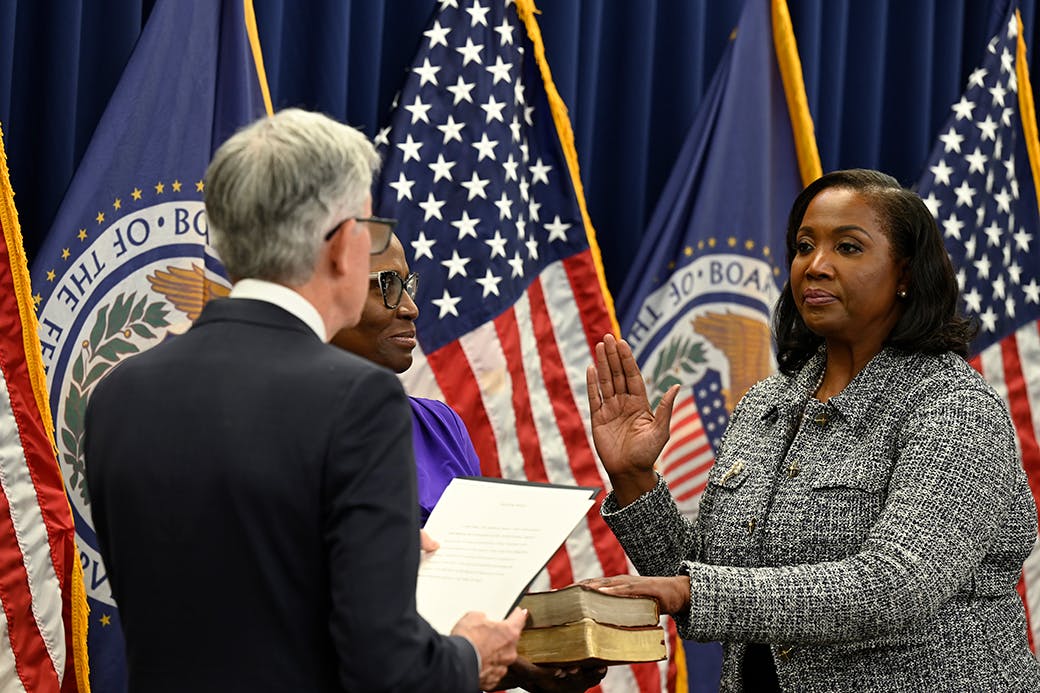
After facing allegations of mortgage fraud, President Donald Trump has fired MSU professor Lisa Cook from her position as a governor on the Federal Reserve Board, effective immediately. This removal marks the first time a president has fired a governor from the board, sparking concerns over maintaining the separation of the independent central bank and the executive branch of government.
On Friday, Trump said if Cook didn’t resign, he would fire her after the Department of Justice opened an investigation into a mortgage application filed before she was appointed to the Federal Reserve in 2022 by former President Joe Biden. The mortgage application allegedly shows discrepancies between properties listed under Cook's name in Ann Arbor, MI and Atlanta, GA.
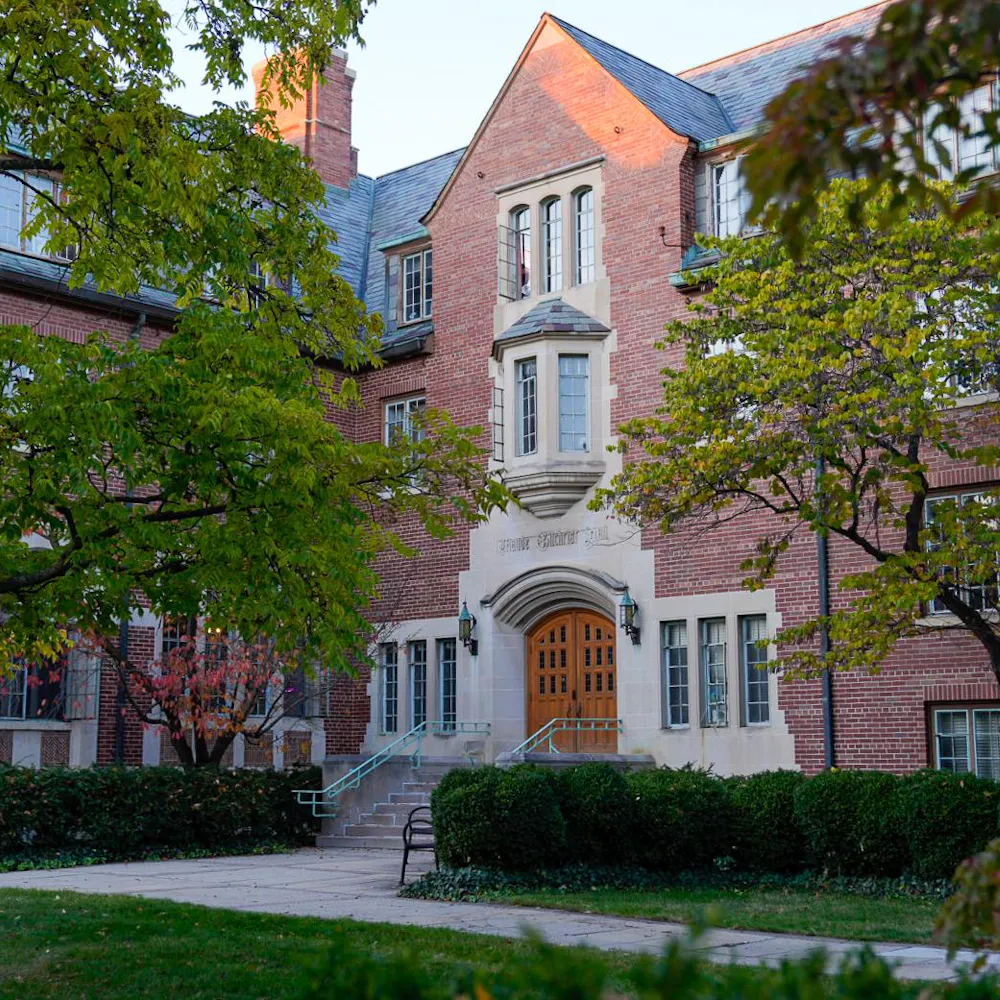
Cook is a tenured professor of economics and international relations through the College of Social Science and James Madison College. MSU Spokesperson Amber McCann confirmed Cook is on unpaid leave from the university and remains on staff. Cook was expected to serve a 14-year term on the Federal Reserve Board until 2038, making history as the first Black woman to serve on the board.
"Her nomination embodies the excellence of our Spartan faculty as she is well on her way to shatter another glass ceiling as the first Black woman to serve on the Federal Reserve Board of Governors," said former MSU President Samuel L. Stanley Jr. regarding Cook's appointment in 2022.
In a letter posted to Truth Social Monday night, Trump officially fired Cook after she refused to resign from the board, citing Article II of the Constitution and the Federal Reserve Act of 1913.
The Federal Reserve Act allows for the removal of its governors "for cause" by the president instead of being subject to "at will termination." Although Cook faces allegations of mortgage fraud, she has not been convicted of a crime.
On Tuesday, Cook’s attorney, Abbe David Lowell, announced that Cook will be suing the administration for unjust removal from the Federal Reserve Board.
Lowell could not be reached for comment at the time of publication.
In May, the Supreme Court granted Trump the ability to remove members of independent agencies but said that the Federal Reserve Board is a "uniquely structured, quasi-private entity."
“(The Supreme Court) has suggested, sort of in passing, that it views the Federal Reserve as something special in that respect,” associate law professor Quinn Yeargain said. “That the need for independence from the executive is so strong that these kinds of ‘for cause’ removal provisions would be permissible, but it's never actually been confronted with a case that has really required it to answer that question.” Cook's removal would be an attempt to answer that question.
Economics professor Raoul Minetti has worked with Cook for many years, establishing a friendship during their time as active professors at MSU. When he found out Cook was at risk of being fired, Minetti was "surprised" in a "negative" way.
"This, as is discussed in many places, presents an unprecedented attempt by the president to remove the governor, which has never happened in history," Minetti said. "Most importantly, this undermines the key aspect of the independence of the Federal Reserve, which is fundamental in order to guarantee price stability, monetary stability and financial stability. The country must have an independent central bank and not be subject to the pressures of the executive power."
Minetti said the loss of an independent central bank could risk the loss of "credibility" if the executive branch is able to apply pressure on the bank to enact certain policies. "It's the credibility aspect that is the key word for independent, so independence is crucial because it gives credibility to the actions of the other side of the central bank," he said.
Minetti cited Turkey and Italy during the 1960s as examples of countries where the central bank failed to remain independent.
"The U.S. has been traditionally an example of a country where the central bank has had independence," Minetti said. "Now, if it is no longer true, it is very bad news for the U.S. ... This is going to undermine the credibility of the Federal Reserve and financial markets."
If Trump is successful in removing Cook from the board, it paves the way for Trump to influence the country's economic policies by having sway over the 12-member committee. While Cook's removal would not give Trump the majority, a new appointment would join governors Michelle Bowman, Christopher Waller and Stephan Miran.
"While I very much hope that the court holds that this is unconstitutional (or) that it is constitutional for Congress to limit the President's removal power, and that this is an impermissible removal under the statute, I do not have confidence that it will do that," Yeargain said. "The consequences could be dire, because what he really wants is for the Fed to lower interest rates."
Support student media!
Please consider donating to The State News and help fund the future of journalism.
Discussion
Share and discuss “Trump fires MSU professor from Federal Reserve Board in first of its kind removal” on social media.