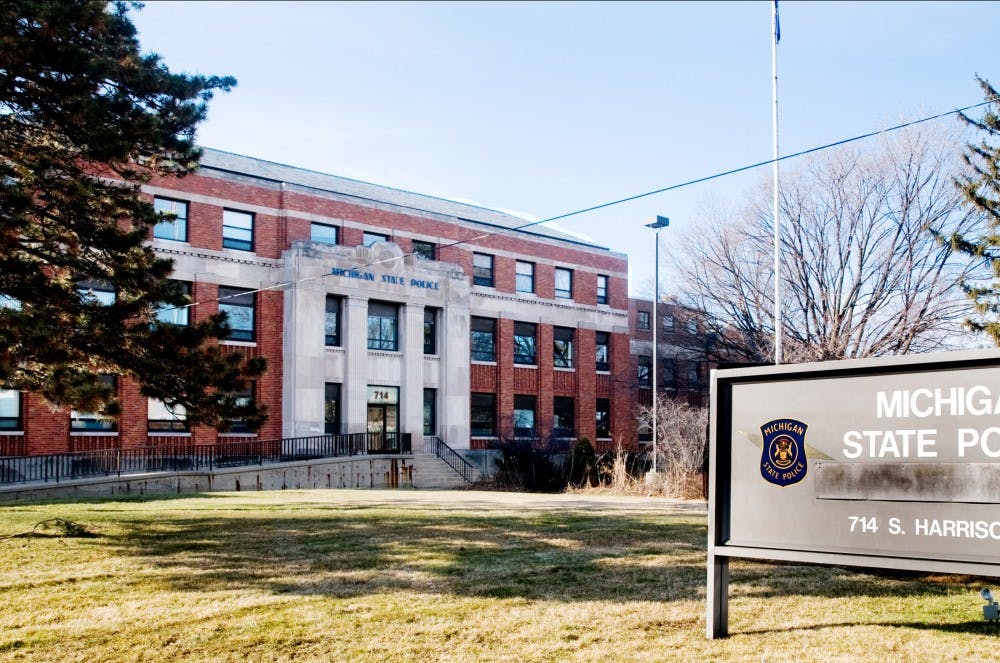
In 1997, a headless body was found in a Blissfield Township field. Officers struggled to find any suspects due to the body's lack of identifying details and insufficient DNA testing, so the case quickly went cold. Progress on the case remained minimal for nearly thirty years until the Michigan State Police were finally able to name the prime suspects—a job that was completed with the help of MSU criminal justice students through the Cold Case Unit program.
The program got its start in 2020 when detective sergeant Larry Rothman was asked by his bosses at the Michigan State Police if he would be interested in leading an internship. Rothman had heard about collaborations between police and local university students in different parts of the country and sought to create a similar unit in Michigan. Rothman’s choice to partner with MSU stemmed from the fact that its criminal justice program is the oldest continuous degree granting program in the country.
Rothman had been working on the case of the Blissfield Township John Doe since 2016. When the collaboration began, MSU students primarily digitized and organized the case files but were also able to work directly with law enforcement to help prepare for trial.
“(The students) were used as a sounding board, as a makeshift jury,” Rothman said. “When we got ready to go to trial I let them listen to some of the interviews we had with suspects and other people to see if they thought they were credible.”
After years of searching through files and conducting interviews, the program was able to pinpoint brothers Michael and Richardo Sepulveda as suspects. The brothers were later arrested in connection to the murder. Michael pled guilty in 2024 and a jury found Richardo guilty the following spring.
Criminal justice professor Allison Rojeka, who is also a member of the unit, said that providing students with these first-hand opportunities is a great way to prepare them for their careers outside of what they learn in the classroom. Rojeka said that students are acquiring valuable skills and receiving a realistic glimpse into what their futures could look like.
“The students really enjoy the hands-on nature of the program, so many of them have never seen a police report before,” Rojeka said. “True crime TV is awesome, but to see the real timeline of how things progress in a case is really helpful.”
Seth Lyons, a recent MSU criminal justice graduate, was a part of the unit from the fall of 2024 through the spring of 2025. Although his work could sometimes be tedious, Lyons said, he knew that what he was doing was important for his community.
Like most students in the program, Lyons was mainly tasked with scanning old documents to upload and organize onto a computer so that they could be more easily accessible for the detectives. However, Lyons said that the most memorable parts of the internship happened outside of the office.
“We had the opportunity to go to the locations and the different sites within the case,” Lyons said. “It was an interesting experience and you get to see what detectives in the present day are dealing with when they open cases from twenty or thirty years ago.”
Lyons also said that the knowledge gained from both those supervising the program and weekly guest speakers provided him with a more in depth understanding of the different roles within a police department.
“You get a preview of what you’re going to be possibly dealing with as a police officer, but you also get to hear about so many different career paths that you can take in law enforcement,” Lyons said. “That in itself is super beneficial.”
Being able to impact his community meaningfully was one of the main goals of his internship, Lyons said. The unit’s motto, “victim centered, offender focused,” served as a constant reminder of he is helping those affected.
“We’re doing work that can bring closure to the victims, their families and friends,” Lyons said.
For Lyons, the Cold Case Unit emphasized the importance of teamwork and showed that all voices—even the interns—are valued when working on a case. Rothman said that he looks at the students as partners rather than interns, adding that having a younger generation in the unit gives a fresh feeling to the work that he has spent so many years doing.
“I’ve been in the state police for 26 years now, it’s about the time that I should be looking at retirement,” Rothman said. “But the students bring excitement and make me realize I have a pretty good job, I enjoy it.”
Though the Cold Case Unit is currently exclusive to the criminal justice department, Rothman and Rojeka said that they are looking to expand for next fall, naming anthropology and psychology as two fields that can offer crucial insight when solving cases.
Interested students can learn more and apply for next year's internship on the School of Criminal Justice’s website.
Support student media!
Please consider donating to The State News and help fund the future of journalism.
Discussion
Share and discuss “MSP-MSU Cold Case Unit prepares students for careers in law enforcement” on social media.