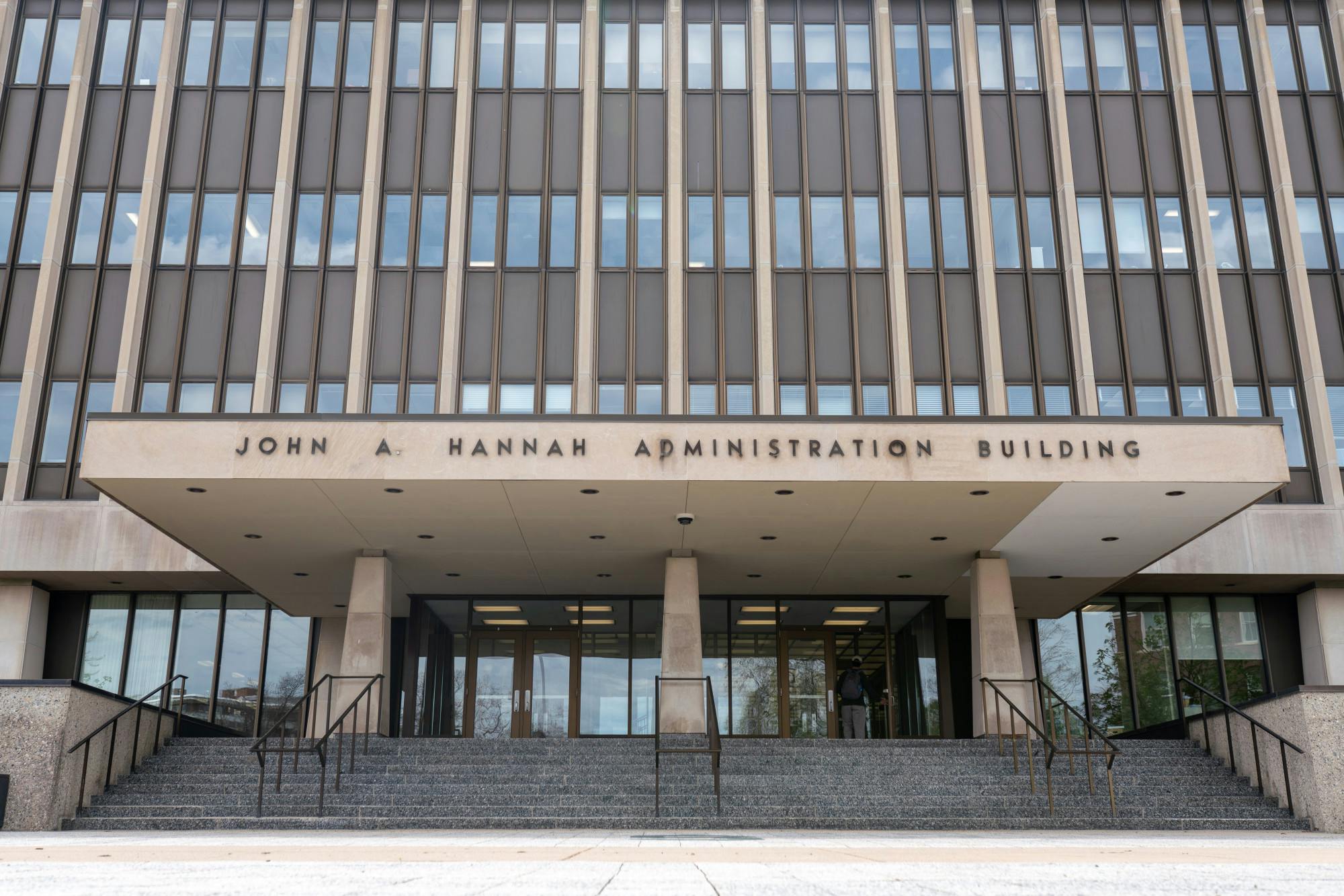
Michigan State University, alongside three organizations and eight other universities, is suing the U.S. Department of Energy, arguing a recent policy that caps the amount of money the university is given for research grants is illegal.
In response to the lawsuit, a federal judge issued a temporary restraining order that prevents the DOE from enacting the Rate Cap Policy pending a hearing on the motion scheduled for April 28. The judge's decision momentarily disrupts the Trump administration's efforts to further slash federal funding for scientific research in higher education.
The Rate Cap Policy, titled "Adjusting Department of Energy Grant Policy for Institutions for Higher Education," sets a standardized indirect cost rate for all grant awards to universities at 15%. It also states that any institution that does not comply with the standardized cost rate will have all grant awards terminated.
When an institution receives grant funding for research, part of that funding goes toward direct costs and part goes toward indirect costs. The lawsuit defines direct costs as those that are "readily attributable to specific projects" and indirect costs as "necessary for the research to occur but harder to attribute to individual projects."
Indirect costs can include facility fees such as rent and utilities and administrative salaries.
Right now, Michigan State’s indirect cost rate for DOE funding is 57%. The lawsuit says that of the $161 million in DOE funding that MSU received in the fiscal year 2024, $45 million was for indirect cost reimbursement.
If the indirect cost rate is reduced to 15%, Michigan State would lose $32 million dollars in anticipated annual indirect cost recovery, according to the lawsuit. This means the university would have $32 million less to spend on salaries, facilities, utilities and other indirect costs.
The Office of Management and Budget (OMB) has regulations in place that require federal agencies to negotiate indirect cost rates, so that every institution receives the necessary amount of indirect costs to meet its unique needs.
"By regulation, this negotiation yields a rate that is intended to reflect the actual, verified indirect costs incurred by the institution," the lawsuit states.
In setting a standardized indirect cost rate, the Rate Cap Policy "will devastate scientific research at America’s universities and badly undermine our Nation’s enviable status as a global leader in scientific research and innovation," the lawsuit states.
The lawsuit argues that the Rate Cap Policy violates the Administrative Procedure Act (APA) on multiple grounds. According to the complaint, the Rate Cap Policy is "arbitrary and capricious," illegally departs from the APA’s negotiated cost rate regulations, unlawfully terminates existing grants and illegally prevents grantees from recovering their indirect costs.
In the lawsuit, the plaintiffs are asking for the Rate Cap Policy to be nullified; a judgment finding the policy "invalid, arbitrary and capricious and contrary to law;" a permanent and preliminary injunction against the defendants which would prevent the DOE from enacting the Rate Cap Policy; and an order awarding the plaintiff’s costs of suit, reasonable attorney fees and expenses pursuant to any applicable law.
The complaint also cites attempts by the Department of Health and Human Services to enact a similar indirect cost rate cap on National Institutes of Health (NIH) funding.
After a lawsuit was filed against this policy, the U.S. District Court for the District of Massachusetts issued a permanent injunction against it on April 4, permanently blocking the Department of Health and Human Services from capping NIH indirect cost rates.
The suit against the DOE calls the Rate Cap Policy a "virtual carbon copy" of the earlier NIH policy.
The DOE argues the Rate Cap Policy is necessary to ensure the department is putting funds to appropriate use, improving efficiency and curtailing costs when appropriate.
The DOE did not respond to requests for comment at the time of publication.
MSU’s choice to join this lawsuit stemmed from its position as a leader in energy innovation and scientific discovery, university spokesperson Amber McCann wrote in an email to The State News.
"The 15% cap will eliminate millions of funding that is critical to maintaining America’s competitive advantage in areas such as energy innovation, national security, and environmental sustainability," McCann wrote.
Support student media!
Please consider donating to The State News and help fund the future of journalism.
Discussion
Share and discuss “MSU sues Department of Energy over proposed cuts to research funding” on social media.