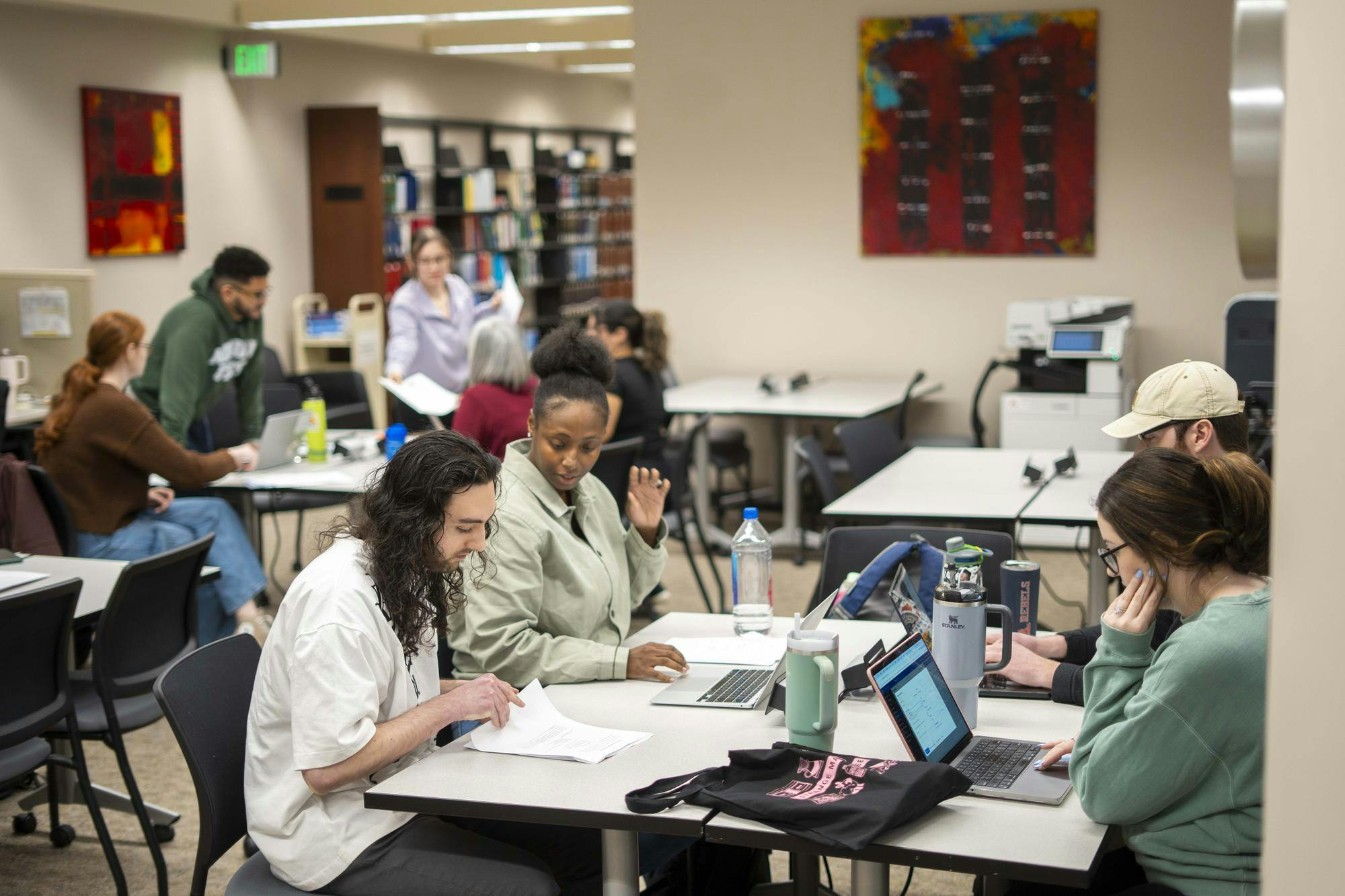
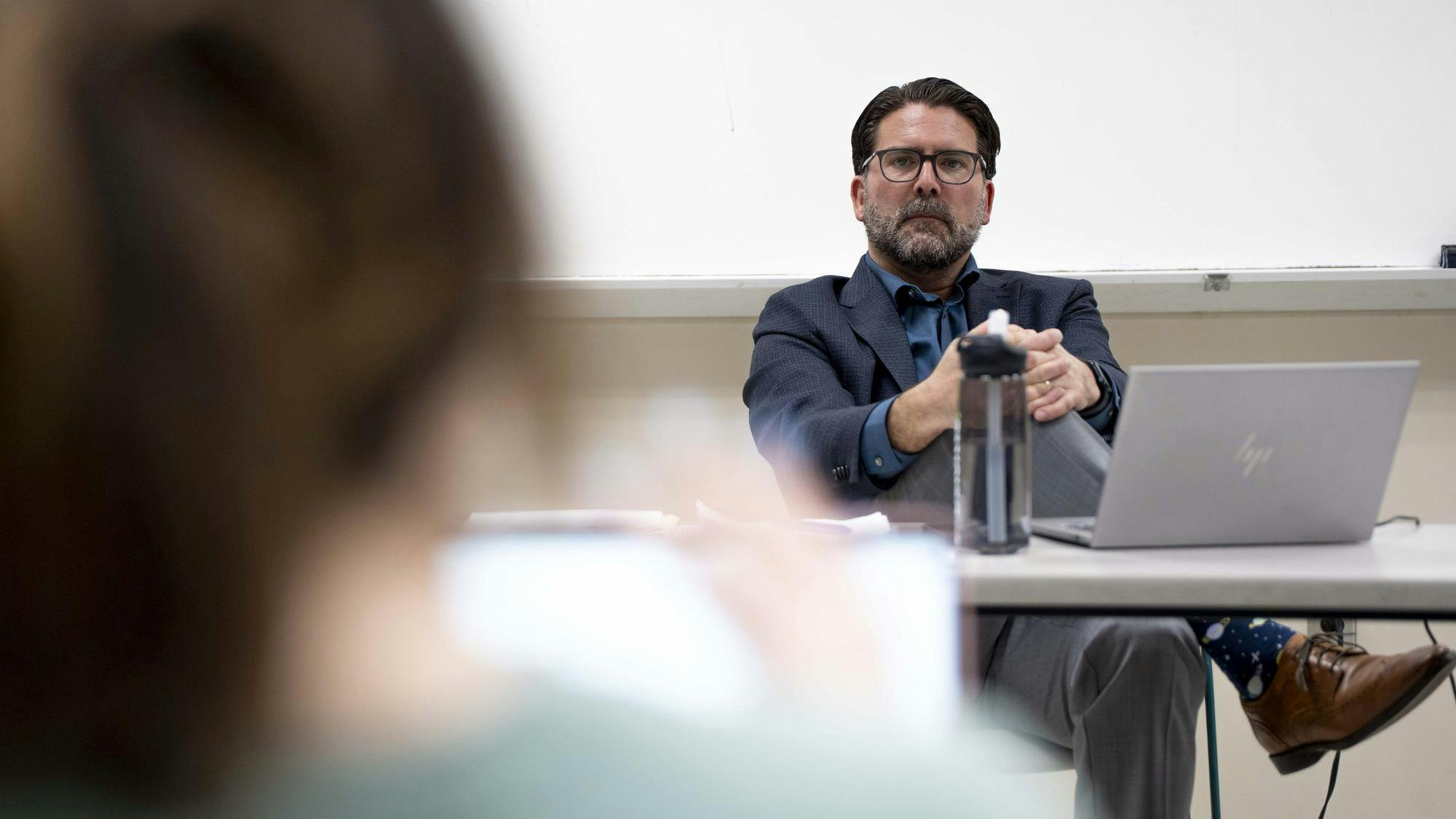
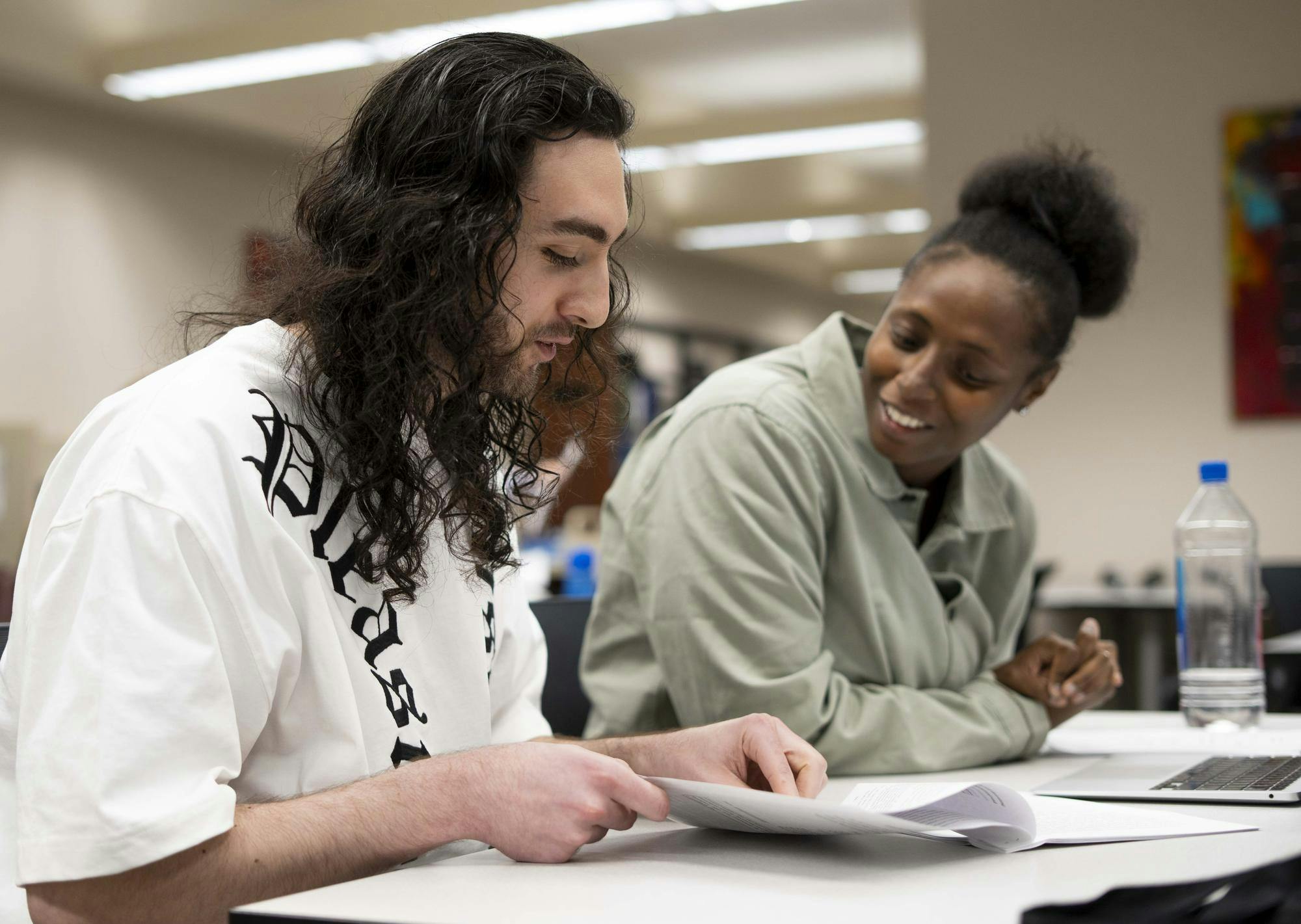
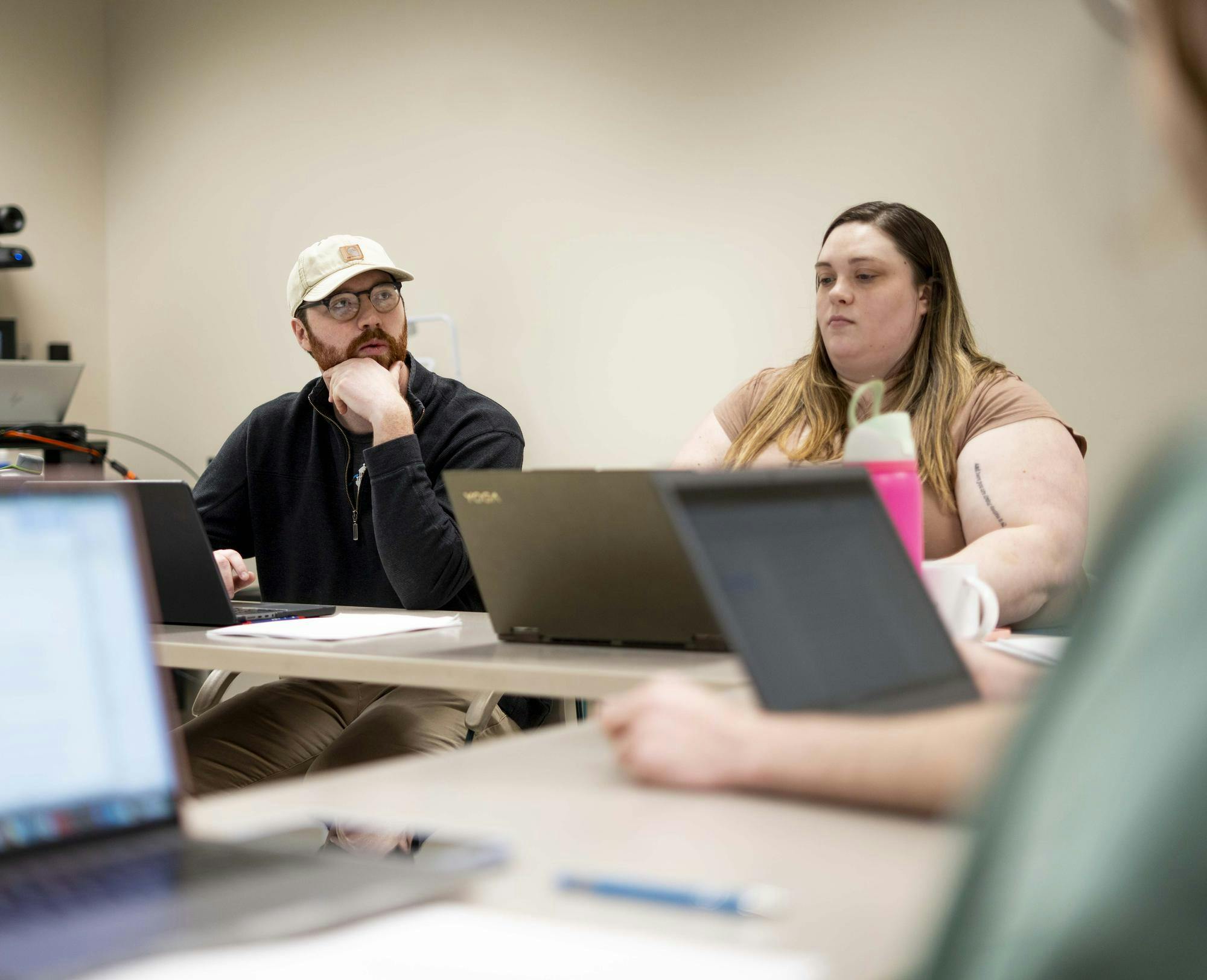
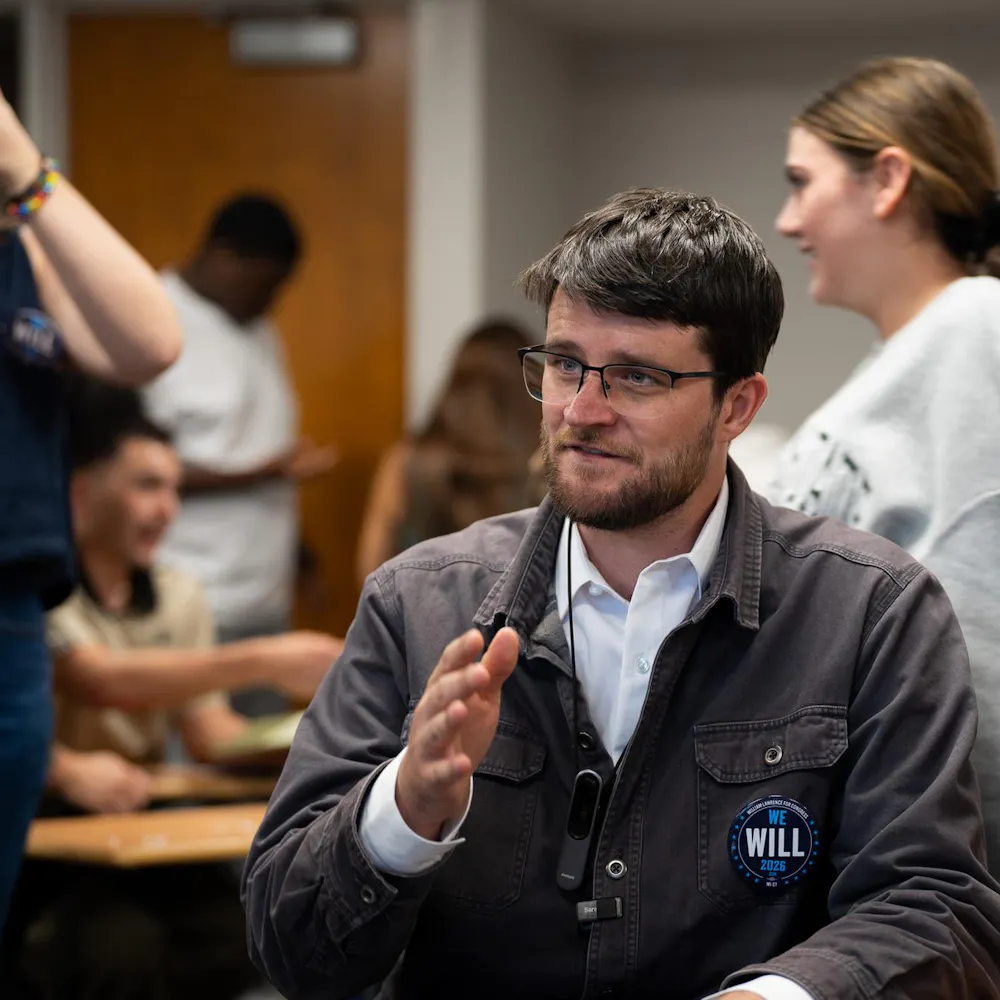
MSU College of Law Public Defender Clinic director and professor Bradley R. Hall speaks to students at the law college on April 4, 2025.
For six law students, the Public Defenders Clinic is more than just another class on their schedule.
The clinic opened its doors last semester and is now hosting its first class of students. Bradley Hall, interim director of the clinic, instructs the six students enrolled in its first operational semester.
It is the newest of several other law clinics run out of MSU’s College of Law, and focuses on an underserved aspect of the criminal legal process: pre-conviction appeals.
Pre-conviction appeals are filed by a defendant before a case goes to trial. Defendants can appeal a judge’s ruling before their case goes to trial, and oftentimes their lawyers aren’t equipped to handle those appeals, either due to workload or inexperience in appellate law.
MSU's Law Clinic offers students the opportunity to work on real cases and represent clients in court, allowing them to learn outside of a traditional classroom. Before the Public Defenders Clinic, none focused directly on criminal law, and instead concentrated on other legal areas.
This clinic, for the first time, gives students an opportunity to represent clients facing criminal charges.
Putting together the clinic
Before the Public Defenders Clinic, Hall said there was a serious need for a criminal law clinic at MSU.
"There was a real need here, and the students were vocal about that," he said, adding that administrators within the college also supported the clinic's opening.
Prior to working at the clinic, Hall served as the director of the Michigan Appellate Assigned Counsel System.
"It was my job to make sure that everyone who can't afford a lawyer and wants to appeal their felony conviction in Michigan is able to have an independent, quality attorney representing them," he said.
While working there, Hall said he noticed a serious need for appellate lawyers, the kind of work this clinic currently handles. Pre-conviction appeals are the responsibility of the trial attorney, but often they aren’t skilled in handling appeals and have to balance massive case workloads, he said.
That’s where the six students enrolled in the Public Defenders Clinic come in. The trial attorneys require another lawyer, or in this case a student, to conduct legal research and present the appeal to the Court of Appeals.
"We don't have to worry about identifying and finding all the issues, raising new issues, investigating the case thoroughly from top to bottom," Hall said. "This is a really narrow legal question, and the students can really excel at it."
Since the clinic started taking in students, Hall said it has transformed into a small law firm of its own. Work can become intense, with some students putting in more than 40 hours a week when deadlines are near.
The students
Second-year law student Borna Mafie knew he wanted to work at a law clinic when he first started law school, and when he heard that a public defenders clinic was commencing work in the spring, he said he knew that was where he wanted to go.
Mafie said he prefers the real world application the clinic offers, compared to the rigid structure of classes. In the clinic, he can put storytelling at the forefront of his work.
Support student media!
Please consider donating to The State News and help fund the future of journalism.
"(Hall) has emphasized a lot about telling stories of the clients," he said. "Judges at the end of the day are people too, and they can be really moved by stories."
Seeing how the law affects real people, rather than just reading about cases from a textbook, has helped Mafie develop practical skills.
"I had never filed a case before this," he said.
Students in the clinic work on two cases each, operating as the lead on one and offering support for the other.
Mafie said the conversations he and his peer had with their clients were eye-opening.
"You can ask them about their upbringing, you can ask them about the circumstances and context of what led to their cases," he said. "That was a very impactful experience, You can see the oppressive environment of the jail just weighing down on him."
Third-year law student Stephanie Leavens has worked with Mafie this semester. Though she had previously worked in a federal public defenders clinic, she said she did not have much experience interacting with clients.
"I am very much a hands-on person myself," she said. "I'm also part of the (Geoffrey) Fieger Trial Practice Institute, and the reason I did that program was because I wanted that hands-on trial experience. Even though we're doing appellate work (at the Public Defenders Clinic), you still are kind of getting in on the ground a little bit."
Leavens said she has often noticed that the theory taught in classes doesn’t apply to real-world situations.
"They're great in theory, but not necessarily applicable in real life," Leavens said.
Much like her colleagues, Leavens has put in about 40 hours of work in the week leading up to case brief deadlines. Workload is often determined on a week by week basis depending on their progress on the case, she said.
Third-year law student Manisha Misra said research takes up a large portion of the work when it comes to writing briefs.
"There are some weeks where I spend hours on hours just reading cases, trying to figure out what's relevant," Misra said.
Misra has been working with clients for years, as she worked as a paralegal at a public defenders office in Alaska before law school. The clinic has helped her become more productive, she said, as the structure of the semester-long clinic creates a fast-tracked schedule for students to achieve.
Because the students are involved in real-world cases, they have to deal with the obstacles that come with the justice system. Misra said she is no stranger to challenges like this.
"I think that's the whole justice system, is it not?" she said. "Doing this work, everyone's working against you. The only people who are on our side are us, right?"
Discussion
Share and discuss “MSU Public Defenders Clinic takes unique approach to educating law students” on social media.