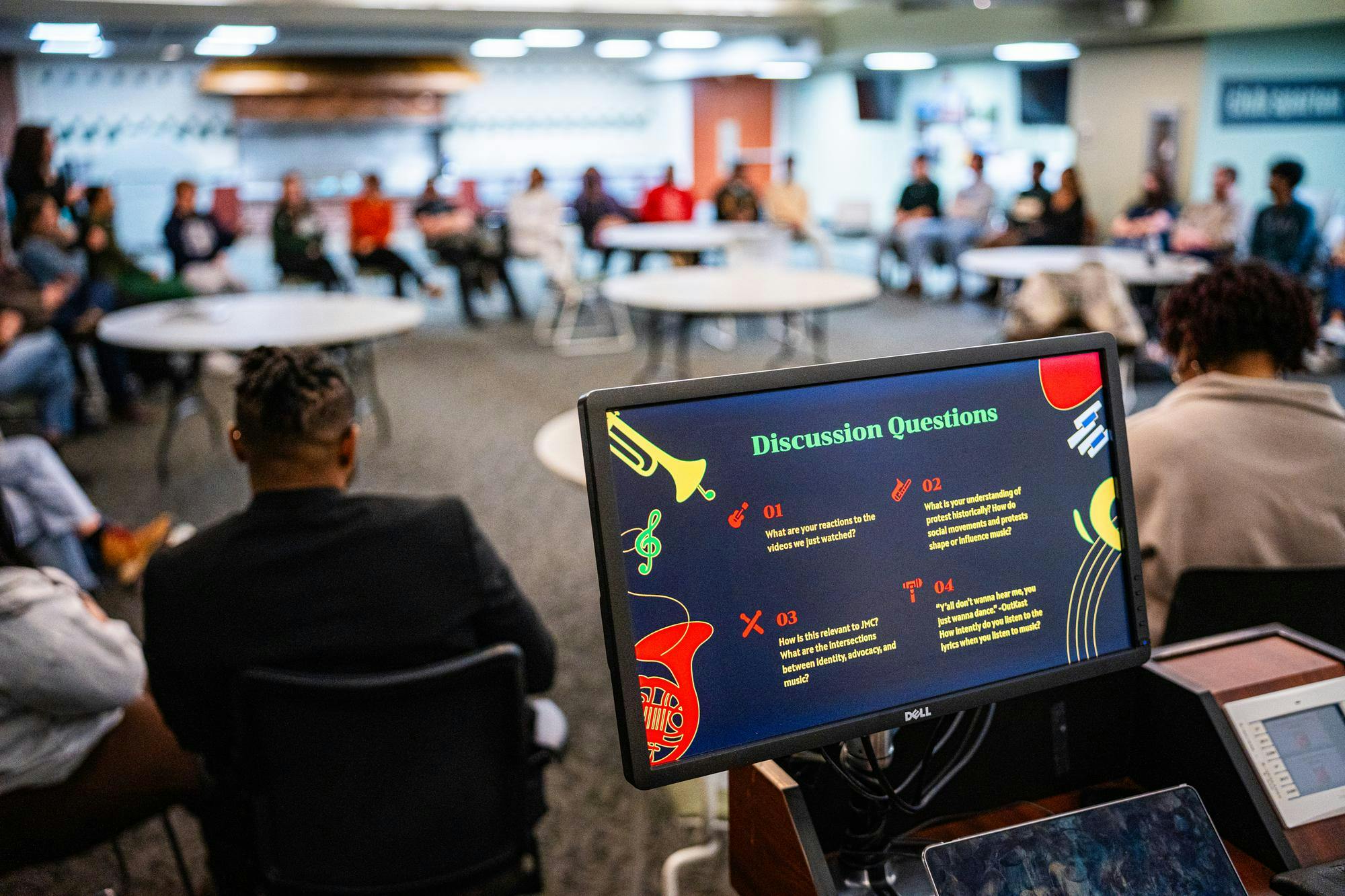
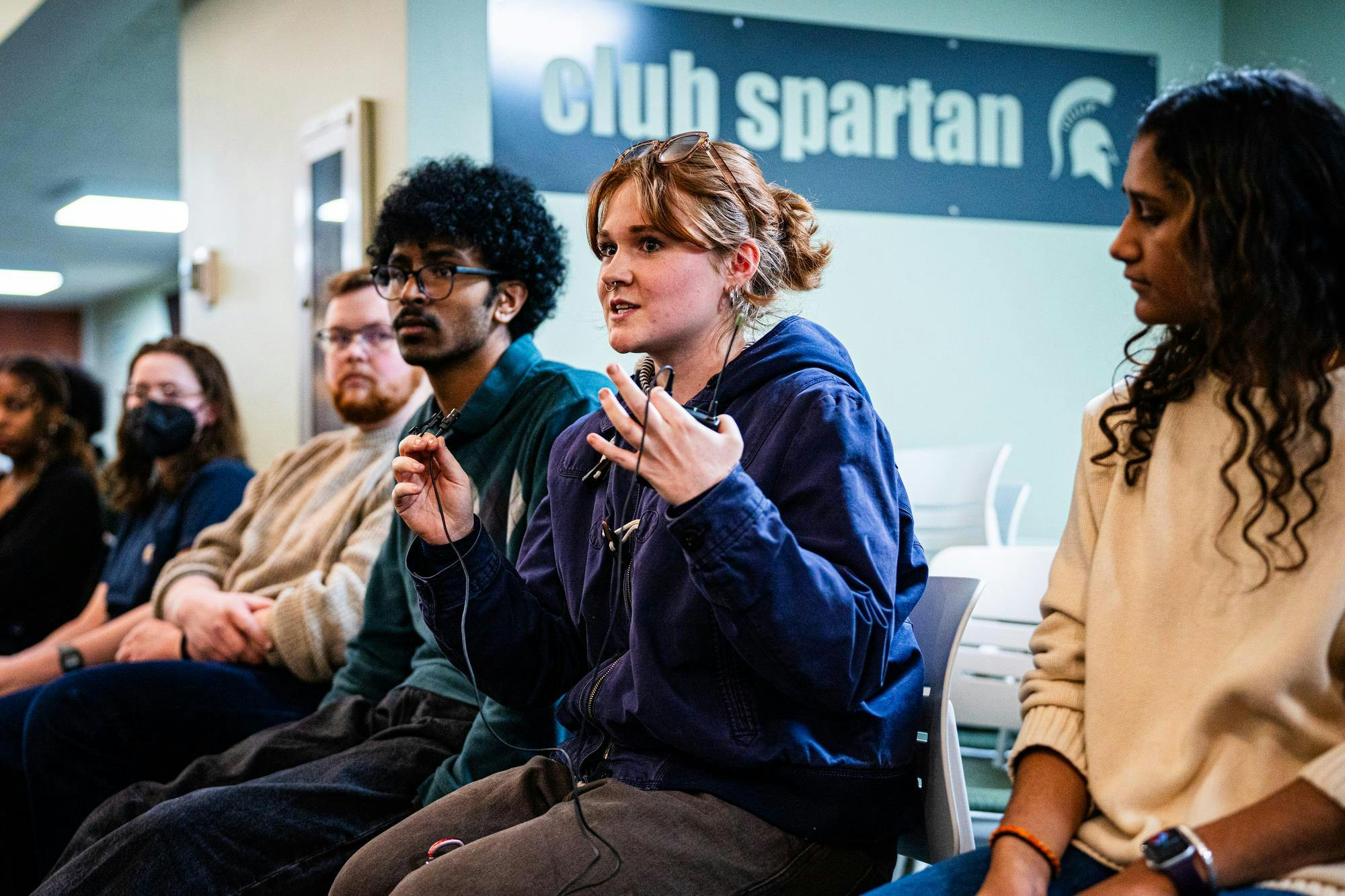
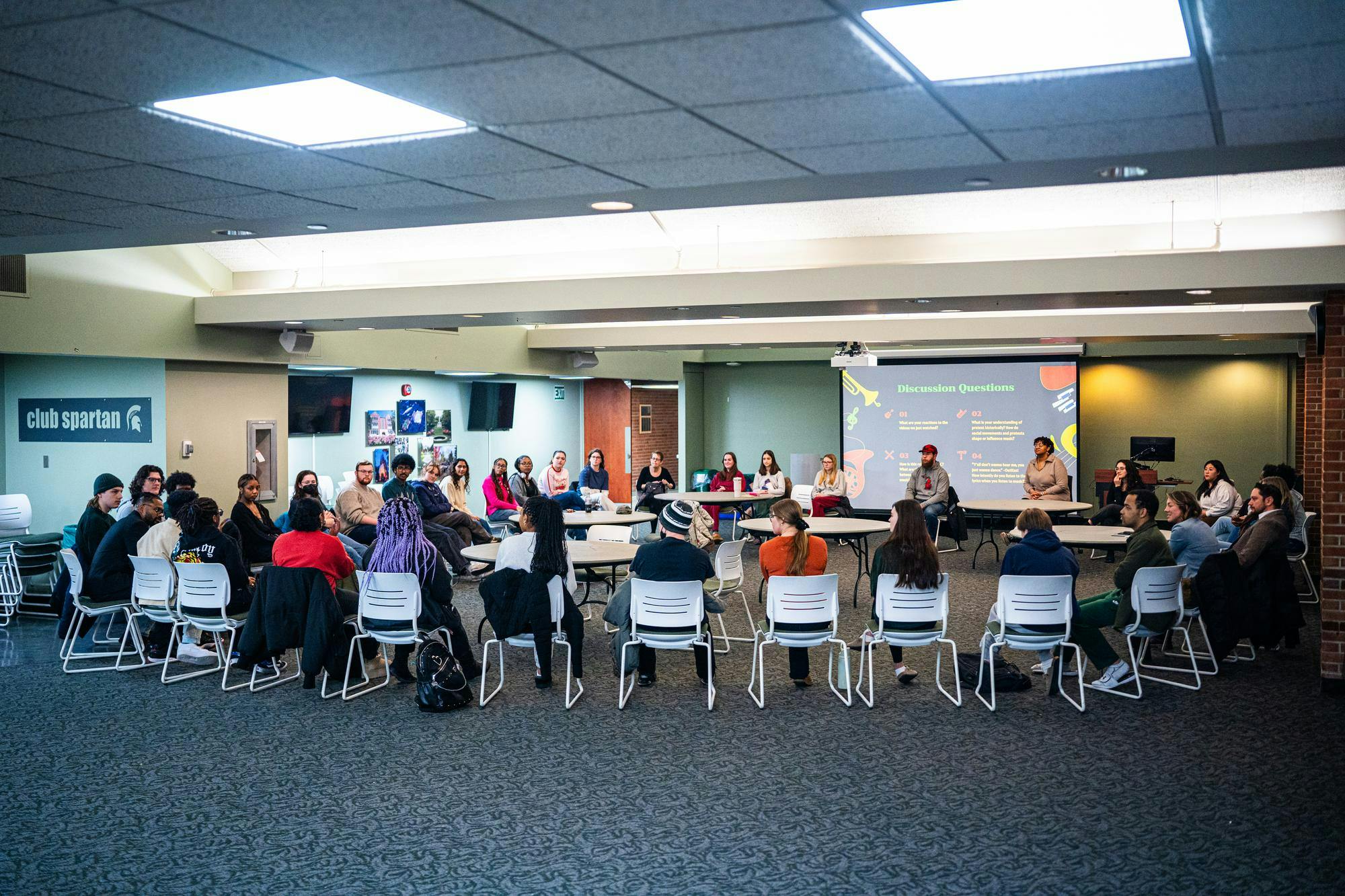
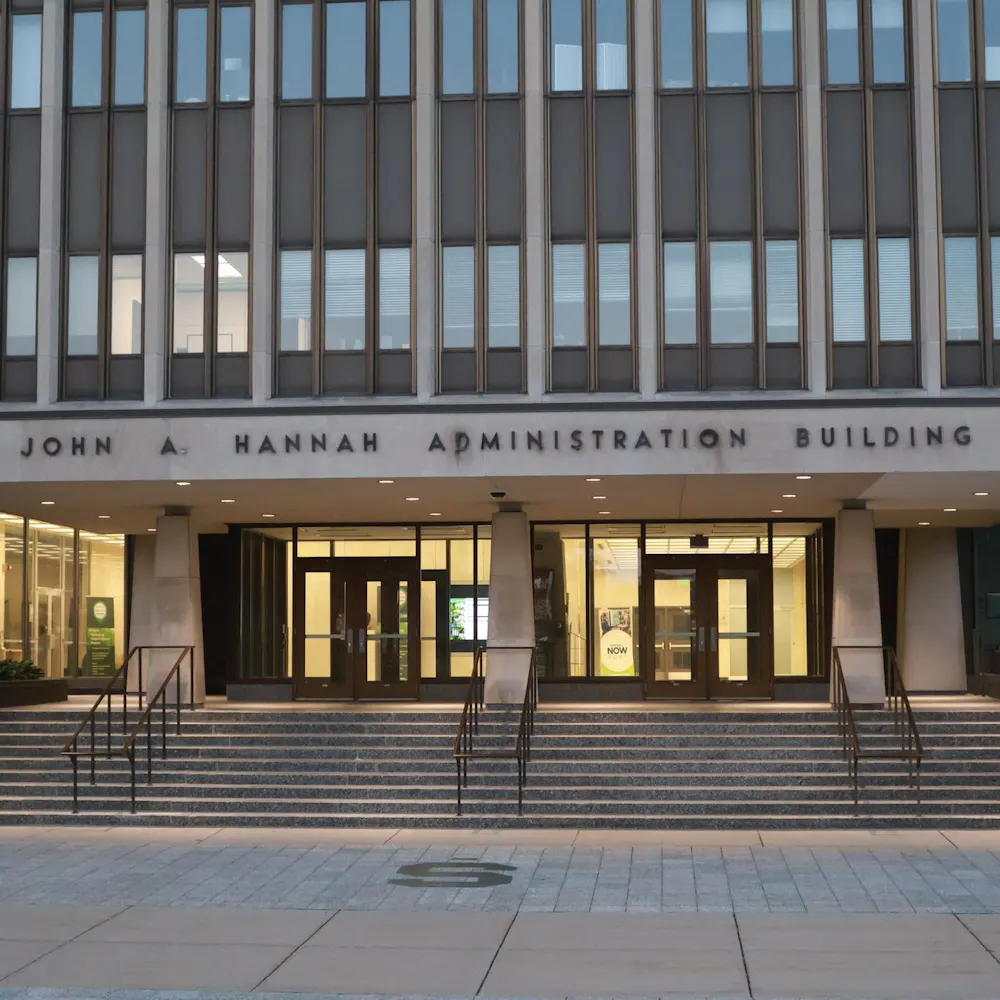
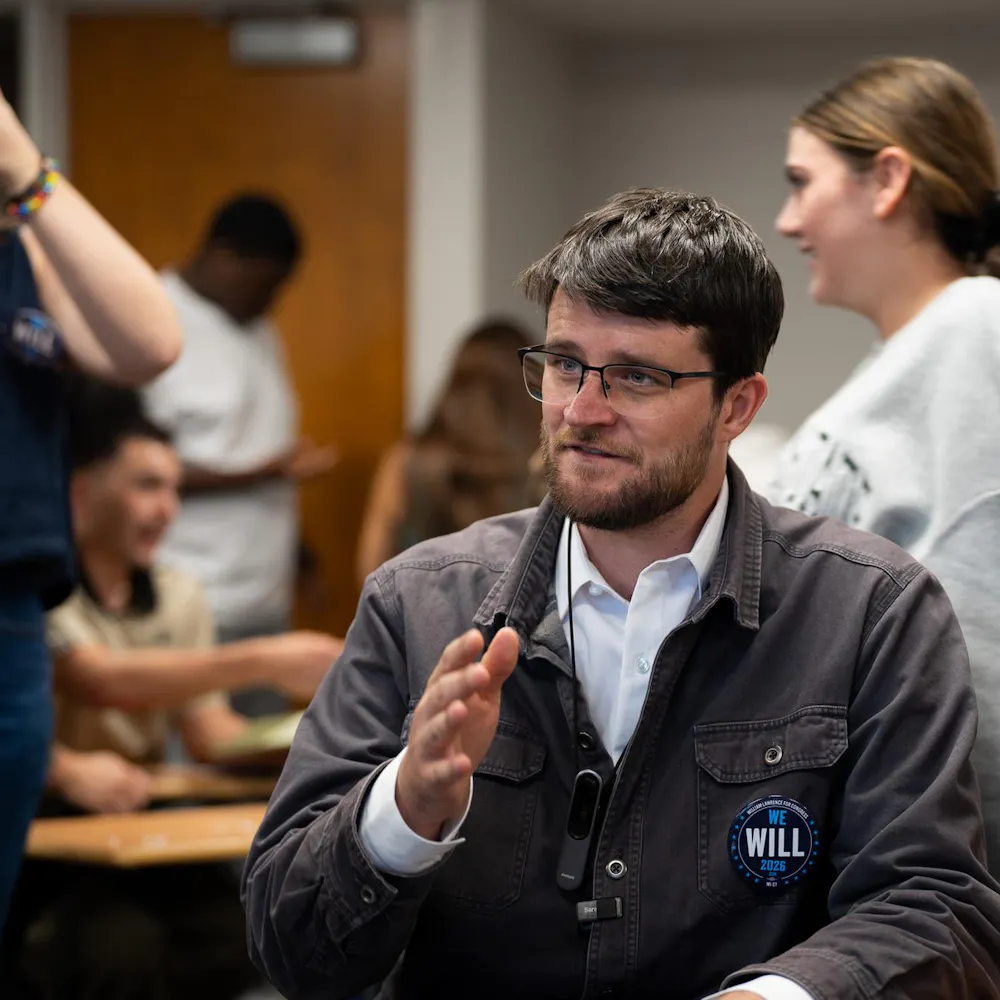
Attendees tackle a series of discussion questions about protest in the form of music during an event hosted by the W.E.B. Du Bois Society at Case Hall on Feb. 12, 2025.
As East Lansing was accumulating nearly six inches of snow the night of Feb. 12, members of JMC’s Office of Justice, Equity and Inclusion and MSU W.E.B. Du Bois Society were expecting minimal attendance for their event. Yet over 30 students, staff and faculty gathered in a wide circle in Case Hall for their dialogue of African-American protest pedagogy in music.
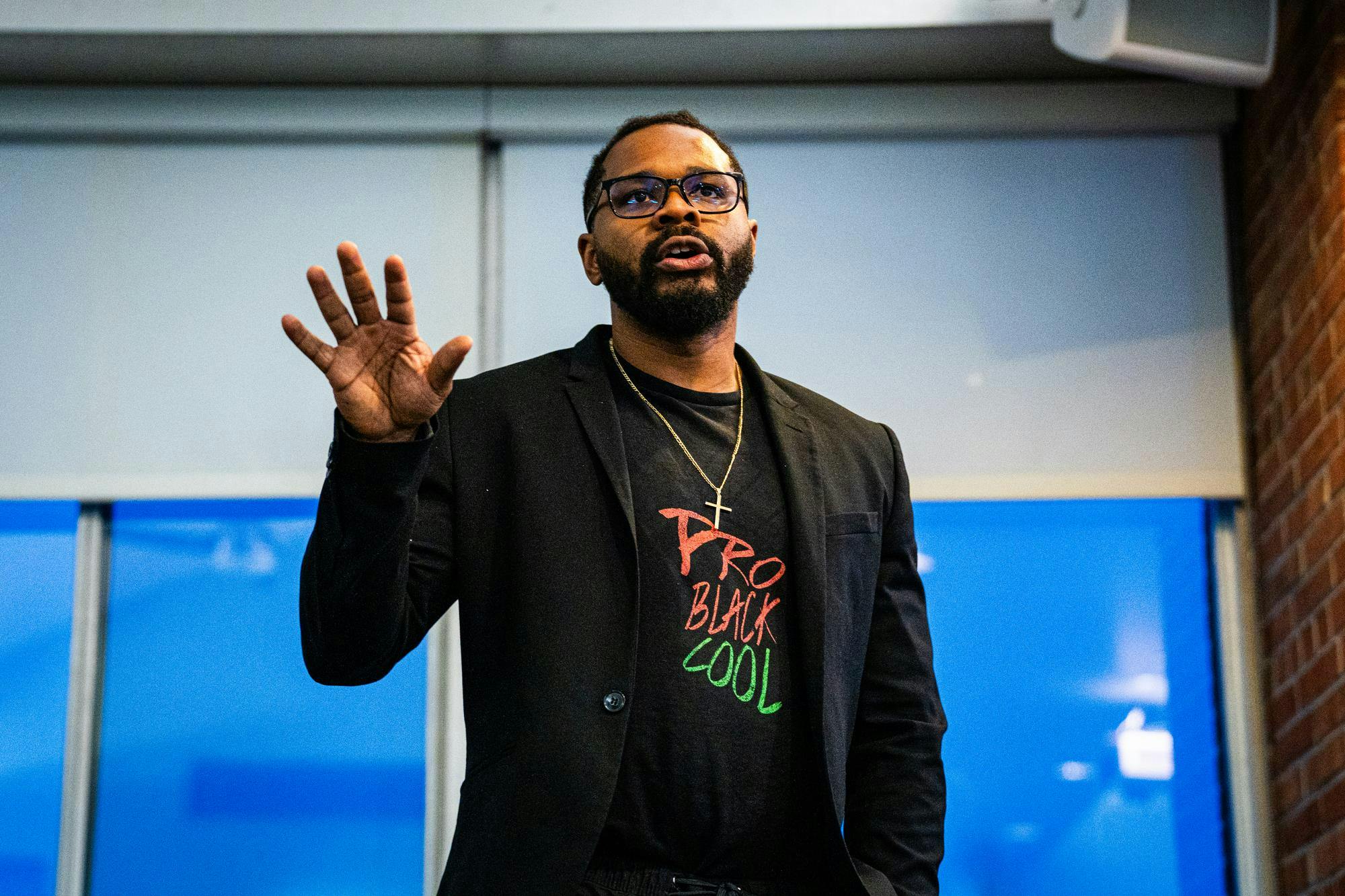
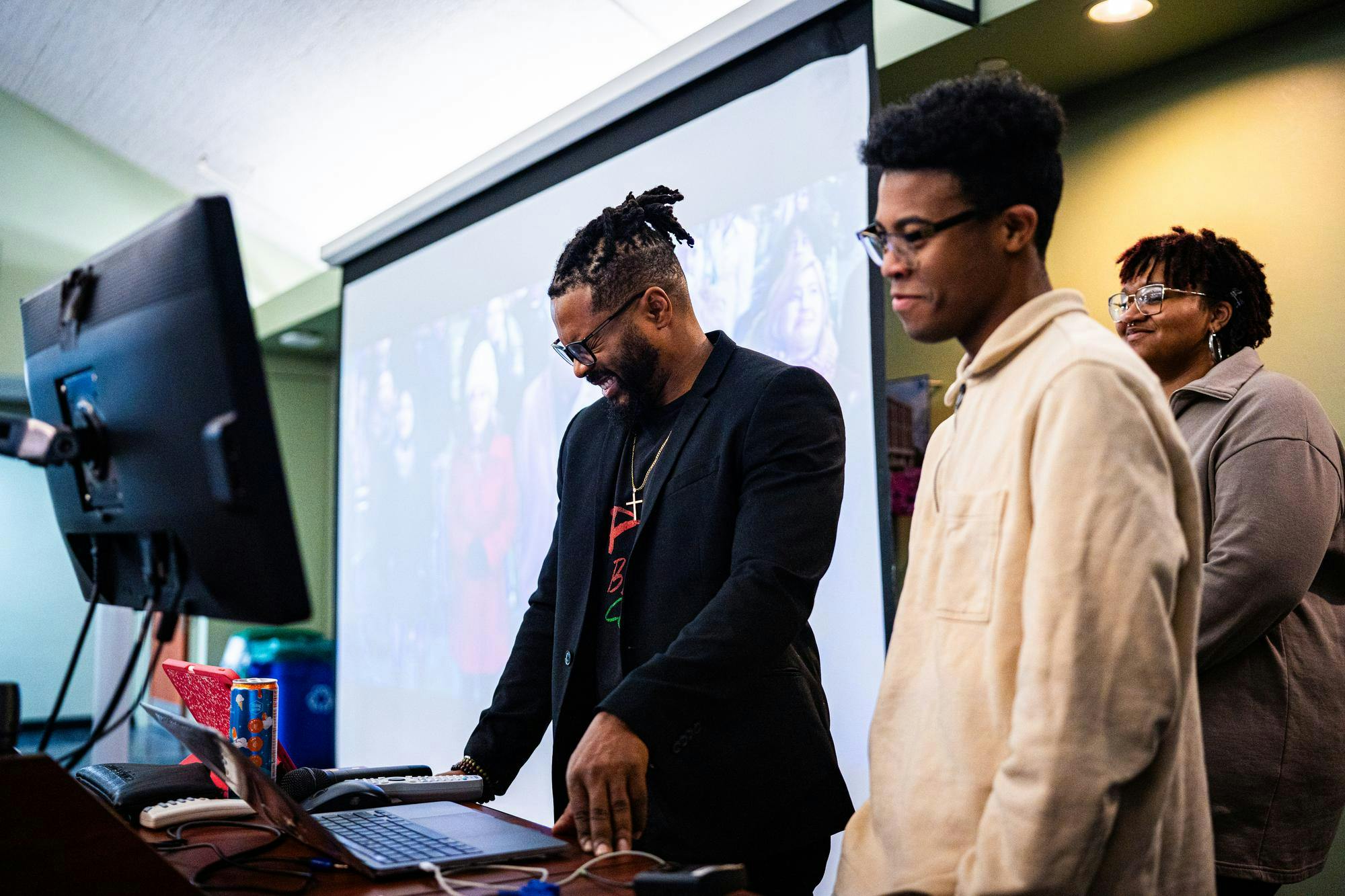
Starting off the event was Grant Dean, the chair of advocacy and policy committee of the W.E.B. Du Bois Society, presenting the timeline of protest music from the transatlantic slave trade to modern day.
He provided insight on a wide variety of historical music genres: spirit and work songs from 1600-1800, blues and jazz early resistance songs from 1920-1940, Motown, liberation and gospel songs from the Civil Rights Movement, as well as hip-pop, rap and blatant resistance mainstream music played today.
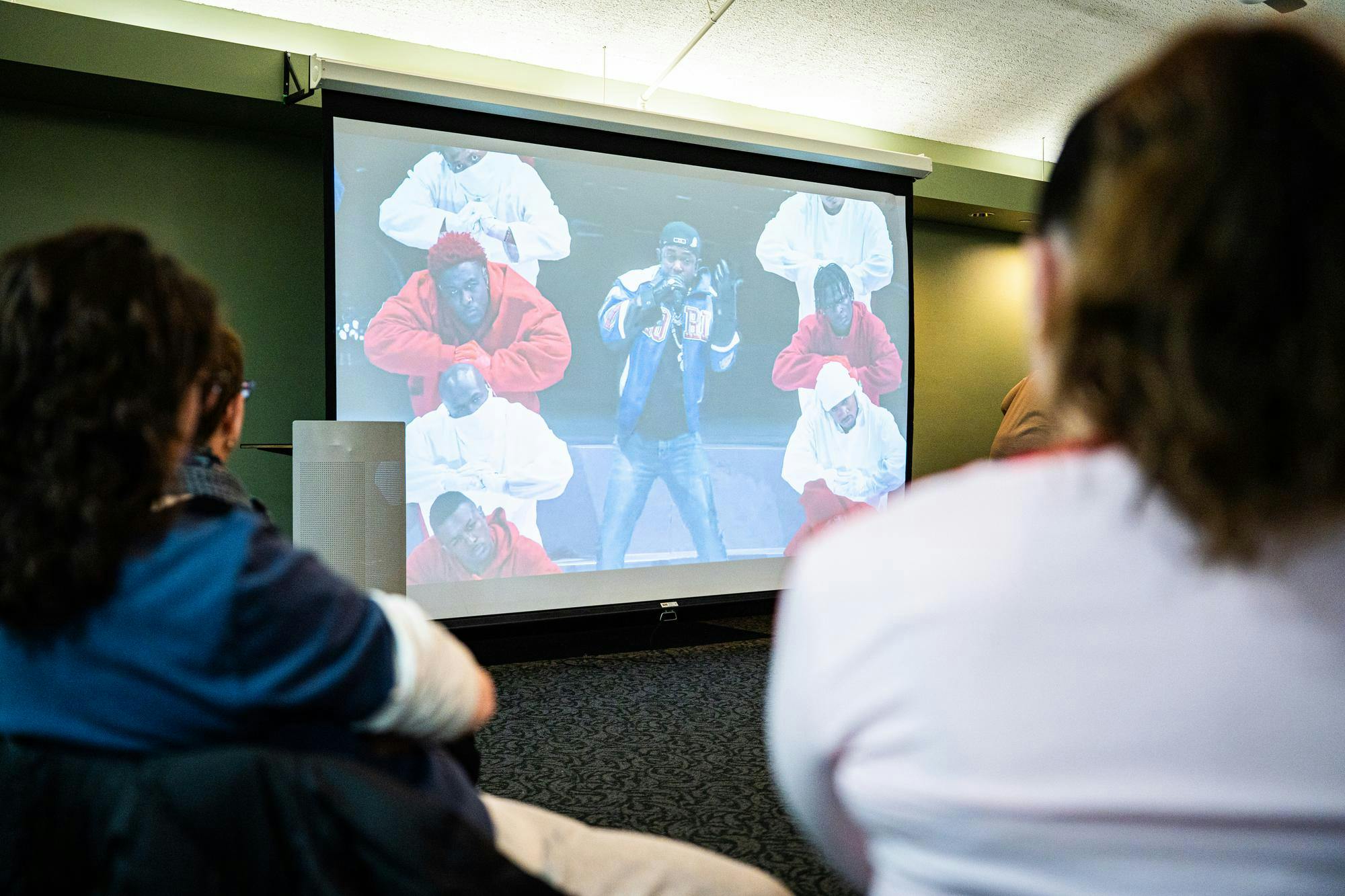
The historical presentation was followed by a break-down of the symbolism in Kendrick Lamar’s recent Super Bowl performance. And with the remaining time, they held a group discussion on historical protest movements, their impact on music and the overall relevance of these topics to MSU students and society today.
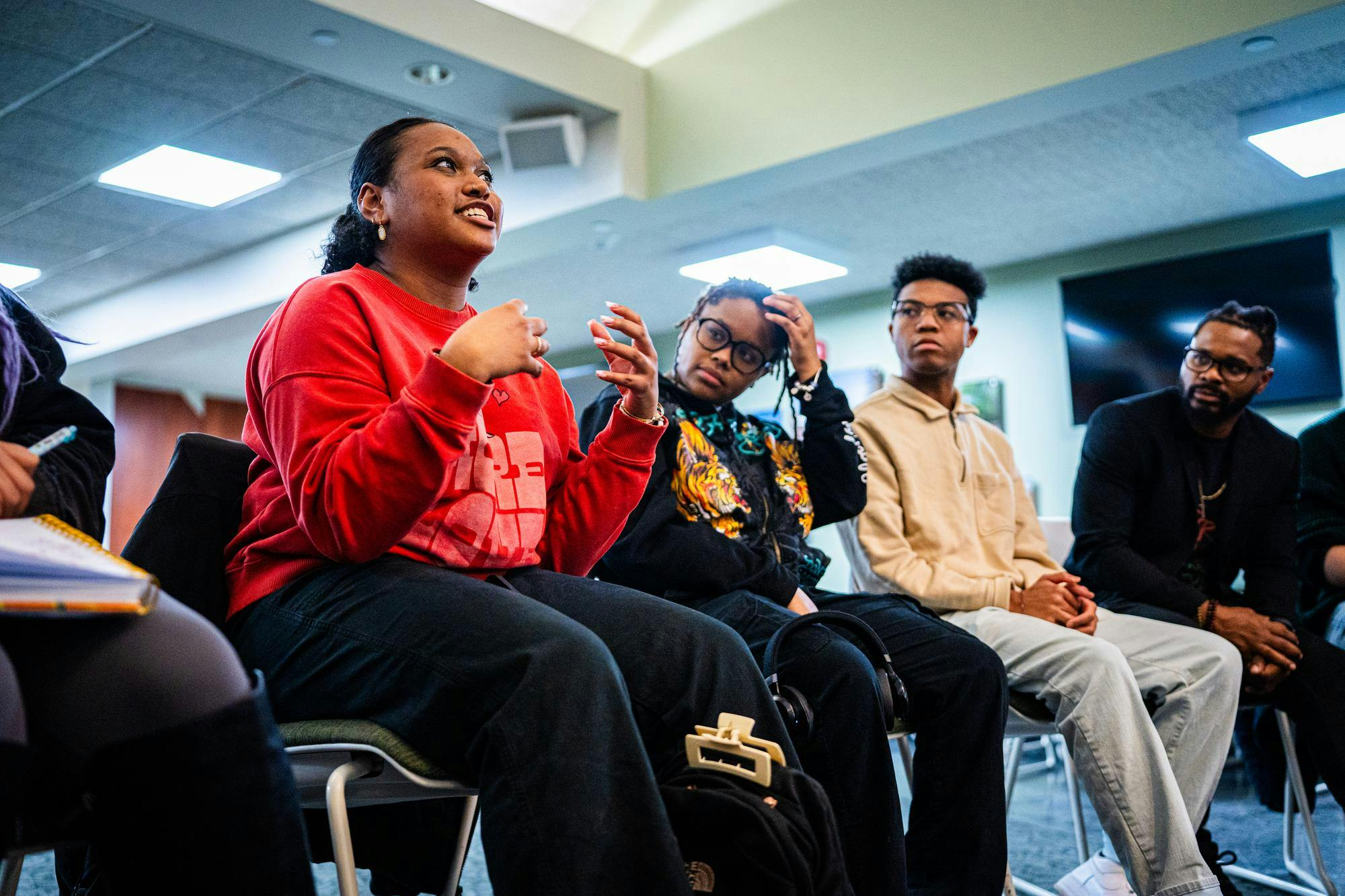
Social work senior Mckenzie Wilson spoke about the NFL’s removal of the "end racism" message on the field prior to the Super Bowl, which was replaced with "choose love."
"(The NFL) took that away when it was probably the most important time for it to be there," Wilson said. "That message could’ve gone very far, but for it to be taken away, knowing how big the Super Bowl is, is so frustrating to see. I think we as a community let it slide."
She related this instance to the Black Lives Matter movement in 2020, speaking about the performative measures people took by posting black squares on Instagram.
Immediately, Demetrius Tyson, a sophomore in international relations, raised his hand to speak.
"I just wanted to echo my disdain for performative activism," Tyson said. "I feel that there's no greater waste of time than to go and tell people how you feel while not actually being a voice and a part of a community that actually gets things done."
He further stated how he is disgusted with the "conservative pipeline this country has gone down."
As the conversation ebbed and flowed from different topics ranging from Beyoncé winning the Grammy for the best country album to what it means to be Black in America, Jahshua Smith, alumni and DEI specialist at JMC, reflected on the importance of this event.
"I think there's a mix of students who are probably scared more than ever to affirm that they believe in DEI because they don't want to be targeted," Smith said. "I think there are students who are also looking for an outlet to talk about what's important to them."
For discussion events like these, Smith believes it’s imperative to remove the power dynamic between professors and students to be able to have these conversations at an equal level.
For Dean, these events feel important now more than ever.
"I think with everything that's happened in the past few months, multiple different communities are really seeing the urgency of solidarity, that at this time, we really do need to come together," he said. "Whether directly or not, someone that you know or you yourself is going to be impacted by the multiple things that are coming out of the White House right now. So it's really important to be there for one another, to stand with each other because whether you like it or not, you're going to be affected."
Support student media!
Please consider donating to The State News and help fund the future of journalism.