It’s been two years since three Michigan State University students died and five more were injured by a gunman on campus on Feb. 13, 2023. Two classes have graduated since, leaving only half a student body that can recall the experiences of being on campus during the shooting.
For two students who witnessed the shooting firsthand, their grief has not been a linear process. They’ve paved their own ways to healing, but managing their grief within an institution that seemingly wants to keep the grieving process moving has been a challenge. They don’t want what happened to fade away with time. The two students want the community to remember what happened that night.
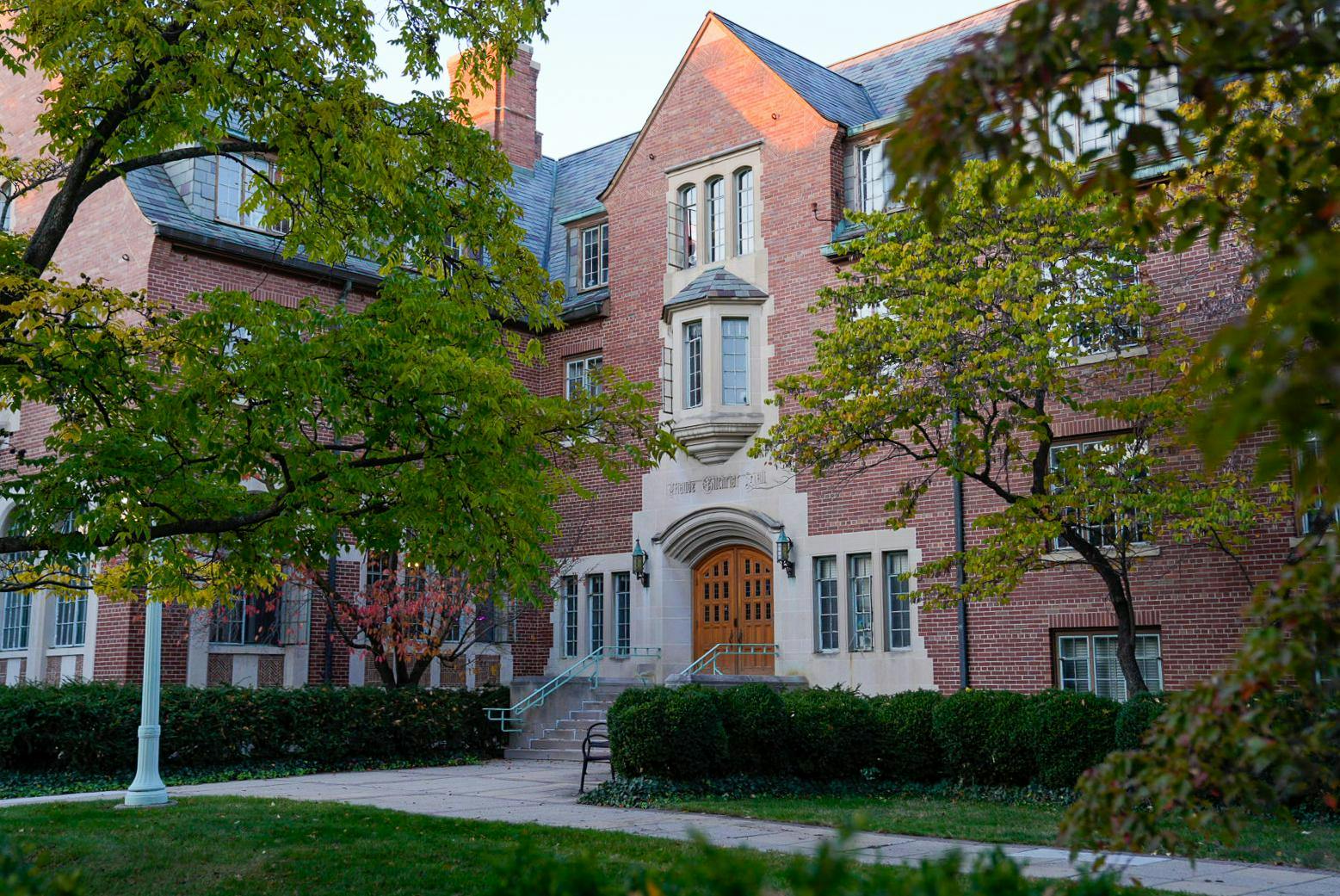
Liz Lopez-Cadalzo was in her class on Cuban identity and culture as the cars of Grand River Avenue flew by outside the windows. She was always put off by the proximity of room 114 to the road. She said it felt like someone could just walk in from the street if they wanted to.
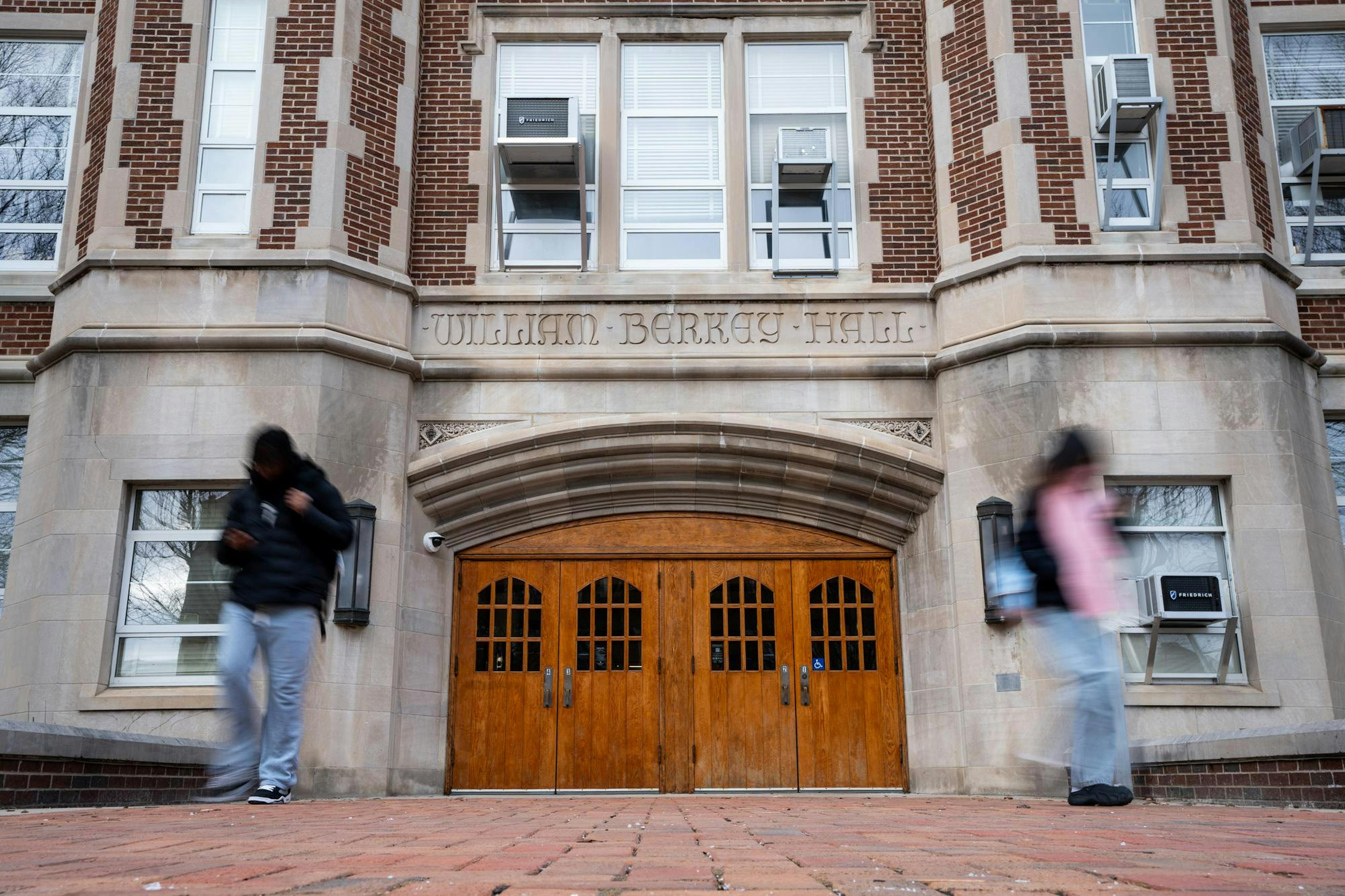
About halfway through class, Liz debated going to the vending machines for a snack, but eventually decided not to. "Thank god I didn’t," she said, because shortly thereafter the class was interrupted by a bang in the hallways of Berkey Hall. She said the class fell silent and whipped their heads around. Liz naturally hoped the sound wasn't what she thought it was. Then there were two more.
The back door to the classroom opened and the sound of gunshots filled the room. Near the front of the room, Liz hit the ground, only able to make out a hand holding a gun peeking through the door. She couldn’t make out a face or a body. Within a minute, it was gone.
Liz described a brief silence followed by screaming and crying. Students called their moms, something she tried to do before thinking: I can’t be in here. Students rushed toward the windows facing Grand River, windows that had to be smashed and climbed over due to the bottom half not opening wide enough for a college-aged student to fit through. The professor of the class, Dr. Marco Díaz-Muñoz, weighed down the lock-absent front door handle in case the shooter attempted to reenter the room. Liz remembers two students, whose names she does not know, as being calm amidst the chaos. They facilitated what to do and where to go as others tended to the wounded. Other students stayed in the classroom out of fear, she said.
When Liz climbed out of the broken glass window, she had another thought: What the hell did I just do? Where am I going? The shooter could have been outside. "I don’t know why I did that," she said. "I just felt like I couldn’t be in that room anymore." When Liz made it to the Chipotle across the street she could hardly breathe. She told the employees her classmates were dead, and she said they looked at her as if she was insane.

It wasn’t until she was in the Chipotle bathroom that she realized her hands had been cut from the broken window glass. It was there she was able to reach her mom, who later picked her up and took her home.
A few buildings away, Max Cibor, a freshman at the time, was eating in the MSU Union dining hall with three other friends after a fraternity chapter meeting. When the shooter entered the Union and fired the first shot, Max said for a moment he thought a plate had dropped.
After the second and third gunshots went off, everyone dropped to the floor.
"Nobody was moving. Nobody was even running out at this point," he said.
Max and his friends were in the middle of the dining hall in booths against the back wall opposite the food stations. "I was looking at my friend, and we both just had a blank stare of no emotion. Like, this might be the end type of thing."
After the final shot went off, Max said there was a brief pause before students collectively fled to the exits. It was quiet then. He said no one was screaming and the only sounds he could hear were tables and chairs being pushed out of the way as people ran toward the doors. "You could hear a pin drop in the time that everybody was laying down on the floor."
Max recounted confusion upon initially exiting the Union, as two of his friends ran toward a nearby dorm. Max said his goal was to create as much distance from campus as possible, and had planned to run through the Target on the other side of Grand River Avenue. His friend, Matt, however, led him to a nearby Auntie Anne’s, where the pair connected with another group of friends who were parked nearby. From there they went to his friend’s home off campus.
"It happened pretty quick, but it felt like a long time," he said.
Immediate aftermath
The events of the following days were numbing for Max. Three days later, when he and his friends went to the Union to collect their belongings, an FBI agent met them outside and rigidly asked for their names and what they left behind. Max said he wished the experience was more supportive; it was presumably everyone’s first time returning to that space.
He also said he couldn’t have processed it all without the support of his friends, especially the three with him that night. He said they spent every day of the following two weeks together. Looking back, he said he wished there had been a support group for those in the Union at the time to discuss their experiences together. "I couldn’t imagine if I was sitting there studying alone, and there was nobody to talk about it with."
While Max said a therapist would’ve helped, and appreciated the resources MSU pushed — like Counseling & Psychiatric Services — his was an experience few could relate to. "I think that there should have been a small group or something."
Support student media! Please consider donating to The State News and help fund the future of journalism.
For Liz, she found that group in her classmates.
The students in room 114 were given the opportunity to return to their original class (relocated to Bessey Hall), switch into another IAH class or take a pass/fail option, Liz said. She returned to the class along with a number of other students. She said she wanted a form of solidarity because, despite gun violence affecting thousands of people on a national level, she discovered that there weren’t many people who understood what she was going through on a more local level.
"Even though we didn’t connect or talk all the time, it just felt good to be there with them," she said.
She still keeps in contact with Dr. Díaz-Muñoz, too. "I think that took a lot of strength from him to keep going despite the horrible thing that happened to him."
That connection persisted through the rest of the semester. She began to notice other classmates would shake or twitch at loud, sudden noises. It affirmed to her: "OK, we’re all traumatized."
It took months for the reality of what happened to settle in. She said she didn’t feel like a person. What she found, however, was a stronger sense of community. She said students and professors were as supportive as they could have been. She got a lot of invites for coffee. Everyone seemed eager to support her. She was rushing a pre-law fraternity at the time and its members were offering support during the pledging process.
Other MSU services provided resources, like one she described as letting survivors know whenever a news article was coming out so they could be prepared for it. CAPS was also helpful, she said. There was one psychologist in particular that she developed a strong connection with, even saying she doesn’t think she’d be here today had she not met him.
But six months after her meetings with him started, he told her he had to cut off his services with her, as a result of what she said is CAPS policy.
"Six months just isn’t enough," she said. "I mean even two years later I feel like I'm still trying to mentally process what happened, and I almost think that this year was harder than last year for me."
Then, in spring 2024, just under one year after the shooting, MSU made the controversial decision to open Berkey Hall again.
Liz was in Washington, D.C. at the time of the Jan. 8, 2024 reopening. She recalled her friends describing the site of the shooting to her as "eerie and weird to walk by." At the time of initial opening the renovations weren’t completed, instead there was a temporary wall blocking off the area MSU intended to turn into a reflective space. She thought it was too soon.
"It's not even done, but MSU is just so focused on what? Opening the doors again? For what? For who? Why?"
She said the university granted her priority class enrollment so she could avoid classes in Berkey when registering, but she still didn’t understand why it was opened in the first place. She recalled one class she was forced to drop because it was located in Berkey.
Liz spent the day of the one-year anniversary reflecting. She walked, went to bookstores and read poetry. She received a luminary from MSU and decorated it with her roommate in D.C. She debated buying a plane ticket and returning to campus, but decided against it.
"It was a really sensitive day for me," she said. She was there in the room when it happened, and she said that hearing people who were in their dorms talking about what happened was hard. "I wish that could have been me. I wish I was in my dorm."
She was still in D.C. when she received a call from university officials asking for her input on what a reflective space should look like. At the time, all she wanted from the university was safety improvements around campus. But her concerns went beyond just more cameras and locks on doors. When the shooter walked in her classroom, she said she quickly realized the desks were attached to the ground and could not provide any cover. The windows they escaped out of did not open all the way. Any sort of training or preparation she could have had for what happened was nonexistent.
The reflective space was built where the room used to be, as denoted by a map near the entrance of the building still showing the area as room 114. There are two small rooms — no bigger than to hold two people. The 'Reflection Room' across the hall from the former classroom has a couch and window. In the area where room 114 was, there is a 'Personal Health Room' with two chairs and a large, circular mirror. It also has a window too — the same one Liz left out of that night.

"I don't really think the space is for me," she said. "I live with what happened every day. I feel that every day. I don't necessarily need to go to Berkey Hall to know and reflect and remember the lives lost."
When she did eventually visit the space, she was struck by its sterility. The harsh white lights and the modern lounge-like furniture are contrasted by the interior of the rest of the building and surrounding buildings built in the 19th and 20th centuries, making it feel out of place. It’s a space that makes people think "this shouldn’t be here," she said.
Two years later
The day before our conversation, Max returned to the Union. He had been unaware a reflective space had been built in place of the dining hall. "I think it was kind of a nice space, but I don’t really get it to be honest. It doesn’t really make any sense … It feels like a modern art project or something."
The dining hall has been turned into a study lounge area, with a variety of new, modern seating and entirely different artwork on the walls — the most notable being wallpaper featuring a forest scene. Max said that a new student who went into the Union would have no idea that it was the site of a shooting due to the lack of signage near the entrance or on the walls.
"I just wonder if students at MSU in 15, 20 years will even know that it happened. That's my biggest question," he said.
Max goes back to the Union a few times a year for his own reflective purposes.
MSU has been deciding on a permanent memorial for some time. Around the one year anniversary, QR codes were put up around campus for students to provide input on what a memorial would look like. More recently, MSU announced that the Permanent Memorial Planning Committee made up of students, faculty, staff and community liaisons decided that the memorial will either be at "Sleepy Hollow between Beaumont Tower and the Music Practice Building, or Old Horticulture Garden located near the Student Services Building."
There is still not a design picked for the memorial itself, but the planning committee has narrowed its decision down to three designs, something it is still seeking community feedback on through March. Whatever it may be, Liz just doesn’t want the community to slowly forget what happened that day and the impact it had.
But she sees it now: that sense of community has since dwindled, and it’s scary for her.
With it being two years since the shooting, there are two undergraduate classes that were here when it happened and two that weren’t. Now, Liz said it’s on the university to continue to make sure what happened is not forgotten when the class of ‘26 graduates. She’s unsure if MSU will hold up that responsibility, given the preemptive reopening of Berkey Hall. She doesn’t know if the university will continue to grant a day off on Feb. 13.
MSU recently announced it is going to make the decision to cancel classes on a year-to-year basis, with university spokesperson Amber McCann saying it would be "premature" to make any decisions about what the university will do in the next few years.
"I think it would be extremely insensitive to just do it for four years and then say, 'Oh, now that most of the students are gone we’re going to have class again because you weren’t there that day.' But I feel like that's what they're probably going to end up doing in the future," Liz said.
Max shares that sentiment, he sees yearly vigils and the day off as a way to memorialize and allow students to reflect. "I hope the school informs students for years to come about what happened because it’s such a big part of our school’s history."
But he doesn’t think the university has done enough to improve safety since the shooting. He said locking doors after 6 p.m. doesn’t change much, and that he doesn’t feel like they actually want to spend more money to improve conditions.
Healing and moving forward
For Liz, her healing journey was rooted in therapy. Looking forward, she also said that her career goals have become more aimed at public policy and activism as opposed to her original plan of going to law school. The shooting has since become something she carries with her every day.
There’s no shelf life for her grief.
"I definitely could feel really horrible and down today, and then maybe a month from now, I'm OK. Maybe five years from now, I'm breaking down on the bathroom floor unable to speak," she said.
Throughout his healing process, Max has been personally adamant about not letting this tragedy define his college experience or perspective of MSU.
"I think everybody handles grief very differently. And there's not one best way to handle this particular situation, but as long as I think that there is an intent to help, as long as there's actually strong intent to help, that's all I care about," he said.
"I don't think I'll get that sense of closure or acceptance, I think that's just something to live and deal with forever, and I’ve kind of come to terms with that," Liz said. "I feel and I mourn, and I will never forget the names of those three students, and I don't want to."