In 2001, when MSU held its first "Jazz: Spirituals, Prayer and Protest" concert commemorating Martin Luther King, Jr.’s life and legacy, the concert hall had 600 seats. That evening, 4,000 people showed up. Event organizers had to put the concert on televisions in the hallway so that everyone could enjoy.
Since this inaugural concert, the event has been held annually and the community has continued to show up. The concert has sold out each time, with some years even selling out two concerts.
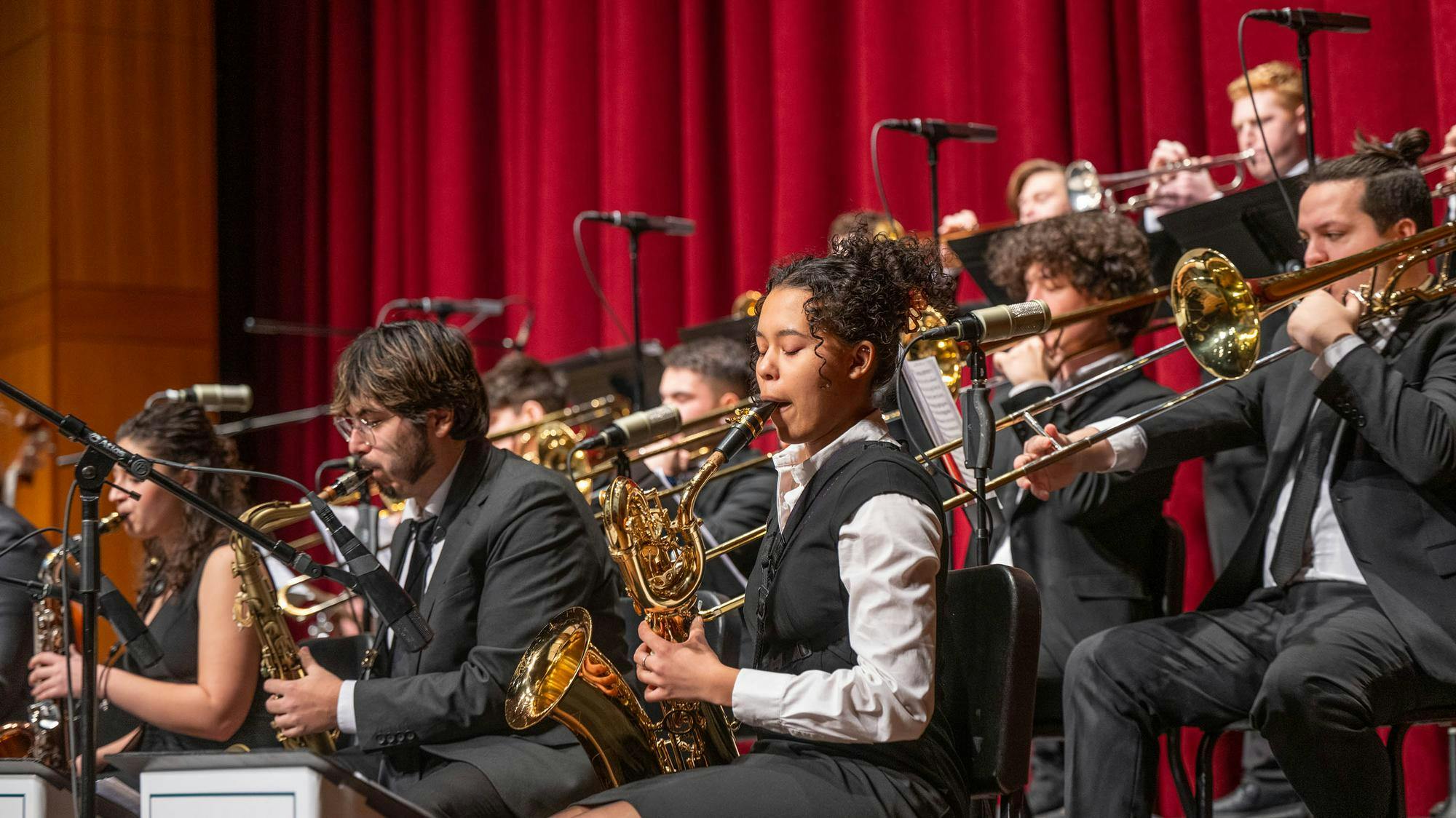
This year, the concert will take place on Sunday, Jan. 19 at 3 p.m. in MSU’s Fairchild Theatre, and the program will be performed by MSU Jazz Orchestra I. While advance tickets have already sold out, there is the opportunity for community members to buy a limited number of tickets at the door.
Director of Jazz Studies Rodney Whitaker will be conducting this year’s program; he is also responsible for the theme and music choices.
Whitaker has been involved from the very first concert. He founded "Jazz: Spirituals, Prayer and Protest" alongside Wycliffe Gordon, a former associate professor of jazz and artist-in-residence.
"One of (the) things we rarely think of, but Martin Luther King grew up during the time jazz was popular," Whitaker said. "He loved music. His favorite musicians were Dr. Billy Taylor and the great Duke Ellington. That was the music of his youth."
Many jazz musicians stood alongside King as activists throughout the Civil Rights Movement.
"It made sense that that music would be sort of like the soundtrack for the Civil Rights Movement," Whitaker said. "People are not aware that people like Louis Armstrong was the first person to speak out against Little Rock … Jazz musicians were really at the forefront of speaking out against oppression."
This year the concert program is titled "I Have a Dream for the World." When deciding on this theme, Whitaker was considering both the past and present. The election was on his mind and he knew there would be a lot of uncertainty with the results.
"The only way democracy works is that, when you’re disappointed and you lose you gotta really figure out a way to overcome that," Whitaker said. "That’s really what Martin Luther King encouraged, for us to persevere no matter what happens. In African American culture we live with this sort of thing our whole life."
Through the music played in this program, Whitaker wants to combat feelings of uncertainty and uplift members of the community.
"What I wanted to do with the concert — and we will try to do — is inspire peace, because you can’t let anything rob you of your peace," Whitaker said. "(Music) heals the soul, but also music is also a way of bringing understanding of issues in a way that nothing else could."
These themes of peace and perseverance are what Whitaker hopes to convey through the music. Not only the perseverance that King showed throughout the Civil Rights Movement, but the perseverance that continues through modern movements against oppression, like the Black Lives Matter movement.
"Listening to themes from the Black Lives Matter movement, and the one that was most powerful to me was 'Black Rage' by Lauryn Hill," Whitaker said. "It really speaks to the time, not that people are gonna go burn up houses, but that rage also can be funneled or channeled through works of art, music, activism."
Every year the concert showcases many iconic jazz works from the civil rights era as well as older African American spirituals. But Whitaker also makes an effort to include contemporary songs in the concert as well, to showcase how music continues to act alongside movements against oppression.
This year's concert will include music from iconic artists such as John Coltrane, Abbey Lincoln, Billie Holiday and Arthur Herzog Jr., as well as contemporary artists like Lauryn Hill and Stevie Wonder.
Second-year jazz studies graduate student and bassist Emma Wilburn will be performing in the concert for the second year in a row. She said that incorporating a range of music into the concert is how the musicians are able to tell a story.
"The music changes as society changes," Wilburn said. "Like, this music changed because the Civil Rights Movement changed, you know. It's just pretty interesting to show where it came from to where it is now."
Every student performing in the concert has a deep understanding of the history and weight behind performing these songs, Whitaker said. Throughout the rehearsal process, Whitaker speaks to students about the songs, but there is also a jazz history class at Michigan State that undergraduate students in the music department are required to take.
"It’s a class about jazz and the history behind it … where it started from with slavery and work songs and the birth of jazz, and the hardships that these musicians had to go through," Wilburn said. "And I think that's what's so powerful about this specific concert, because there's so much meaning behind it."
Support student media!
Please consider donating to The State News and help fund the future of journalism.
First-year jazz studies graduate student and alto-saxist Tommy Noble said that the students' understandings of jazz history and the legacy of Martin Luther King Jr. make the concert feel more important than usual.
"It's an important day in American history to remember MLK, and we're not just playing to, you know, maybe make people feel better, but to commemorate Martin Luther King, Jr., and for all he did for our country," Noble said.
Alongside many of the songs performed by the jazz orchestra, there will be guest vocal accompaniments.
The guest artists include Michigan State alumni and jazz vocalists Jasmine Hamilton-Wray and Ashton Moore, as well as jazz vocalist Rockelle Whitaker.
"It's pretty special to be able to play these songs with the singers, and really get to hear the lyrics and feel the meaning behind the songs," Noble said.
Whitaker said that by inviting vocal accompaniment, there is a chance for audience members to relate to the music on a deeper level because they are hearing the lyrics as well.
"I think I’m overwhelmed because every part of it is gonna be either exciting or even some things will be inspiring," Whitaker said. "Every aspect of the concert will be powerful, uplifting, some moments beautiful, and some moments will make you cry."
Discussion
Share and discuss “MSU Jazz concert to honor interwoven legacies of jazz music and Martin Luther King Jr. ” on social media.