The MSU Japan Club is an organization on campus dedicated to promoting Japanese culture in the local community, ensuring the comfort of international Japanese students in the U.S., as well as aiding those who wish to learn the language.
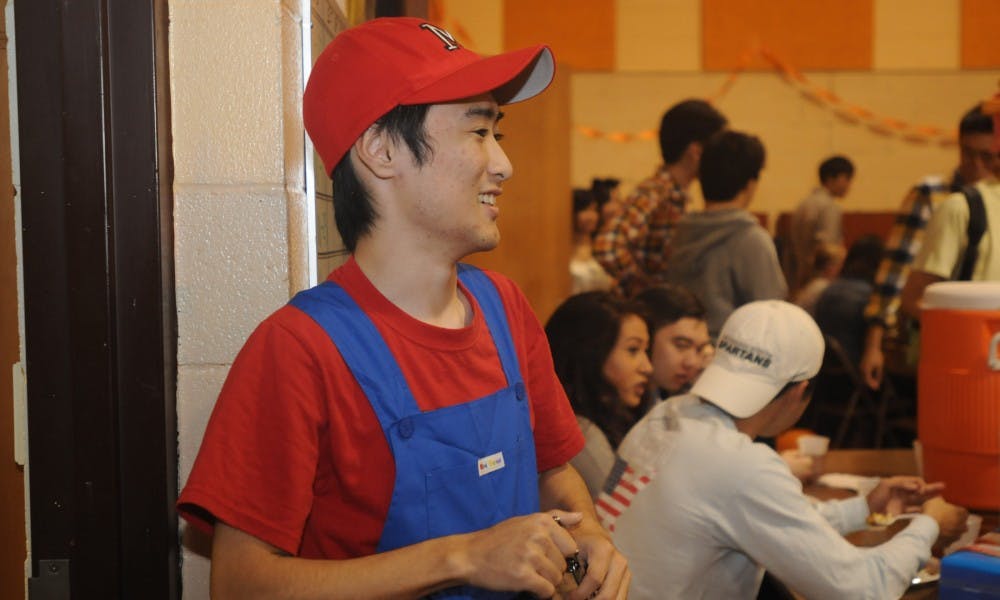
The club hosted its annual Curry Party earlier this month where students could sample Japanese cuisine, all while dressed up for Halloween.
The goal was to “provide a welcoming environment for both cultures,” president of the Japan Club and child development junior Shiori Egawa said.
Egawa takes pride in the diversity of the Japan Club and said the the general membership itself is about “40 percent domestic students.”
“Both the e-board and general members consist of very diverse backgrounds,” she said
Students in the club consist of students taking Japanese classes, students from Japan and those simply interested in Japanese culture, Egawa said.
At this specific party, international students were introduced to the idea of Halloween while American students could taste authentic Japanese cuisine and listen to contemporary Japanese music.
The curry certainly was the main catalyst to bring such a mix of students to the First Christian Church in Lansing.
James Madison freshman Momoko Watanabe described the basic ingredients that go into the dish.
Including the poignant curry spice, the dish includes an assortment of vegetables and potatoes, all draped over steamed rice.
Watanabe said she feels the dish and party are an excellent way for both cultures to interact and share with each other.
“The club is not just a group of Japanese students hanging out with one another,” she said.
Japan Club hosts a multitude of other events, including a tea party, dodgeball tournament, Super Smash Bros. tournament and an island bazaar.
American students, some of whom are not members of the club, find themselves coming back to Japan Club parties simply for the delicious food and welcoming atmosphere.
Communications senior Brittany Carter and Chinese sophomore Paige Korner are not members, but love the mixed atmosphere of these events and especially the curry.
Carter noted that it is wrong to think that someone who is not Japanese “will be alienated” at gatherings such as these.
“There is so much we can learn from these events,” Korner said.
The two feel events like these, as well as the Japan Club itself, promote inclusion on campus and between cultures in general.
The party had to take place off campus because a special license is needed to prepare food on campus. Still, the technicality did not stop such a mix of students from traveling into Lansing for the Japan Club’s event.
Egawa feels events like the Curry Party are indicative of the clubs scope. They introduce Japanese culture, welcome any background, and provide a friendly environment.